Side Dishes for Rotis/Dosas/ Naan.

Punjabi Kala Channa Curry.

Punjabi Kala Channa Curry.
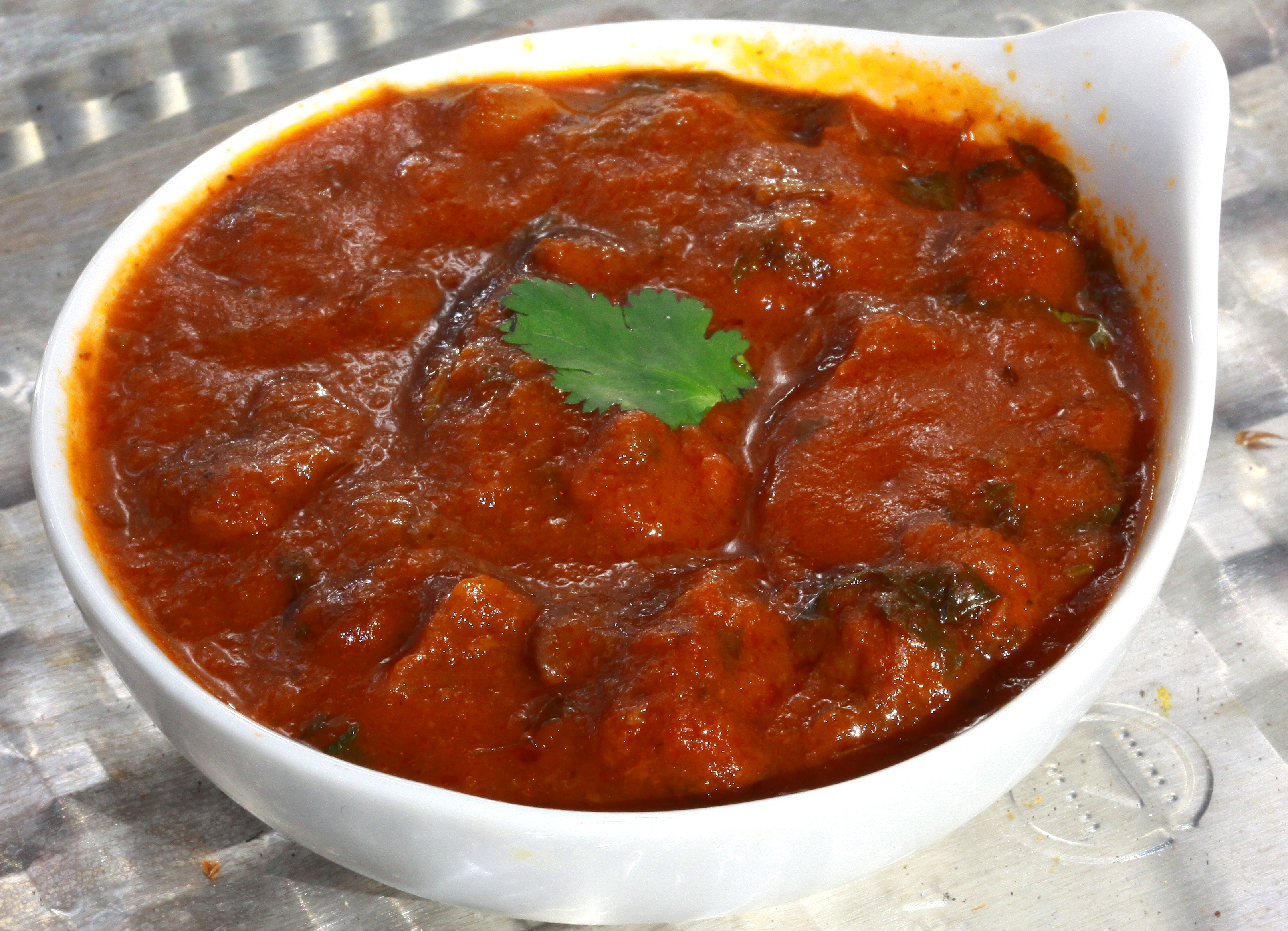
Punjabi Kala Channa Curry was something that I had tasted at a friend` s home at dinner and I flipped at the simplicity and taste of this particular dish. The Kala Channa like any other edible legume are extremely high in protien. It is also believed to be one of the earliest cultivable legume!!! The black chana  have a markedly higher fiber content than Kabuli Channa also called the Garbanzo,  and hence a very low glycemic index which may make them suitable for people with blood sugar problems.

INGREDIENTS:

1 Tsp Jeera.

1 Tsp Ginger Garlic Paste.

Paste from 1 Medium Red Onion.

1 Can of  Hunt`s Tomato Puree.

1 Tomato Finely Chopped.

2 Green Chillies.

1/2 Tsp Red Chilli Powder.

1/4 Tsp Garam Masala Powder.

1 Tsp Dhania Powder.

1 Tsp Kasui Methi

Cilantro to garnish.

PREPARATION;

  • Soak the kala channa for 5-6 hours and cook in the pressure cooker for 3 whistles. Drain cooked and cooled kala channa and save the water.
  • In a kadai add 1 spoon of ghee and when its hot, the jeera and the ginger garlic paste. Allow it to cook well in the oil. The ginger garlic has to become almost brown.
  • Next add the smooth paste of 1 Onion. Fry this paste to a golden brown colour on a medium flame. This is the essence of any punjabi masala – to cook out the  onion paste on a medium flame and keep sauteing it until it turns golden brown and all the water is gone completely.
  • Add the sliced green chillies and then the can of tomato puree. This add valuable colour and tang to the dish, which is very important to the final flavour.
  • Now add all the dry masalas – Red Chilli Powder, Garam Masala, Dhania Powder, kasuri methi and some more chopped tomatoes and fry well for about fifteen minutes until its cooked well and the curry comes together.
  • Now add the boiled channa and the water in which it was boiled. Add enough water as you want the final consistency to be.
  • After boiling for a few minutes, switch off the flame and serve garnishd with chopped cilantro.

HINTS:

  1. Fry the onion paste well on medium flame to a golden brown colour until there is no trace of water at all and it comes to a chutney like consistency. This should take at least ten minutes or so, so do not lose your patience here.
  2. The tomato puree adds a lot of tang and colour to the dish. Feel free to use puree made from tomatoes, at home.
 

Naivedhyams/ Festival Offerings.

Omapodi / Plain Sev.

Omapodi.

I am guessing the name itself is derived from the main ingredient that differentiates this fried snack from its other variations – Omam/ Ajwain. Omam is an excellent aid in digestion and a cure for low appetite and colic and flatulence. Omapodi is a delicious snack in itself and also aids as a main ingredient in Mixture. Omapodi is also used as a garnish in north indian chats in the form of sev.

INGREDIENTS:

1 Tsp Butter at room temperature.

2 1/2 Cups Besan.

1 Cup Rice Flour.

1 Tsp Salt.

1 Tsp Powdered  Ajwain/ Omam.

Water.

PREPARATION:

  • Keep a kadai of oil on the stove on medium heat and allow it to get hot enough to fry.
  • In a wide mouthed bowl, add butter, salt, rice flour, powdered Ajwain and besan. Use warm water and mix to a creamy moist dough. It should be in a consistency like Murukku Dough, one that allows it to get pressed using a Murukku Press. Adjust the consistency variating the water/besan.
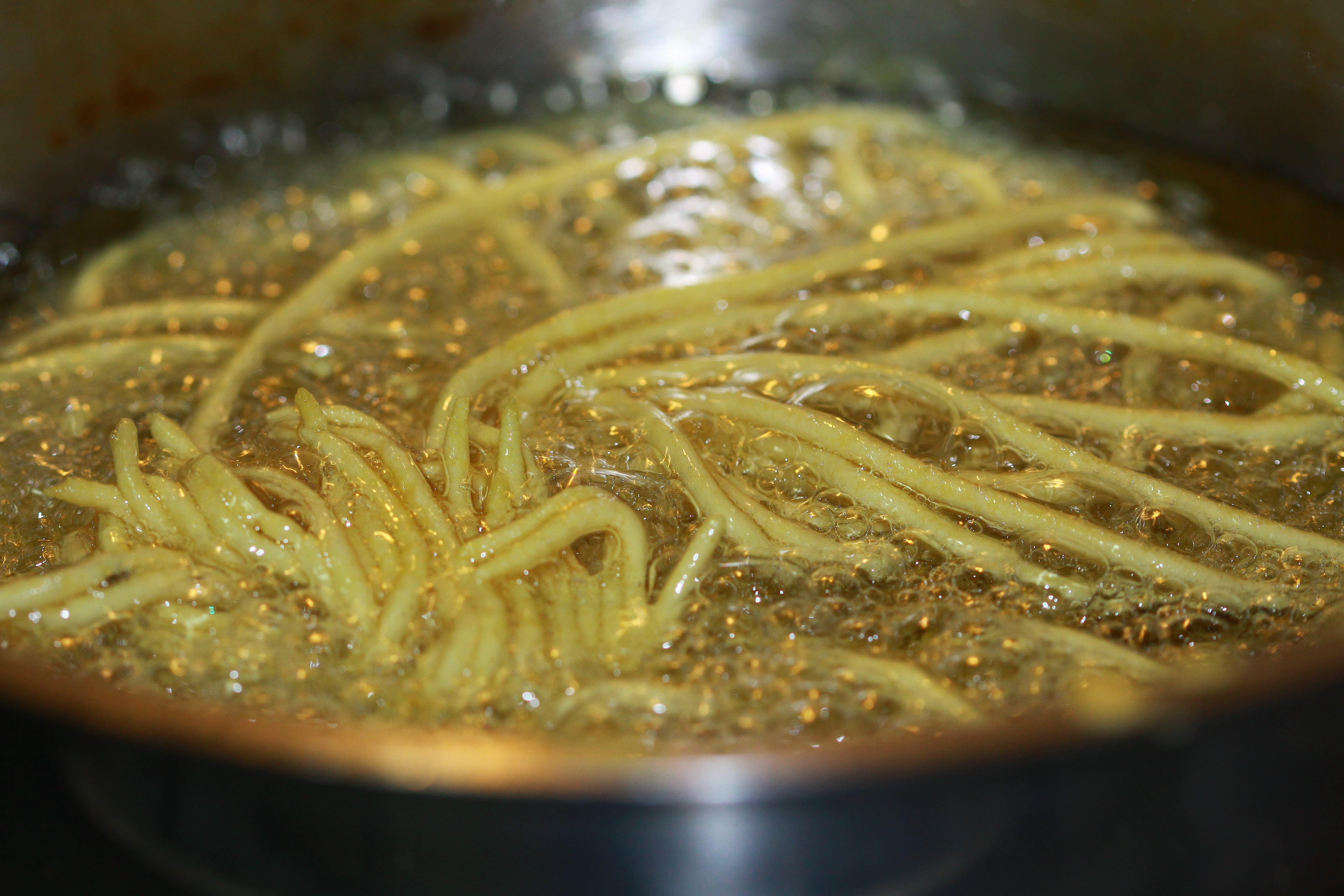
  • Use the Omapodi Press, press it on to the hot oil.
  • Allow it to cook on both sides and drain on to a tissue.
  • Crunchy Omapodi is ready to snack by itself or to use in Madras Mixture.
Naivedhyams/ Festival Offerings.

Karaboondhi – Cripsy Fried Spiced Besan Balls.

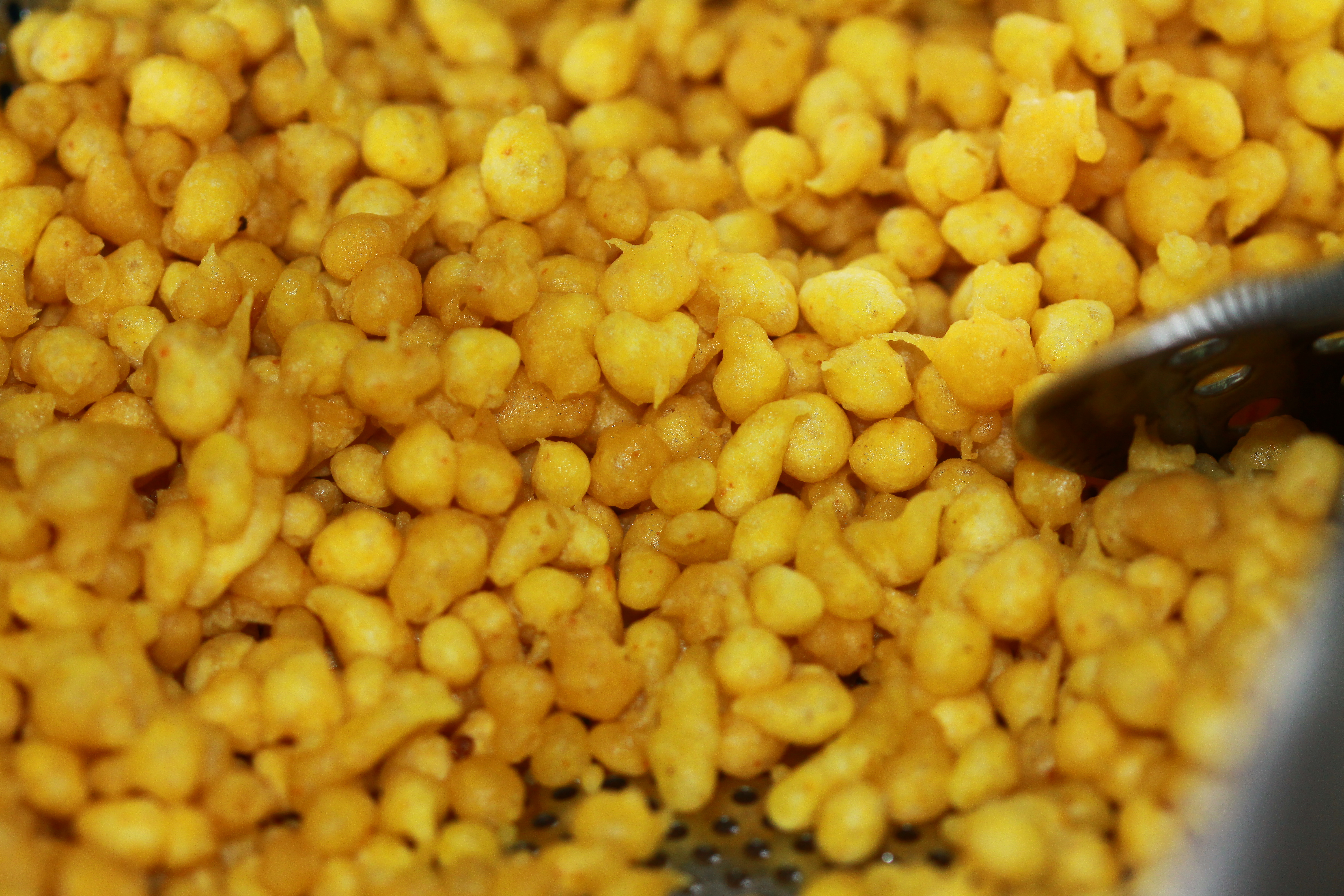
One of the most easiest snacks to make, yet requires sleight of hand and knowledge of a few tips as its tricky. The only tricky part being the consistency of the batter. Runny batter results in “boondhis” with little tails. A batter which is too thick would not even fall through the holes and not cook enough. Kara Boondhi makes an excellent snack by itslef, but I prefer making delicious Mixture for Deepavali.

INGREDIENTS:

2 1/2 Cups Besan.

1 Cup Rice Flour.

1 Tsp Salt.

1 Tsp Red Chilli Powder.

Pinch of Baking Soda.

Pinch of Hing.

1 Tsp Butter.

Pinch of Baking Soda.

1 – 1 1/2 Cups of Water. (Totally depending on the kind of Besan.)

PREPARATION:

  • Set a kadai with oil to medium heat on the stove. Meanwhile mix the batter for the Kara Boondhi.
  • In a bowl add the butter and all the dry ingredients – salt, hing, red chilli powder and  baking soda.
  • Sieve the required quantity of besan as many times the store bought besan has clots which may not yield results needed.
  • Add the rice flour and the besan.
  • Use a whisk to mix as this really helps in binding all the ingredients well.
  • Pour 1 cup of water and whisk to see the consistency. If needed add more water little by little.
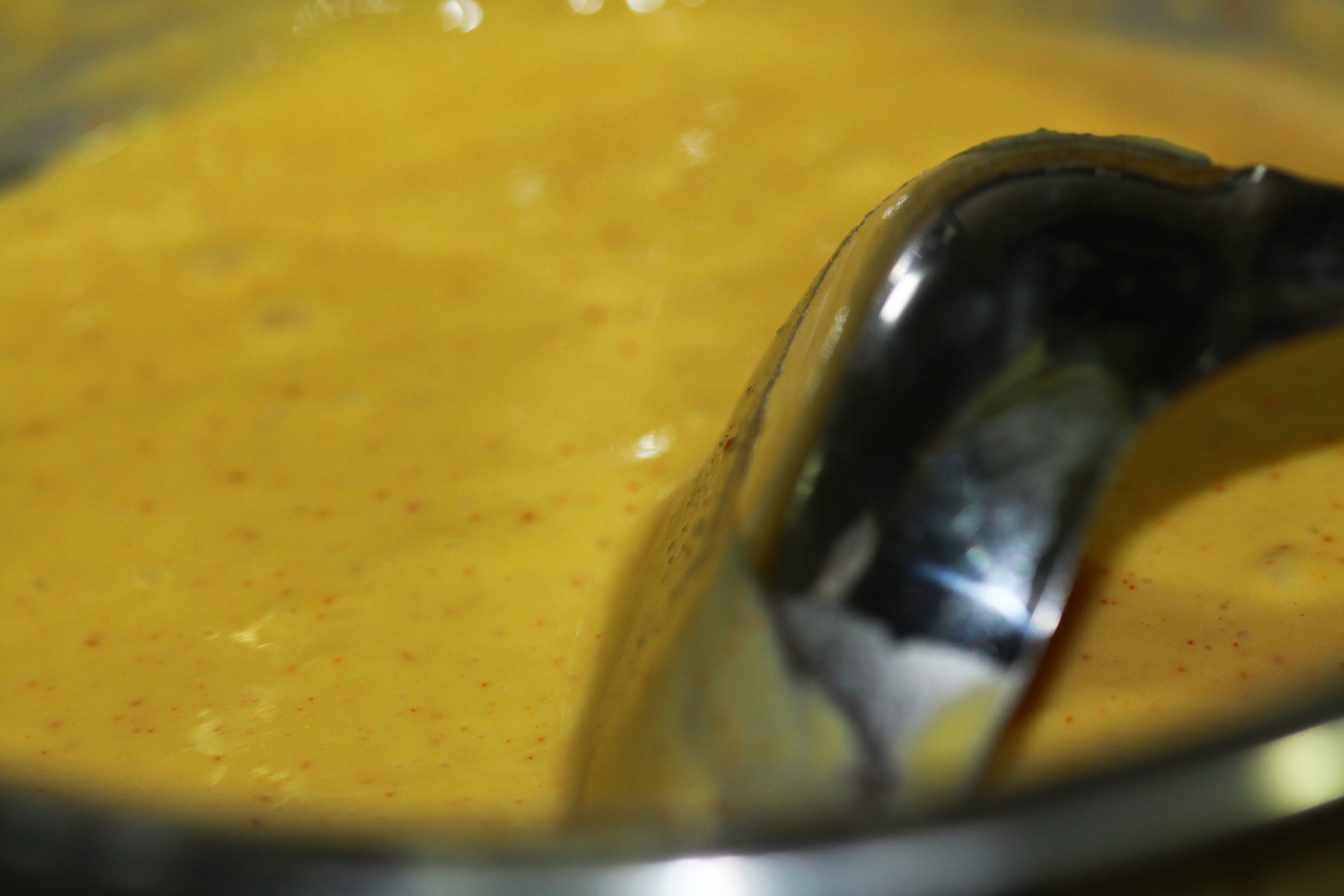
  • The consistency should be slightly runny but not too much.
  • Batter for KaraBoondhi.
  • Using the Boondhi Ladle or a simple perforated ladle, take out a ladle of batter and pour over the boondhi ladle and press out the batter through the holes to fall on to the hot oil.
  • The boondhis or drops will sizzle and hiss, when cooking in the oil. Use your ladle and mix it in well to allow uniform cooking.
Boondhi Ladle.
  • When starting to turn a light golden colour, remove from flame and on to a collander lined with tissue.
  • Allow the oil a couple of seconds to heat up before adding the next batch of boondhis.
  • Crisp KaraBoondhis are ready.

HINTS:

  1. Try out the boondhi ladle with the batter to see how the batter falls. You can keep the boondhi ladle on the mixed besan batter itself to see results. Then adjust the consistency of the batter by either adding more water or more besan.
  2. Use KaraBoondhis to make raitas or simply spic it up adding a little red chilli powder and hing for any anytime snack.
  3. Use with other fried snacks to make Mixture.


Naivedhyams/ Festival Offerings.

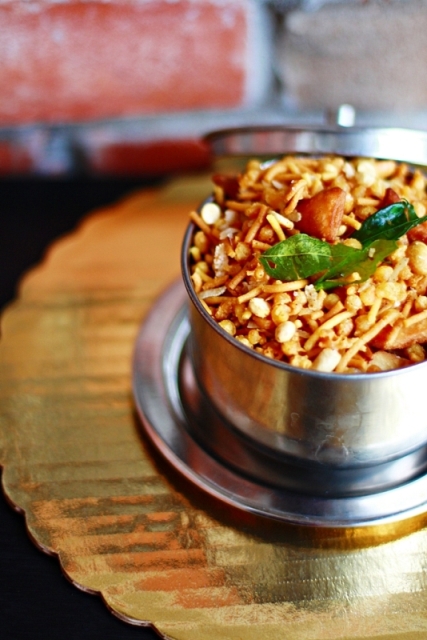
Deepavali Special – Madras Mixture.

Special Madras Mixture.

Every year Deepavali has been a special occasion for the entire family to get together and celebrate the festival of lights. These days, there is a lot of TV involved, but when we were little kids, Deepavali was getting up early in the morning and having oil bath and then wearing new clothes and prostrating before the elders of the family. We would always try to compete as to who would get up early and have a bath to get ready to go out and burst crackers with friends in the neighborhood. The earlier we get up, the more chances to enjoy more firecrackers as many of them are not as pretty when the skies light up. At around 7, breakfast would everytime be steaming hot idlis with Coconut Chutney, accompanied by the sweets and savories made for the occasion. Then more playing and more playing until we are exhausted. Lunch would be filling and satvik and with all my cousins and family.

Many of the sweets and savories prepared for Deepavali I would never eat much on that day. It would be fun to eat all of this later on, after a few days. The most special preparation for Deepavali has always been Maduraiamma`s Special Mixture. I don’t know how exactly she does it, but every time her proportions of chili powder, salt and hing have been spot on. When I open the container having the mixture, and I get the familiar aroma inside, it never fails to transport me to my childhood days.

INGREDIENTS:

1 Batch of prepared KaraBoondhis.

1 Batch of prepared Omapodi.

2 cups Maida Biscuits/ Shakkarpare

1 cup Roasted Peanuts.

1 Cup Split Chick Peas (Pottu Kadalai.)

1 cup Cashewnuts.

1 cup Aval/ Poha.

Curry Leaves.

1 Tbsp Red Chilli Powder.

1 Tsp Salt.

1/2 Tsp Hing.

PREPARATION:

  • In a large mixing bowl add the prepared KaraBoondhis.
  • Next add the prepared Omapodi and break it in to little pieces.
  • Prepare the Maida Biscuits/ Diamond Biscuits  in the following manner:

MAIDA BISCUITS:

Ingredients:

2 Cups All Purpose Flour.

3/4 Cup Powdered Sugar

1/3 Cup Milk + Little water to make a stiff dough.

1/3 Cup Butter/ Melted Ghee

Pinch of Baking Soda.

  1. Cream the butter, sugar, salt, baking soda until its light and fluffy and slowly add the milk a little water with the measured  2 Cups of Maida and knead in to a stiff dough. The consistency should not be sticky and soft, not too hard that its difficult to roll in to balls. Set aside for about ten mins.
  2. Divide the dough in to balls and spread out as you would do a thick chappati.
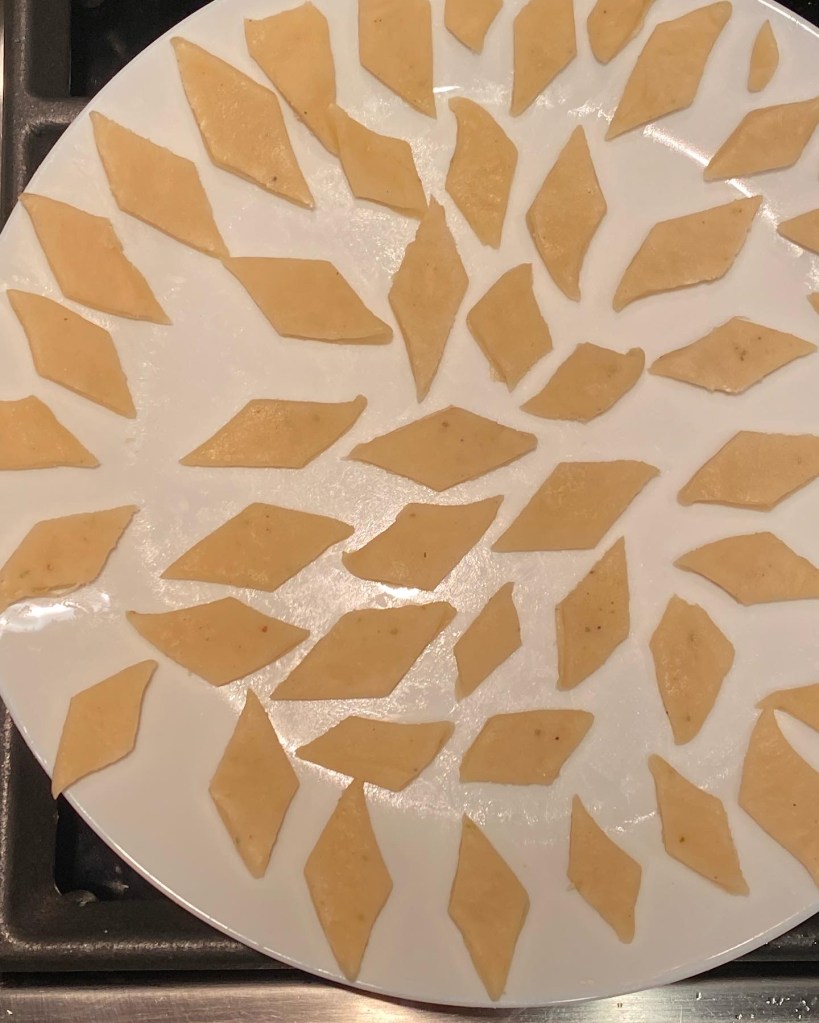
  3. Using your knife cut vertically and then diagonally to form diamonds.
  4. Fry in oil in medium low flame until well cooked and crisp and set aside.
  5. Maida Biscuits are ready.
  • Add the prepared Maida Biscuits to the mixture bowl.
  • Take some oil used for frying Omapodi  in a small kadai. Slowly add the roasted peanuts and fry them on medium low flame.
  • When done add to the mixing bowl.
  • Now add some more oil and fry the cashews until they are a light golden brown. Add to the mixture.
  • Similarly fry the Aval/poha and Split Chick Peas  and add to the mixture.
  • Finally add about 20-25 fresh curry leaves to the oil. When they are fried crisp add hing to the oil and pour over the mixture.
  • To all the hot fried items add salt and red chilli powder and using your hands/ ladle mix them all in.
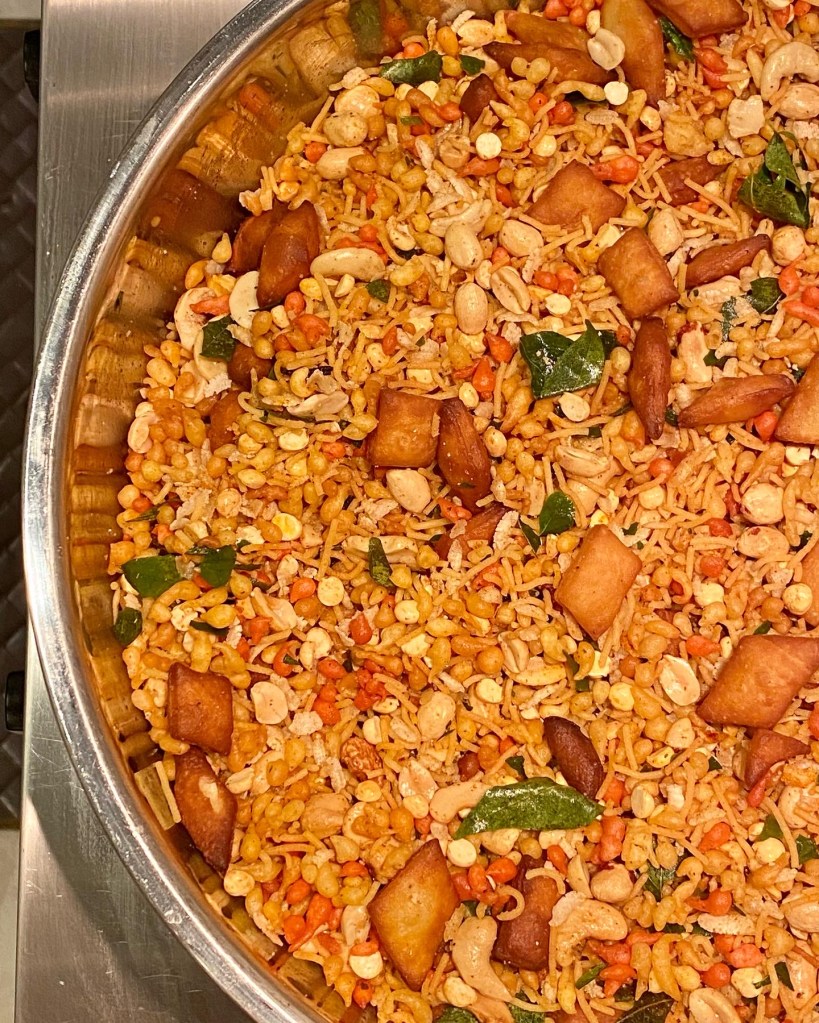
  • Fresh homemade Mixture is ready !!!
  • Happy Deepavali Wishes to all my readers.
Brisk Breakfast · Snacks & Tiffin Items

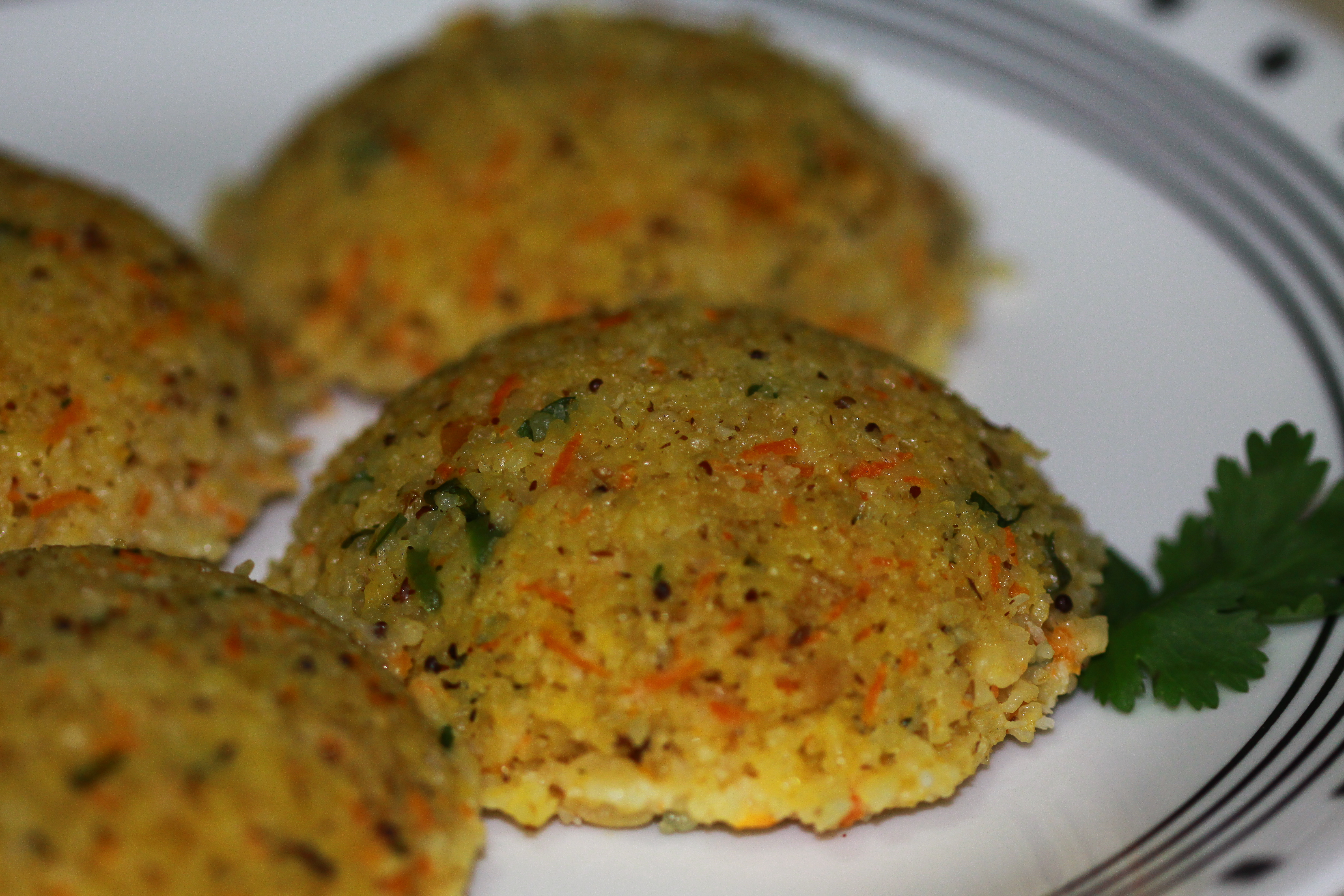
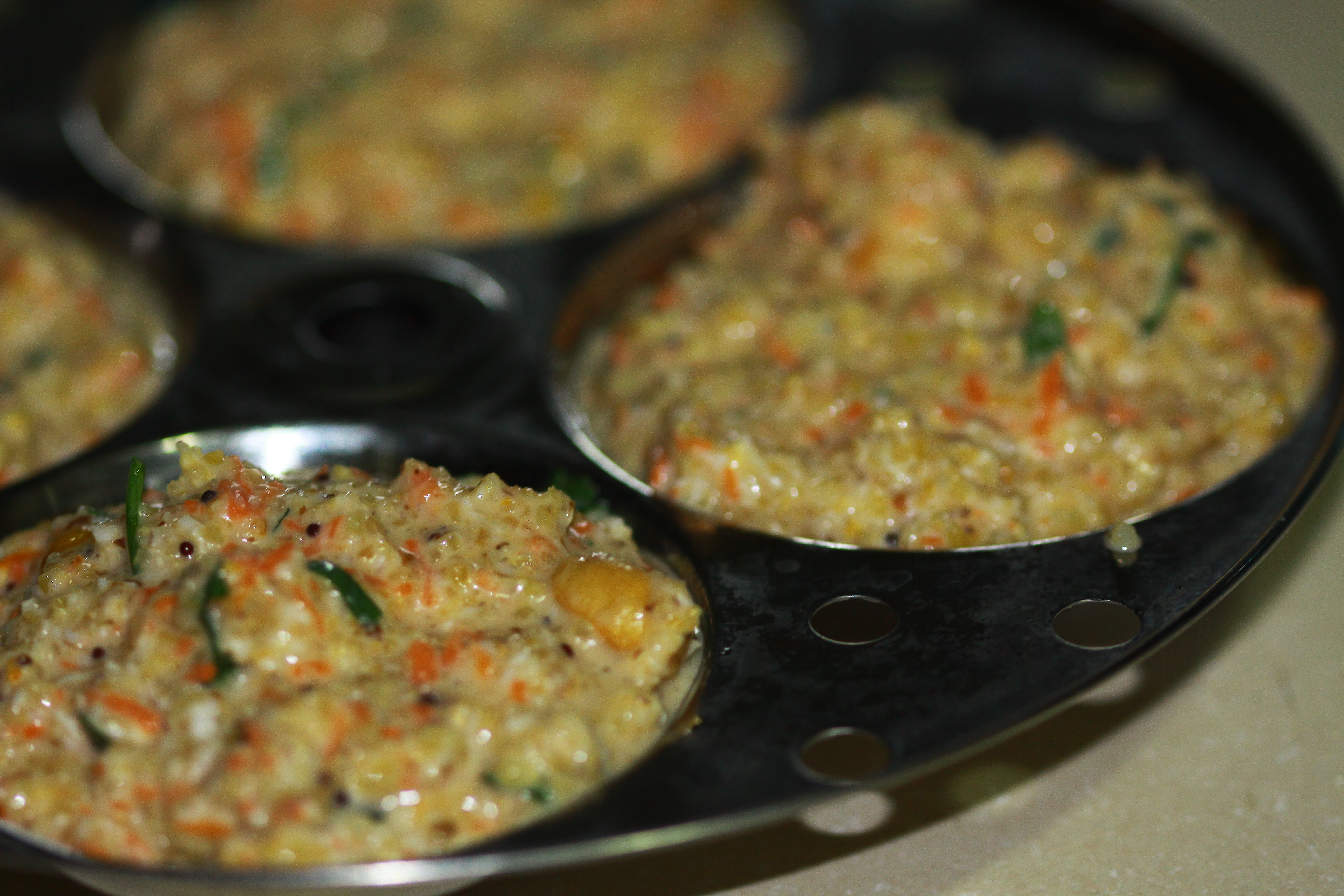
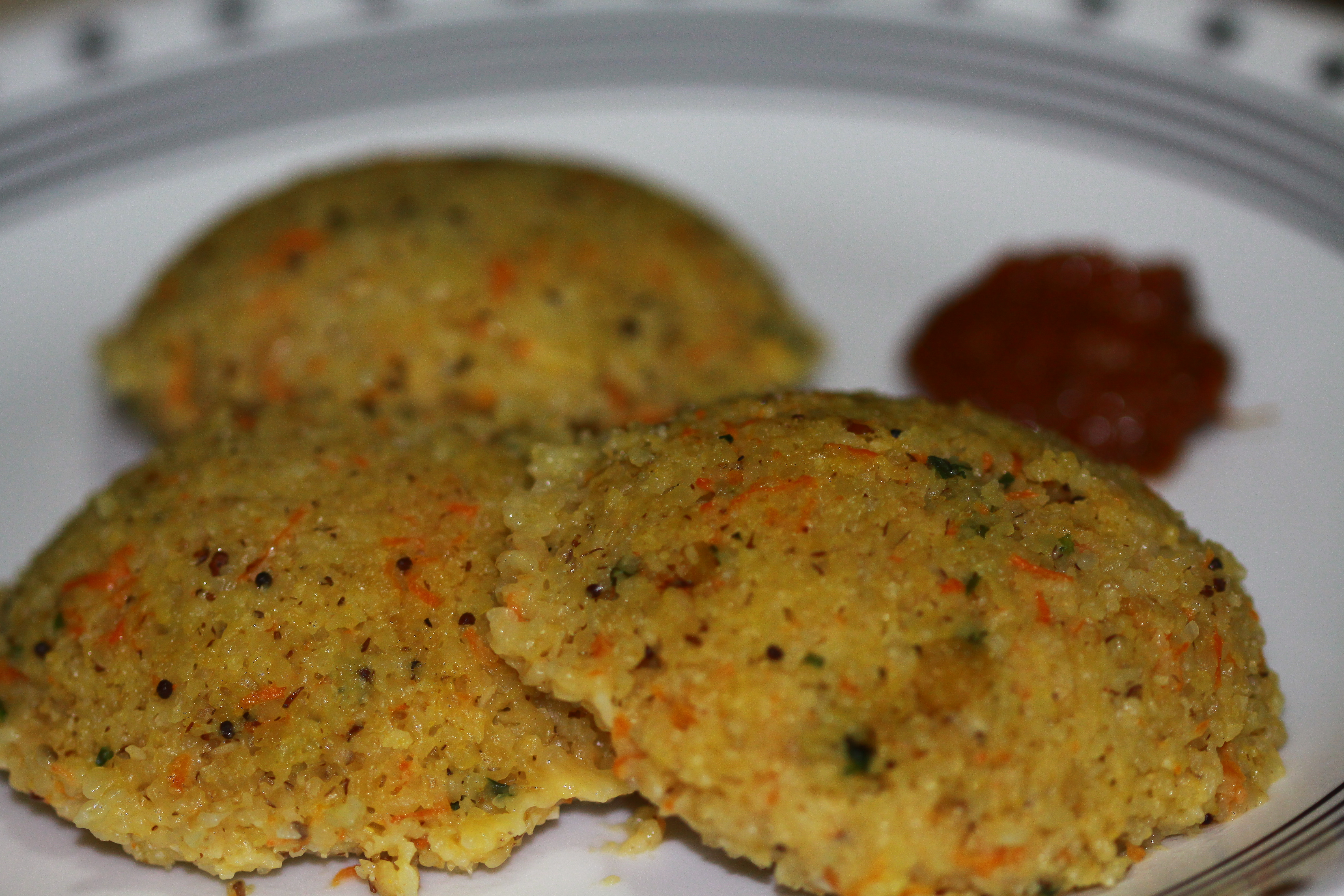
Cracked Wheat & Oats Instant Idlis.


Cracked Wheat & Oats Idlis.

In my constant endeavour to find meals that are low in calories but on the other hand rich in protein and fiber, I picked out this packet of cracket wheat from the global store I regularly visit.  I did not pick out the Indian brand but from the meditteranean brand “Sadaf” which brings out this good quality cracked wheat. They are number 1, 2 and 3 based on the coarseness of the wheat grain. I bought no 2 as I did not want the grain to be far too fine and refined, or too big to bite. I am aware that cracked wheat is an excellent source of  nutrition and fiber and so I wasted no time there.

What is Cracked Wheat???

Cracked Wheat is a wheat product made from whole raw wheat kernels which are crushed or cut into smaller pieces. There are a large number of uses for cracked wheat, and the food makes a popular dietary supplement  in many cultures. Many grocery stores carry cracked wheat, which should be stored in a cool dry place until use so that it does not go rancid. If not used within one year, cracked wheat should be discarded.

Because cracked wheat is made from whole wheat berries, it carries a great deal of nutrition and fiber since it includes the fiber and nutrient rich outer bran and germ of the wheat. For this reason, it is often added to healthy diets, especially those eaten by people who are concerned about heart / diabetic health. Other whole cracked grains may be used as well, for variation in flavor and nutrition.

INGREDIENTS:

1 cup Coarse Cracked wheat

1 cup Steel Rolled Oats  oats.

1 Medium Carrot grated fine.

2 Tbsp Dry Coconut.

Salt to taste.

Hing

2 Cups Sour Buttermilk. (PLEASE SEE NOTES BELOW)

Finely Chopped Cilantro.

1 Tsp Baking Soda.

Season:

Mustard.

Curry Leaves.

Hing.

Cashew Pieces.

2 Tsp Bengal Gram.

2 Tsp Peanuts.

PREPARATION:

  • Take a dry kadai and dry roast the rolled oats until  you get the pleasant aroma.  Place in a large mixer.
  • In the same kadai, dry roast the cracked wheat for 3-4 minutes and add to the mixer. Pulse for a few seconds. Measure it and you will find it comes to almost the same two cups you started off with.
  • Take a wide mouthed vessel and add the pulsed powder.
  • Add finely grated carrot, finely chopped cilantro, salt, hing, baking soda, dry coconut and mix it lightly.
  • In a seasoning kadai, add 1-2 tsp oil and when its hot, add cashew, peanuts, bengal gram, mustard and then the curry leaves.
  • Allow the seeds to cackle and add it to the bowl.
  • Now add the 2 cups of sour buttermilk little by little and mix it in.
  • It should come to a slightly runny consistency but not too much. Adjust the quantity of fluid for the desired consistency.
  • Allow it to sit for 10 – 20 minutes. By now, the cracked wheat and the oats, absorb the water and it becomes slightly hard.

  • Grease the idli plates and just before spooning it on to the idli moulds, dilute the batter with a little water and then pour on to the plates.
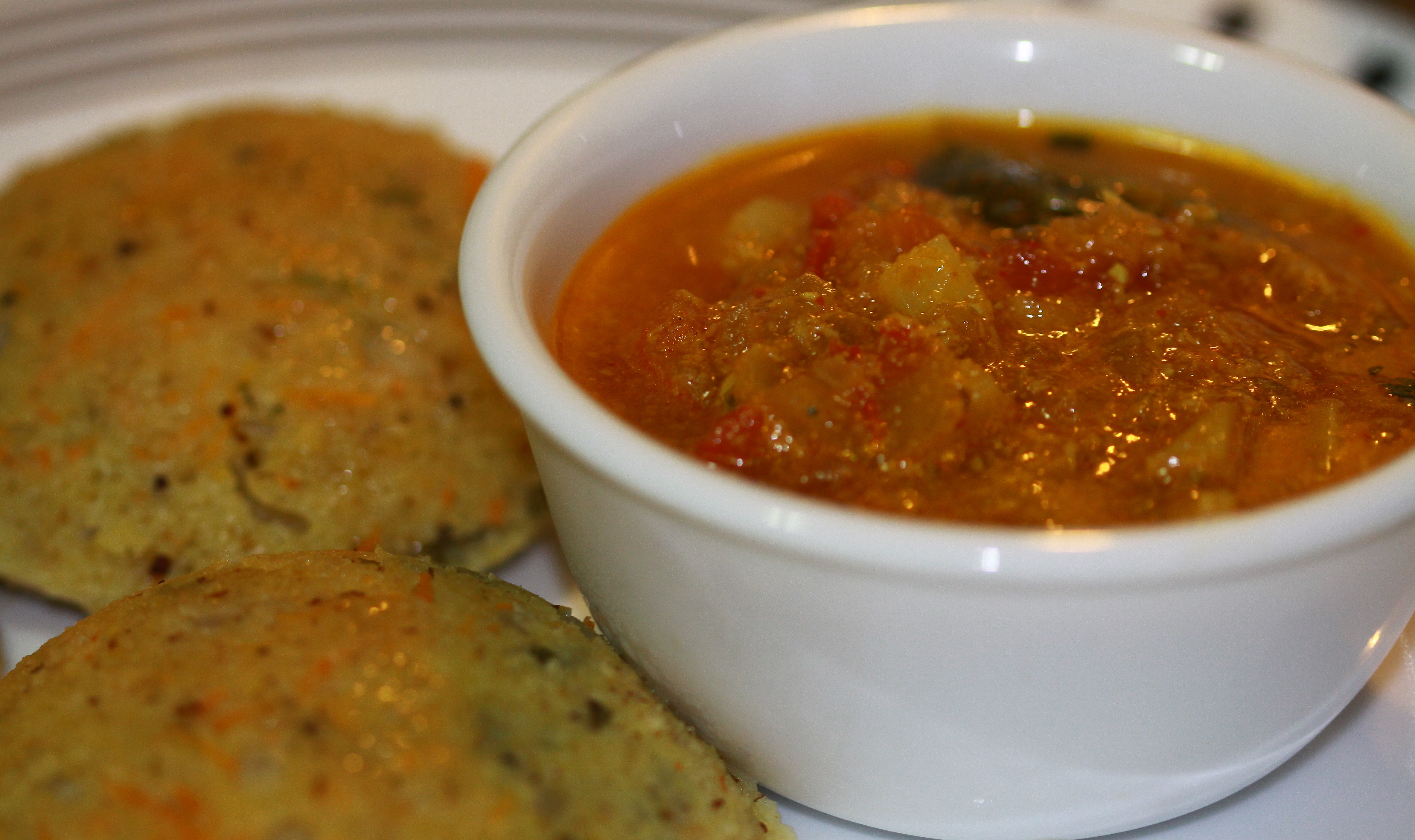
  • Steam for about 10-12  minutes and remove and store in the casserole to serve HOT with Andhra Tomato Till Chutney.


HINTS:

  • I use good quality steel rolled or old fashioned oats from Whole Foods. You would probably not great results from quick cooking oats etc from stores like Walmart etc. I have seen that the oats from Walmart etc crumble very easily and dont hold on to their texture.
  • My cracked wheat is SADAF brand of coarseness 2 from an international foods store. SADAF  is pretty much available in all leading indian stores.
  • Secondly moderate the amount of buttermilk and keep the batter just as thick as idli batter and NOT runny. If your cracked wheat and oats take only 1 1/2 cups of buttermilk, you dont have to add the 2 cups. Please watch the consistency and keep it thick, if you find its too thick, you can always add a few tablespoons of buttermilk jst before adding to the idli plates.


Side Dishes for Rotis/Dosas/ Naan.

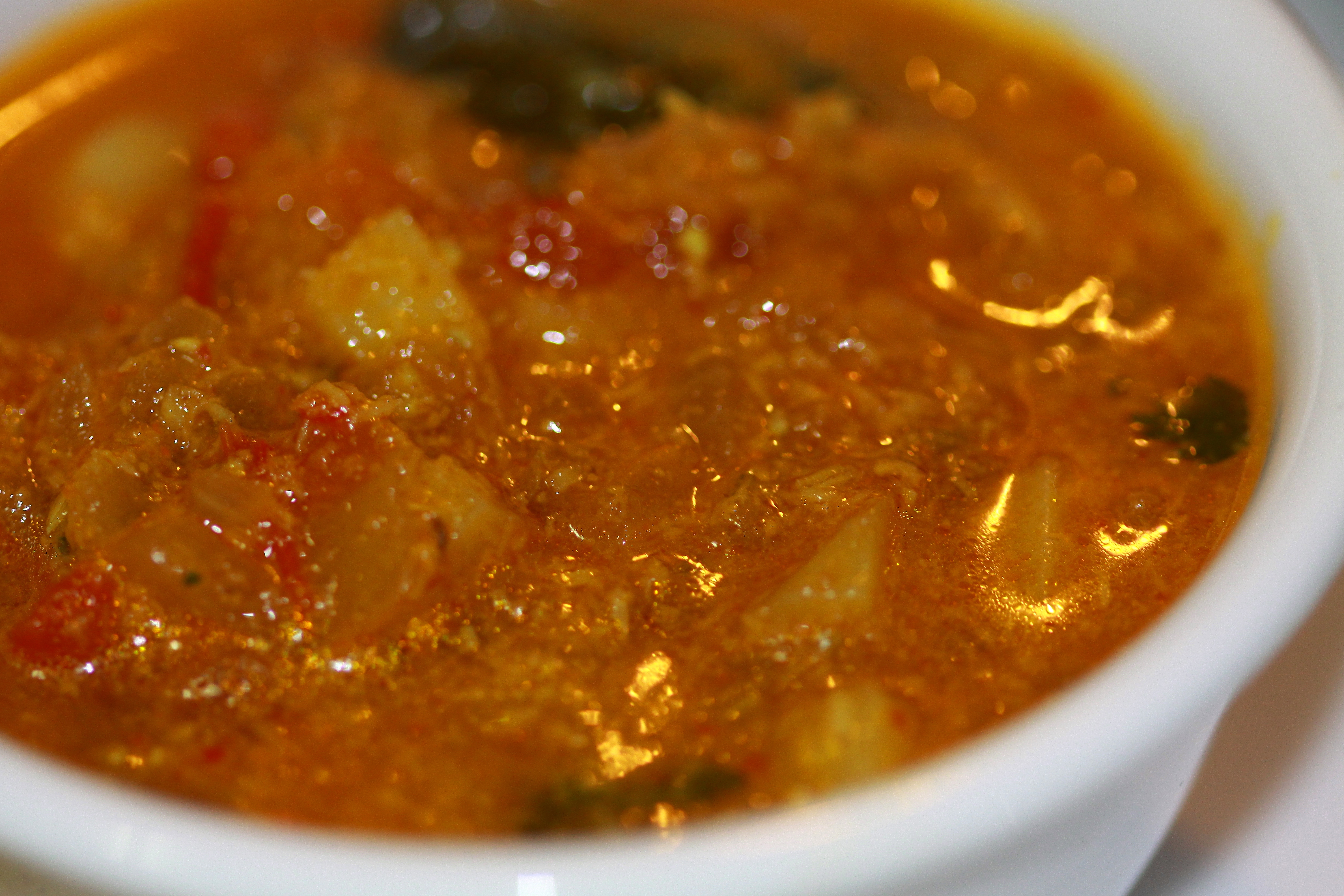
Spicy Chettinadu Kurma – Spicy Sidedish for Aapam.

Aapam and Kurma has been a combination of sorts  a marriage made in heaven, spongy white silky pieces of aapam dunked in spicy fragrant kurma and the meeting of the softness of the aapam and the fiery spice in the kurma, and the day is made. My first ever taste of Aapam and Kurma was in a restaurant in Madurai,  nothing so special as to remember the name of the eatery…but the memory of the tastes remain. I have never ever had such tasty kurma since then. It was spicy, fiery, a little tangy with a tinge of sweetness as an afterthought! I have never had the recipe for it, until the one Aachi posted on her site. It does come real close to the kurma that I had in the restaurant so many years ago. Its amazing when an aroma, or a bite can transport you in a flash to a moment many years ago, and a bite of this Kurma did just that…Took me to the cold rainy day, when my friends and I, took shelter in a wayside hotel near the bus stand in Madurai, and ordered a plate of Aapam and steaming hot Kurma and Chilli Parotta. Now thats another dish, that is very special to me, but the story remains to be told, for another day!!!


INGREDIENTS:

1 Big  Red Onion or 3  Medium onions.

1 Potato.

1-2 Big Vine Tomatoes.

6 Red Chillies.

4 Tbsp Grated Coconut.

6 or 7 Cashew nuts .

1 inch Cinnamon.

3 or 4 Cloves.

1 1/2 Tsp Fennel Seeds .

PREPARATION:

  • Grind the coconut, cashewnuts and 1/2 tsp of fennel seeds and red chillies  to a fine paste with a little water. Keep the water to a minimum adding it only when needed.
  • Cut the onions, tomatoes and potaotes in to small pieces.
  • Microwave the potatoes on HIGH for 3-5 minutes. Set aside.
  • In a kadai add 2 tsp of oil and when its hot add cinnamon, cloves, fennel seeds and curry leaves.
  • When you feel the aroma of these spices wafting in the air, its time to pop in the finely diced onions.
  • When its sauteed enough, add the semi cooked potatoes, and in a few minutes the diced tomatoes along with the pulp and the juices.
  • Stir in well with a little salt and turmeric and allow to cook well for about 3-4 minutes.
  • Add the ground coconut paste and then follow with  3 cups of water and stir well.
  • Add sufficient salt and allow the gravy to cook well.
  • When the gravy comes together and reaches the required consistency switch off the flame and garnish with fresh chopped cilantro.
  • Serve Spicy Chettinadu Kurma with Aapam or Piping Hot Puris or Soft Parathas.
  • I served mine with Healthy & Instant Cracked Wheat & Oats Idlis.

Side Dishes for Rotis/Dosas/ Naan.

Eggplant Fry flavoured with ginger-green chilli paste.

Eggplant Curry in Ginger-Chilli Paste.

In my everlasting quest for newer and flavorful varieties of making the lowly eggplant, I came across this simply yet top rated in flavour recipe from a good friend L. The first time ever I tasted it was when she made it and brought it home, piping hot. I had made spicy Lemon Rasam that cold winter day and the combination with this amazing eggplant side was a marriage made in heaven! I immediately guessed that the secret ingredient was Ginger! There are really two thoughts on  this aromatic rhizome – People simply love its sweet yet warm spice and the other group just dont like the taste of it. In my school of thought, its more of a medicine for me – Warm, spicy and an excellent aid in digestion. Some of the best indo-chinese recipes base their taste on this one ingredient.  This is a simple preparation with a good  punch of taste and flavour thrown in, and can be prepared in less than ten minutes! And yes, I am talking about the Japanese Eggplants that are super easy to cook!!!

INGREDIENTS:

3 Fresh Japanese Eggplants.

4 Green Chillies.

2 Inch Ginger Piece peeled and diced.(Ginger has to be slightly prominent taste)

4-5 sprigs of Cilantro Leaves.

Oil.

Salt

Turmeric.

Seasoning:

Mustard.

Curry leaves.

Urad Dhal.

Hing.

PREPARATION:

  • Wash the eggplants well, pat them dry with a kitchen towel.
  • Dice the eggplants in to 1 inch long pieces. As they are the japanese variety, they cook very fast so if diced in to small pieces tend to turn mushy.
  • Put them in a container with water to avoid oxidation.
  • Meanwhile, puree to a fine paste the ginger, green chillis and the cilantro. Add the ginger first, the green chillies and then finally the cilantro  in the mixer jar.
  • The cilantro tends to overpower the taste to keep the quantity low to enhance the flavour of the aromatic ginger root.  Do not add much water but if necessarily needed, probably a teaspoon or so. Set aside.
  • In a flat non stick kadai, add oil and the ingredients for seasoning. When done, add the ground paste and saute for a few minutes until the raw smell disappears. The resulting aroma is wonderful and fragrant.
  • Pop in the chopped eggplants and add little or no water.
  • Cook until the eggplants are soft.
  • Eggplant Fry with ginger green chili paste is ready to serve with phuklas or rotis or even better with steaming hot rice and Lemon  Rasam.


Festivals & Significance

Navarathri Golu – 2010 & Significance of Marapachi Dolls.

Navarathri Golu 2010

This year, I have my second daughter is who just turning one this month on the 24`th, so planning for Golu was something  I had postponed to the very end of the day!  I had all the paraphernalia out and I was wondering If I was really out to put myself through monitoring the little one all through the day…and finally It dawned on me, that I really had to do it this year. I wanted the fun of watching her out of the corner of my eyes, to see if she is getting anywhere close, while she watches me closely so she can pounce on the little wax squash that I had added to the vegetable collection and disappear with it!!!. I wanted to experience the joy of seeing her eyes light up when she finds a little gap between the chairs that I have used as reinforcement, just before the golu shelves, and tries to reach out and climb the stairs!!! I wanted this as I know she will be growing up to be a sensible toddler very soon….and I am enjoying every moment of it. I hardly get to chant my shlokams in one contiguous  slot, nor complete my chores at any point of time…but I am enjoying this minute, with my little baby…and loving every moment of it!!!

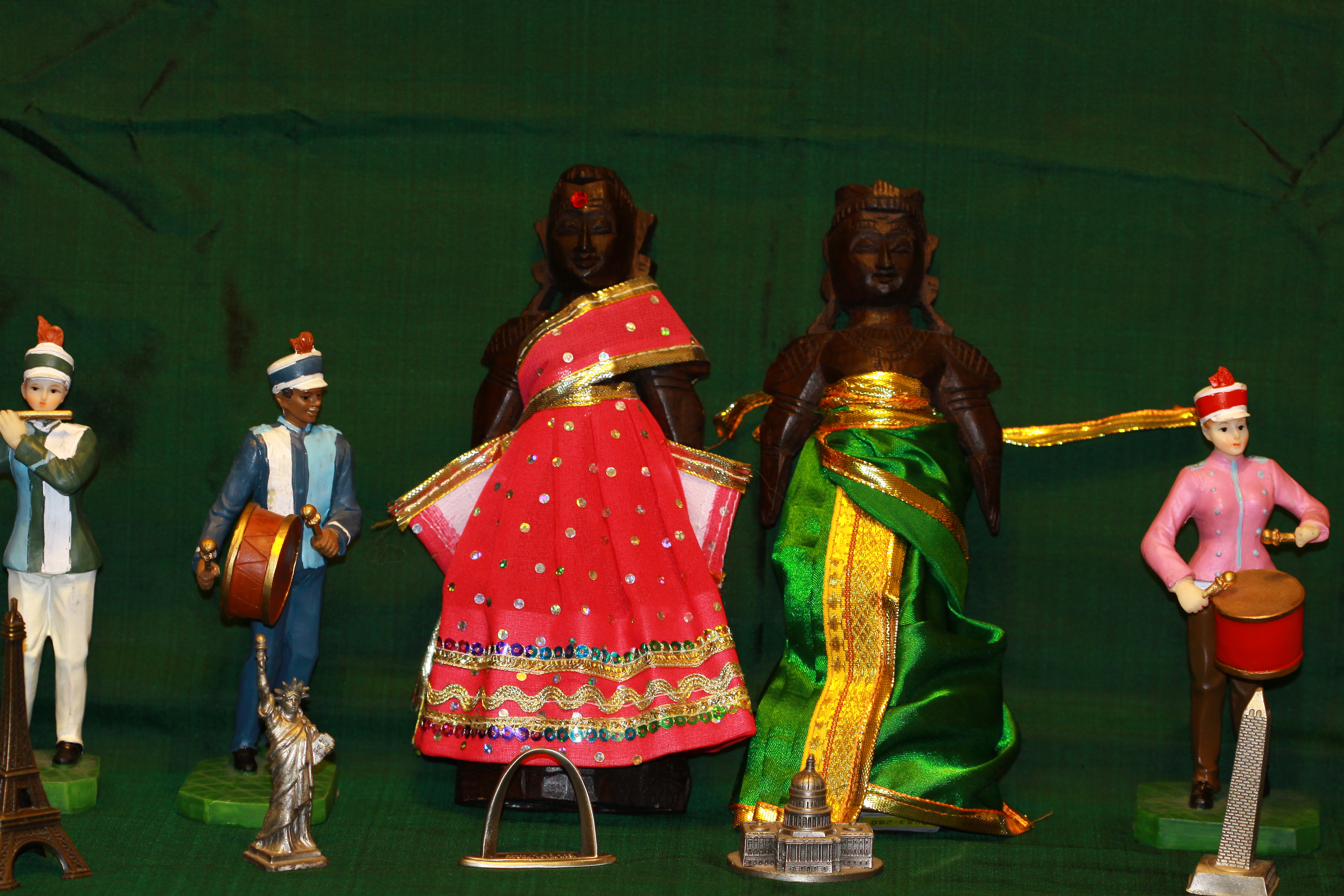
Marapachi Dolls - Traditionally attired in wedding finery!
Marapachi Dolls.

Every time there is a festival or a special day marked by a religious custom, my daughter would want to know the  reason and the significance of that festival, which led to Significance of Navarathri . Many times this leads me to soul searching for the same . I firmly believe in the Hindu culture and that every ritual has been evolved with a very scientific reason, within the premises of the traditions at that time. The Marapachi Dolls are one such tradition which form one of my prized possessions, of my wedding gifts from my mother`s home.   The Marapachi Dolls , are a pair of male and female dolls, carved out of this reddish wood called “Marapachi” have been a traditional part of every wedding , which is gifted by the parents of the bride.   Tradition dictates that the bommais are brought out in display, every year, at the time of Navarathiri. The bride’s parents present these dolls to the bride and initiate the yearly tradition of Navarathiri Gollu in her new home with her husband. These bommais come as couples dressed in their wedding attire, signifying the start of the bride’s Gollu collection, which then grows over the years with the addition of various clay dolls signifying various Gods and Godesses.

Marapachi bommais are special dolls from Tirupathi, the land of Lord  Venkateshwara. Some explain the word Marapachi as a special kind of
wood that has medicinal values and hence the name Marapachi Bommai .  And like any age-old tradition, you can’t help but wonder, what is the significance of  Marapachi Bommais? Some believe that these dolls were presented to the bride and the groom at the time of marriage as toys for the couple. After all when two people, rather two children, get married at the age of ten what better gift than toys to keep them happy. So, it is reckoned that they were truly for enjoyment purposes to please the little couple. Yet another lore had it that these dolls dressed in their wedding attire helped in capturing the moment in the days where technology was clearly non-existent. In the absence of pictures, what better way to remember the way you looked when you were married !! That seemed to me , to be a lovely explanation for  this beautiful custom.

(Source : Shalu Ramachandran)

Chutneys / Thogayals & Podis.

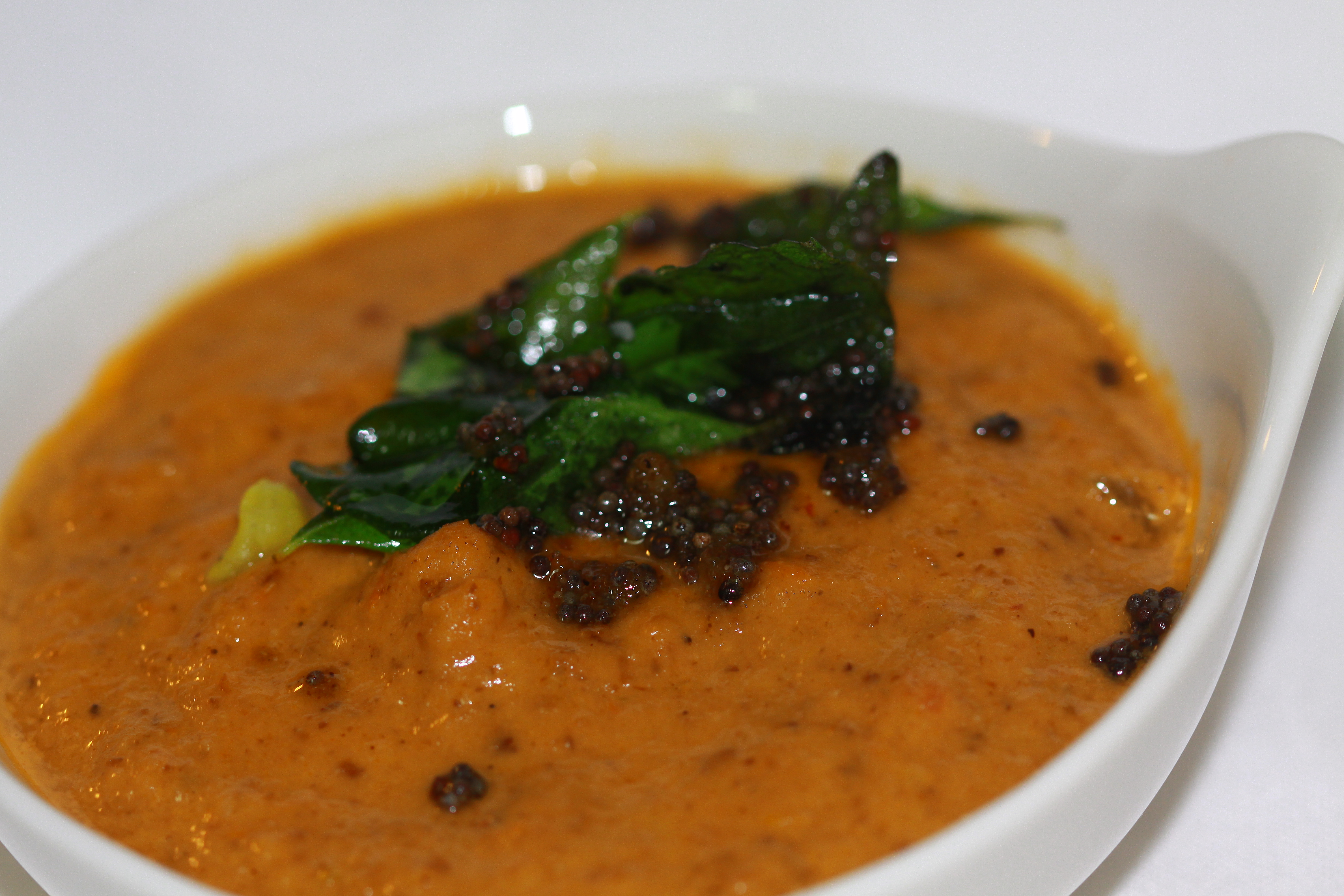
Andhra Style Spicy Tomato Till Chutney.

I have always steered clear of spicy fiery Andhra Cuisine, as we generally are used to very normal levels of spice in my home.  In my many trips to the US and with so many friends from this neighbouring state, it is but natural for my cooking to be influenced by friends from here. I became more open to trying out new cuisines here in the US, then why not experiment to cuisines and cultures, closer to home, which has been nourished and perfected with years and  years of cooking with patience and love?

Many of my friends wonder how my spice levels are dismally low??? I tasted their cooking, learnt the secrets of it, by tasting and sometimes by merely watching them at their most perfected art – The art of cooking!!! Now I am pretty comfortable with the idea of tossing a dozen red chillies in to a chutney or a thogayal, or even a Kara Kuzhambu, but only if the recipe demands it, as increased spice levels, are generally not considered healthy..I had tasted this spicy Andhra Chutney at a restaurant and had been wanting to try it for a very long time. Sailu`s post, tweaked here and there,  urged me to put my methods and madness to practise and the results were very delicious spicy, yet tangy chutney, that wanted me clamouring for more!!!

INGREDIENTS:

4 Vine Tomatoes.

2 Tbsps Dry Roasted White Sesame seeds.

2 Green Chillies.

4 Red chillies.

1/2 Tsp cumin seeds.

1 Tsp Bengal Gram.

1 1/2 Tsp Urad Dhal.

1 small piece of tamarind softened or 1 Tsp of Tamarind Paste.

1 Tbsp Dry Coconut/ Fresh Coconut.

Salt.

2 Tsps oil

For Seasoning:

1 tsp oil.

1/2 Tsp mustard seeds.

Hing.

Fresh curry leaves.

PREPARATION:

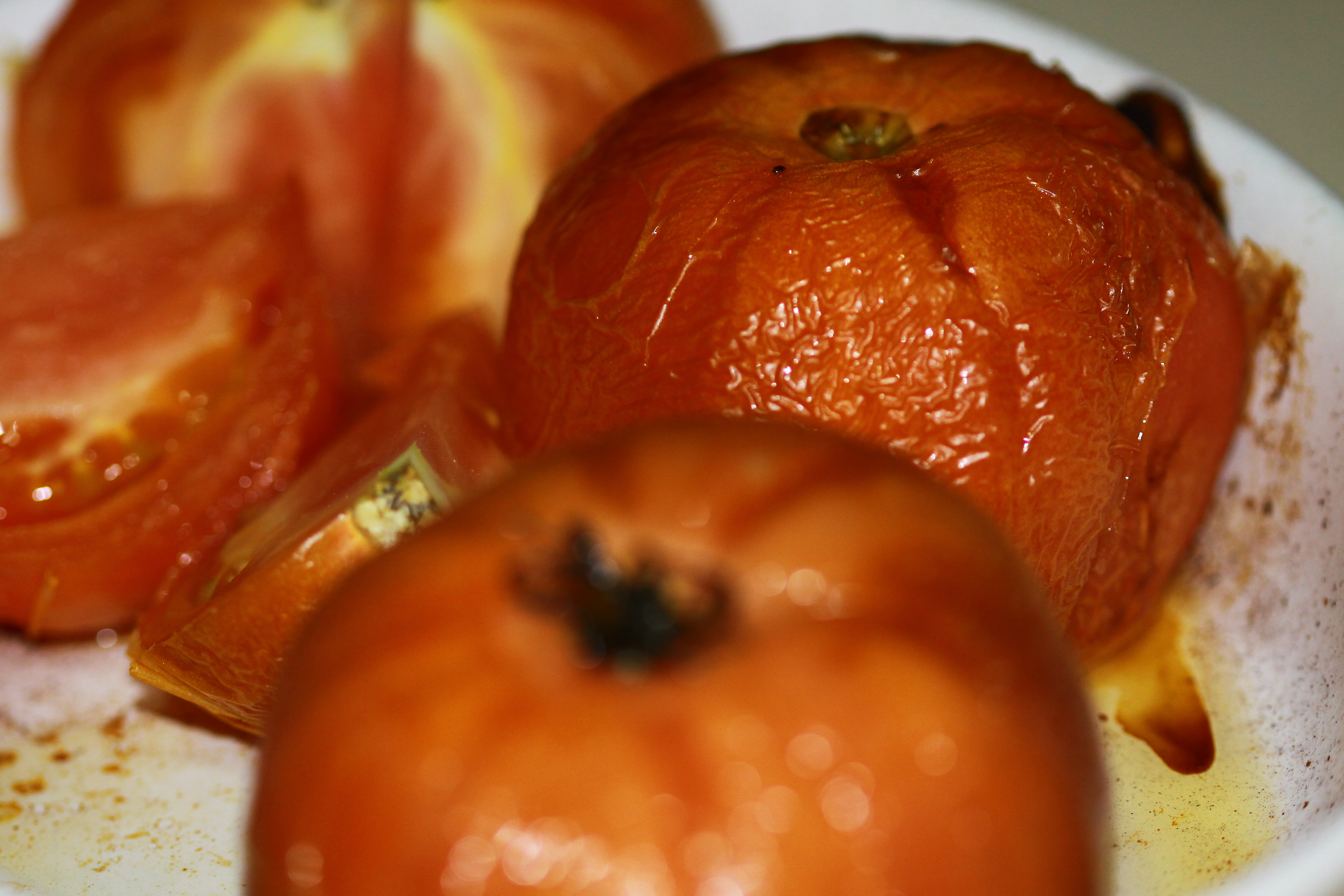
  • Preheat the oven to 400 F and pop the tomatoes inside for around 10 – 15 minutes. In  my opinion, this step is purely optional, but valuable in contributing added flavour to the chutney. Fire roasting for a few minutes can also be done. Set aside to cool.

Roasted Tomatoes

  • Take a dry tawa and dry roast the sesame seeds until you can smell the aroma of the seeds. Take care not to burn them. Set aside to cool.
  • Heat oil in the same tawa and add urad dhal, bengal gram, cumin seeds and the dry red chillies until the dals turn in to a light brown colour. Finally add the dry coconut, pinch of hing  and fry for another couple of seconds and remove from tawa. Set aside.
  • In the same oil, now add the green chillies and roast for a couple of seconds. Remove and set aside.
  • Now add the fire roasted/ oven roasted/ raw tomatoes that has been cut in to pieces and the tamarind piece . Allow for it saute well until all the water  evaporates. Allow to cool.
  • Now grind the roasted cumin, dal mixture along with the dry roasted sesame seeds. Once they are well ground, add the roasted tomatoes+ tamarind, green chillies and salt .
  • Transfer to a serving bowl and season with curry leaves, mustard, urad dhal and hing.
  • Serve Andhra Style Spicy Tomato Sesame Chutney with Cracked Wheat & Oats Idlis or Crisp & Tasty Adai.


Tips

5 Minutes to Sparkle Your Silverware…And Keep them that way!

Sparkling Silverware...

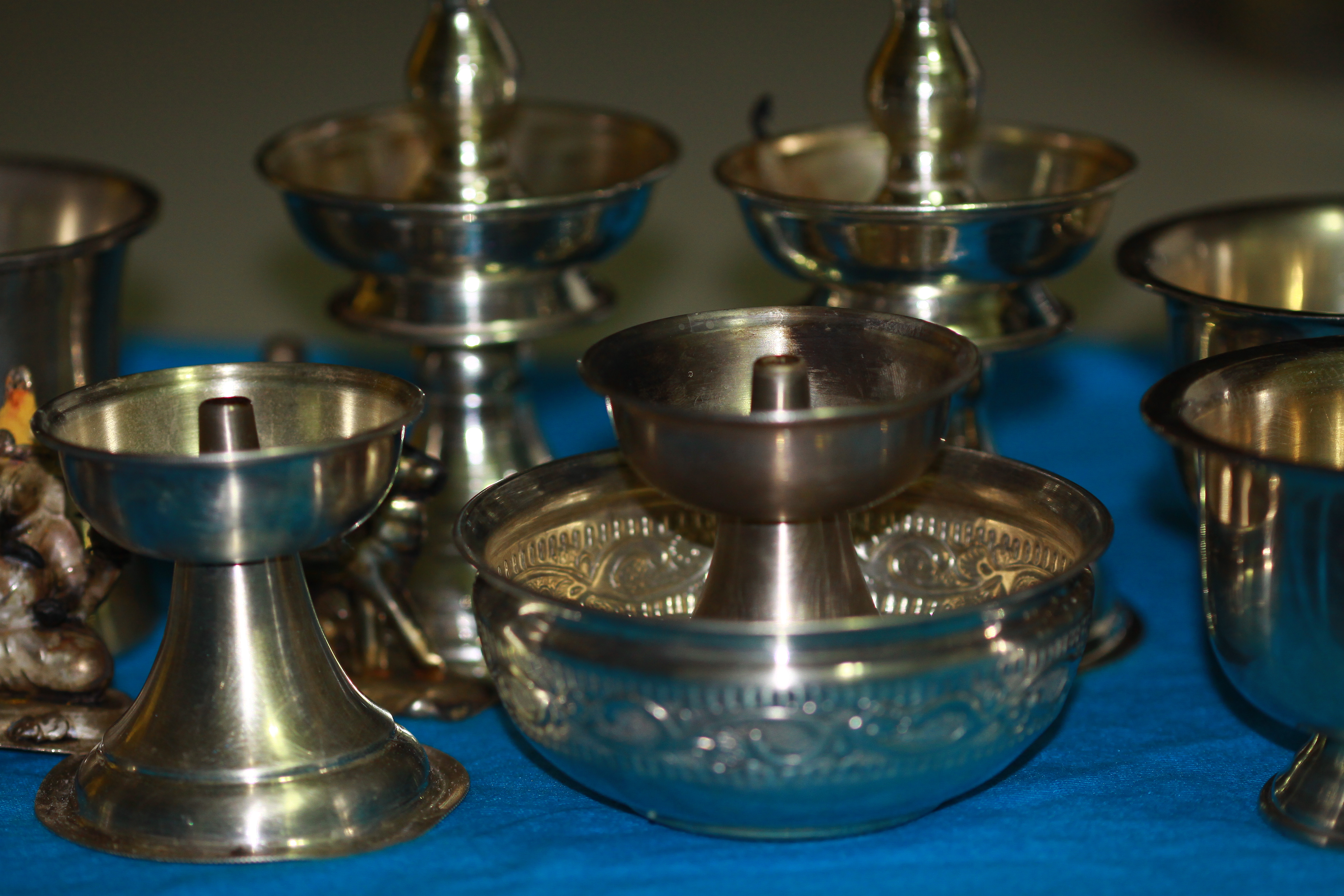
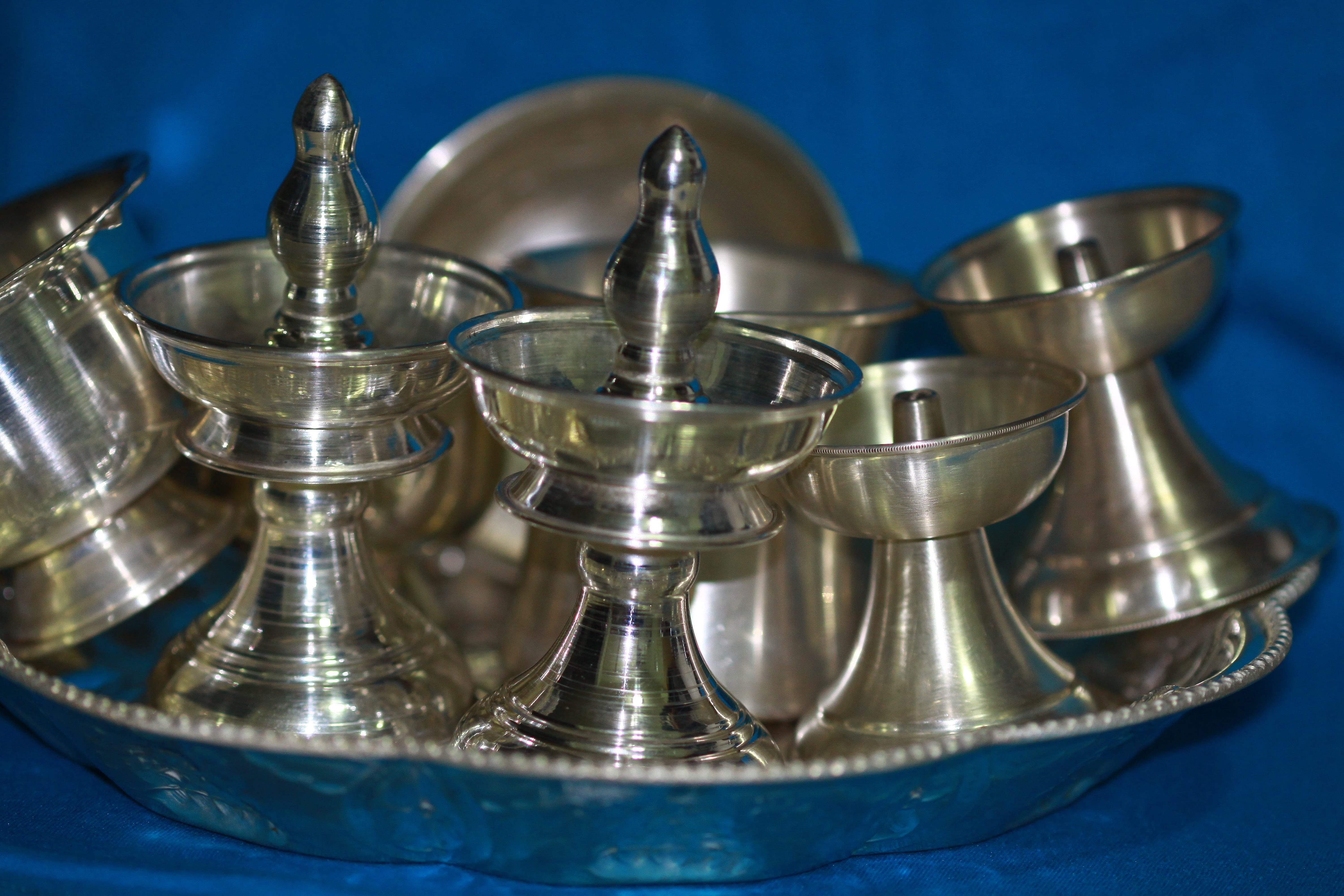
My love with my silverware started actually after coming to the US.  All my silverware that was bought during my wedding was locked and stored in safe keeping, getting tarnished with age and dust.  When I saw my aunt and her impressive array of little silver articles that she beautifully uses for her pooja, I decided there was really no point in allowing them to simply stay put in locked draws! I brought them out and started using them in  my everyday pooja and of course for special occassions like Navarathri, Pongal, Deepavali, Ganesh Chathurthi etc.

My initial attempts at keeping my silver intact was to use the lowly Colgate Paste. I would apply it to all my silver and then wash them with the vessel detergent and wipe them off to a polish. This of course, never took off the sulphides that were glued on to the silver. Then I tried using Rooperi, but the fumes from the chemicals was way too strong for me. Then I saw blogger friend Shanthi`s   post on silver polishing and cleaning and I was struck with awe at the simplicity of it all…No fumes, no chemicals, no scouring, in all no sweat.

Silver Before Polishing.

YOU WILL NEED:

A big pot of water.

10 – 12 pieces of Aluminium Foil.

2 Tbsp Baking Soda.

Soft Clean Cloth.

Cling Film.

PROCEDURE:

  • Take all your silverware and remove all traces of oil, kumkum etc with  a soft tissue. Place them on a dry tray.
  • Keep a clean soft cloth ready for later use.
  • Try to use a pot exclusively for this purpose as this may leave some residue on the sides.
  • Bring a large pot of water to boil depending  on the amount and size of the silverware that has to be polished.
  • Add baking soda and 10 – 1 pieces of torn aluminium foil.  (Take a square piece of foil say as large as your palm spread out and tear it in to little pieces.)
  • Adjust the quantity of foil depending on the number of vessels to be polished.

  • Silver ware in a few minutes after immersing in boiling water.
  • In a few minutes, you will see that the parts that are immersed are bright and clean and sparkling almost like new.
  • Turn them around so that all parts of the vessel are completely immersed in the boiling water.
  • Spread out a large soft cloth on your counter and pull out each silver article carefully using a pairof tongs/ long ladle.
  • If needed you could scrub your vessels again with dishwash detergent.
  • In my case they were all squeaky clean and sparkling.

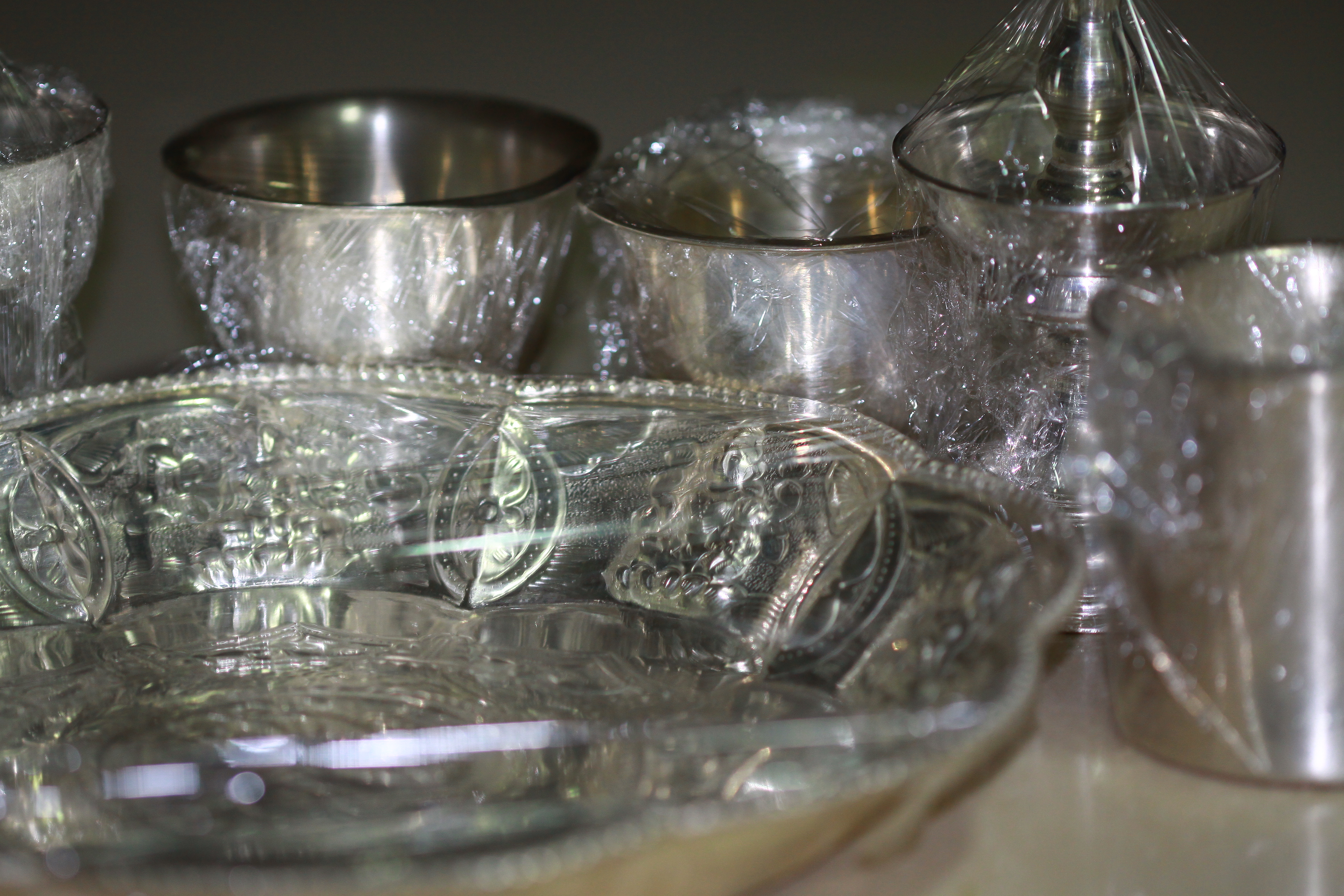
  • Wipe them down to remove all trace of moisture and when completely dry, store them in tightly wrapped cling film.
  • The next time you take them out for an occasion or a festival, they will sparkle like new.

  • Repeat once a month or whenever required.
  • The best part of this is that you use basic items found at home, free of obvious chemicals and  fumes.
  • Especially easy for items with intricate filigree work.