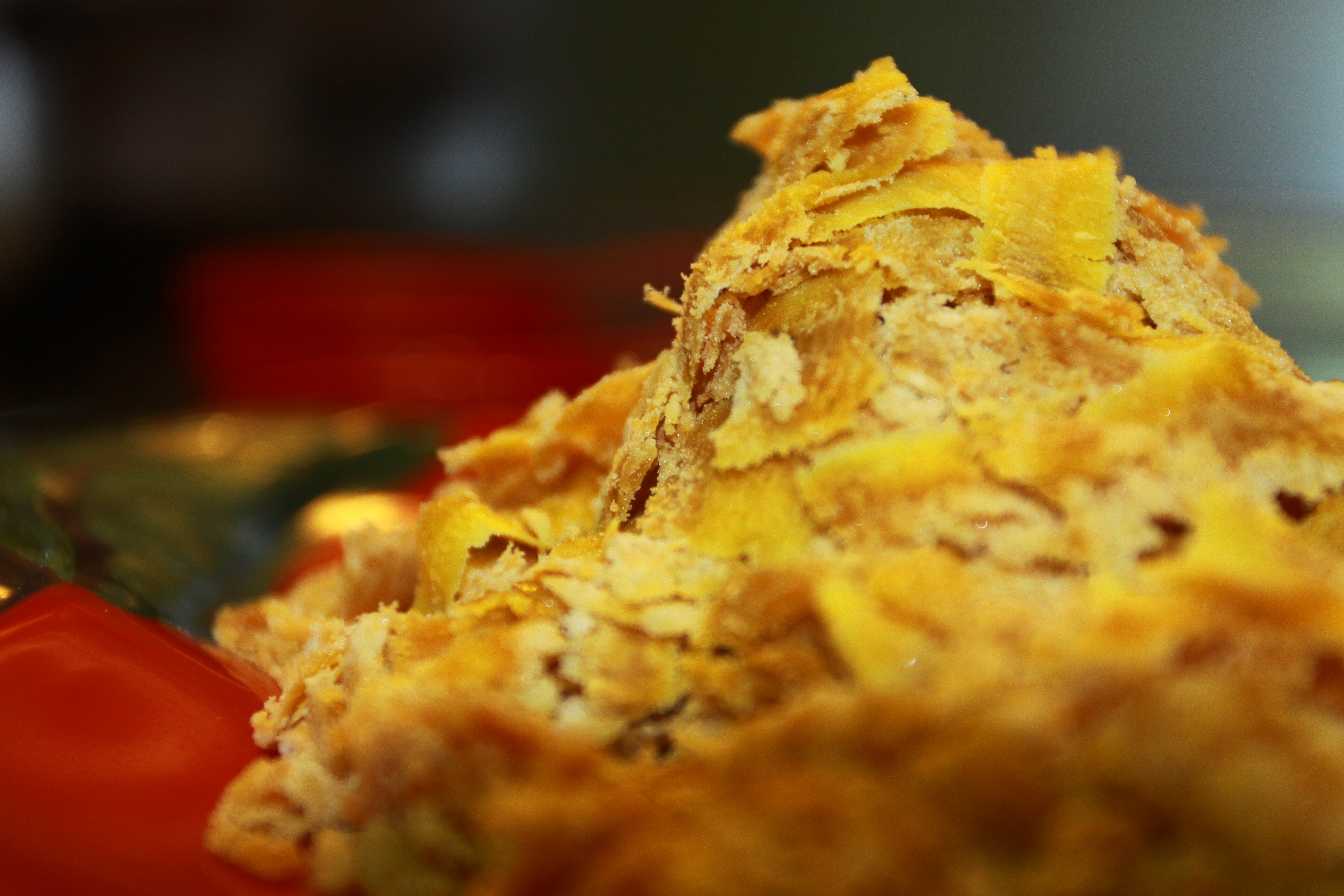
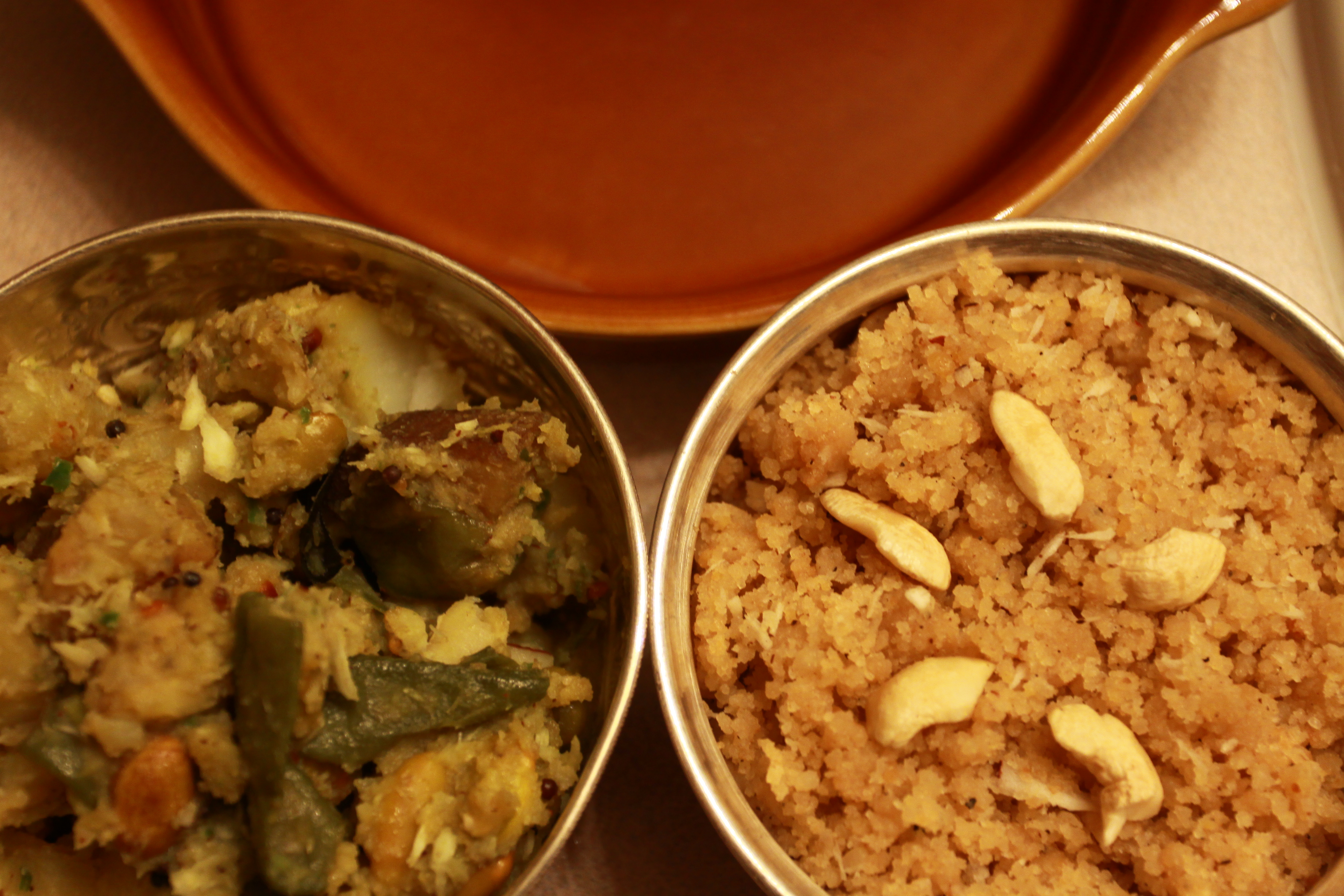
Naivedhyams/ Festival Offerings. · Sweets

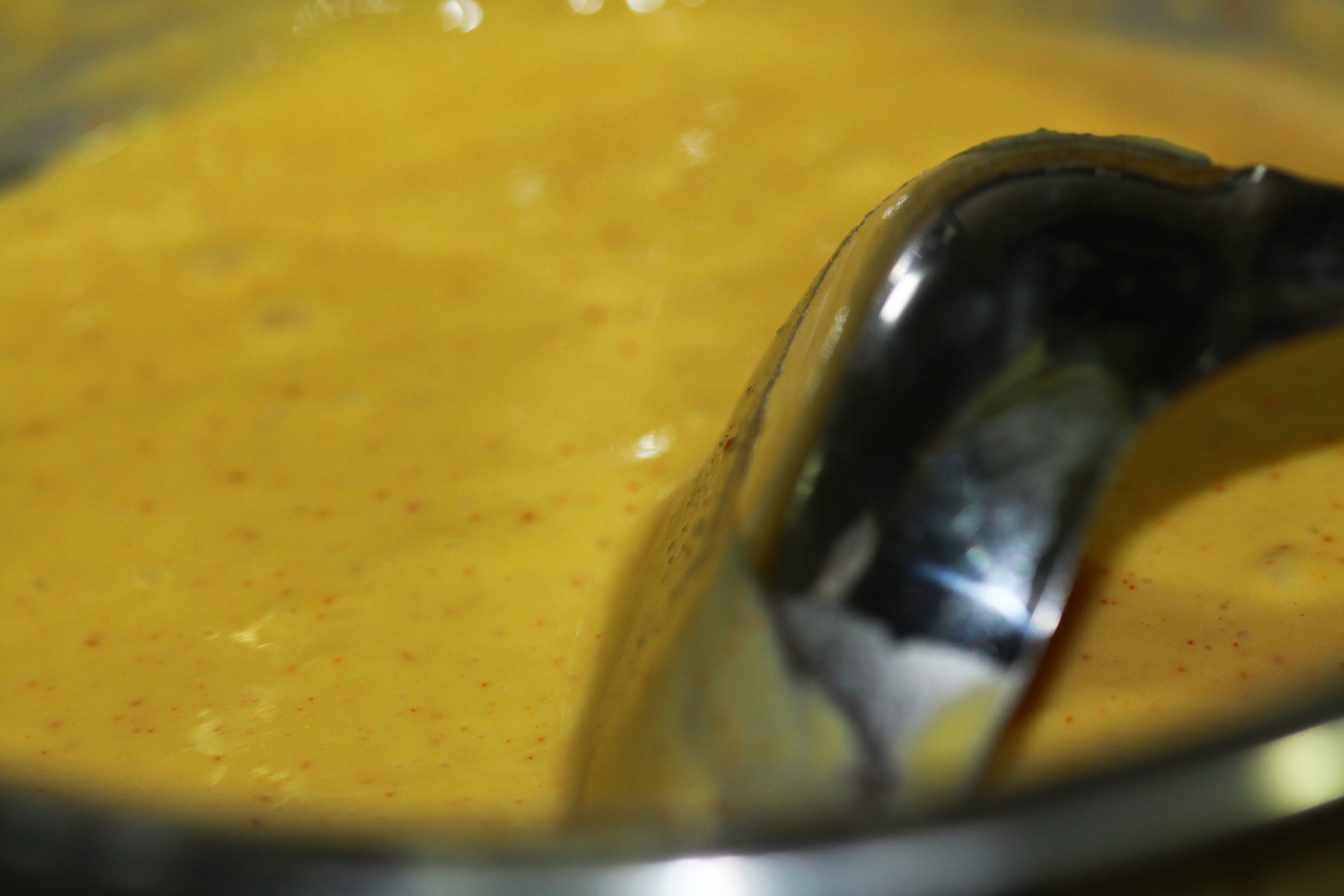
Badam Halwa (Dense Confection made with almonds sugar and saffron)
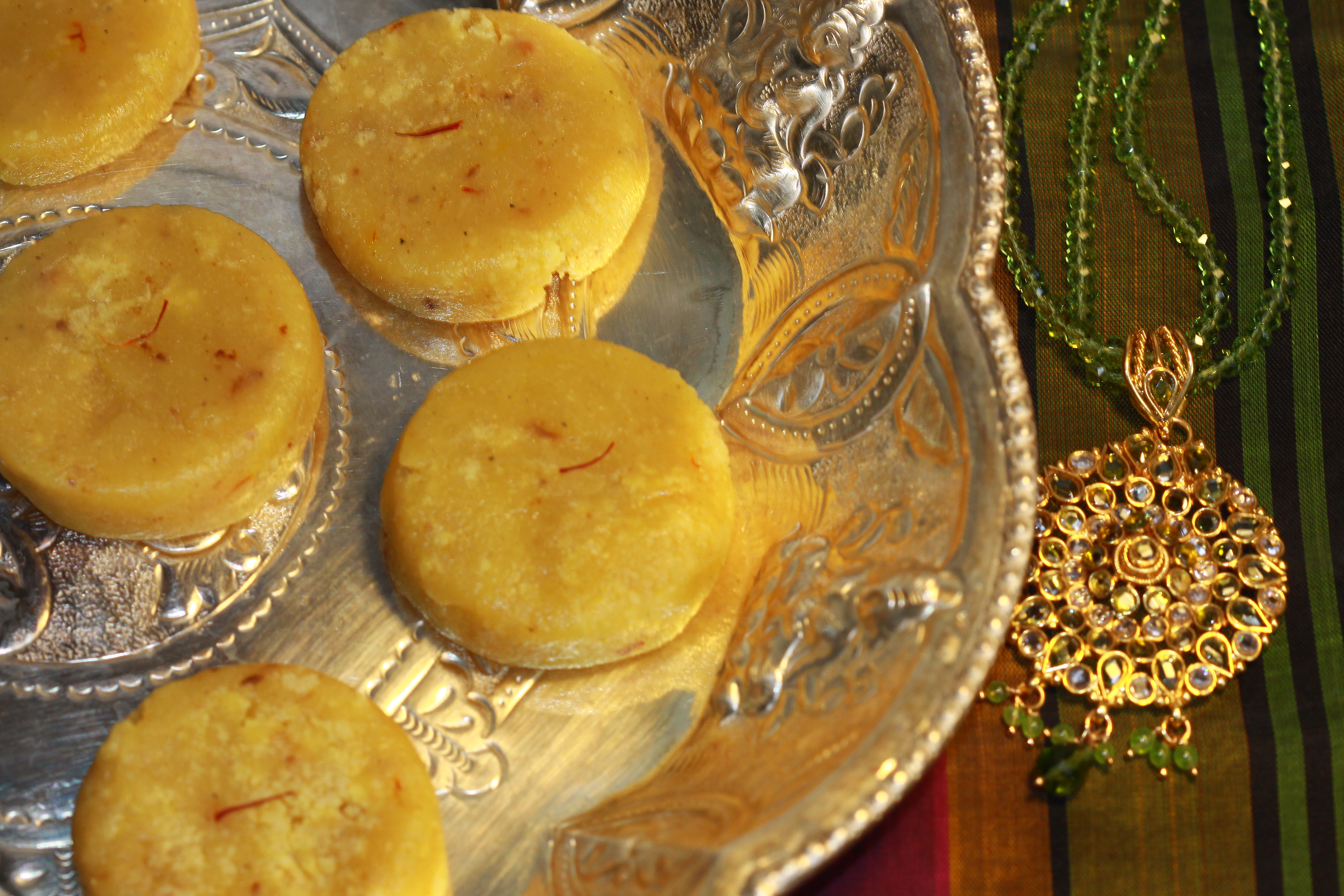
A high-fat food that’s good for your health? That’s not an oxymoron, its almonds. Almonds are high in monounsaturated fats, the same type of health-promoting fats as are found in olive oil, which have been associated with reduced risk of heart disease. In addition to their cholesterol-lowering effects, almonds’ ability to reduce heart disease risk may also be partly due to the antioxidant action of the vitamin E found in the almonds, as well as to the LDL-lowering effect of almonds’ monounsaturated fats. (LDL is the form of cholesterol that has been linked to atherosclerosis and heart disease). There is a constant need to increase the “protien” content in a vegetarian`s diet as it does NOT include chicken or fish. Well,  Almonds are concentrated in protein. A quarter-cup contains 7.62 grams-more protein than is provided by the typical egg, which contains 5.54 grams. Now how cool is that?  Munch an almond the next time you feel hungry and crave for fried snack and watch your waistline plummet.

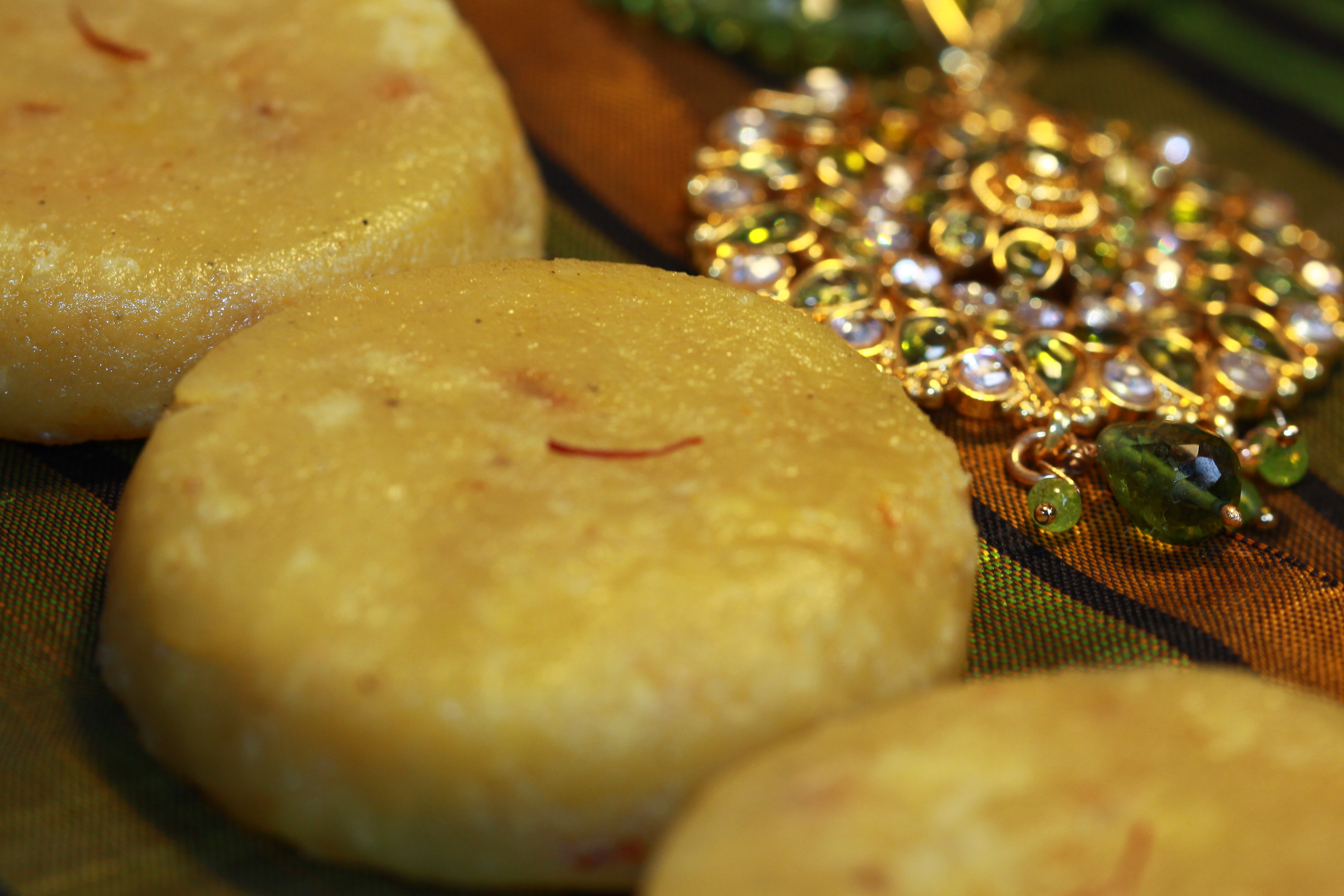
Badam Halwa has been the most favourite sweet that we make during festivals like Deepavali. Amma makes it every year around and I love the way she makes it in the shape of little diamonds that are a little harder than my version. I love the Badam Halwa from Sree Krishna Sweets, redolent in a coral- tangerine color  with the  addition of delicate saffron strands, in a smooth scoopable consistency.  There are many interesting anecdotes with Sree krishna sweets, but that we shall keep for another day!!

INGREDIENTS

1 Cup Badam.

1 Cup Sugar.

Saffron

Water to dissolve sugar.

1/2 Cup Milk.

Vanilla Essence.

1/4 Cup Ghee.

two drops rose essence.

PREPARATION:

  • Soak a pinch of saffron strands in warm milk for a couple minutes.
  • Take a wide mouthed pan and add 3 cups of water and allow to boil.
  • Measure out one cup of almonds and add to the water. After 5-7 minutes switch off the flame and keep covered.
  • When sufficiently cooled, peel  out the almonds and puree to a smooth paste with the milk. Add the milk slowly and not at one go.
  • Use a heavy bottomed pan for making the halwa.
  • Measure out the required sugar and add just enough water to cover it and set on the stove.
  • When the sugar has just melted, add the ground almond paste, saffron with the milk it was soaked in,  and incorporate the ingredients well.
  • Maintain  the flame on medium low with an eye on the halwa. This one requires constant attention.
  • After a good ten minutes or so, keep adding a spoon of ghee now and then and allow it to get absorbed by the halwa.
  • It might splutter now and then, but stirring the halwa, immediately brings this down.
  • When you start seeing the halwa leaving the edges, switch off the heat.
  • I had it to a scooping halwa consistency for one night and the next day it had considerably solidified to a beautiful creamy pliable texture.
  • I immediately used my cookie shapers and made them in to tiny little discs and decorated the little discs with delicate saffron strands.
Naivedhyams/ Festival Offerings. · Sweets

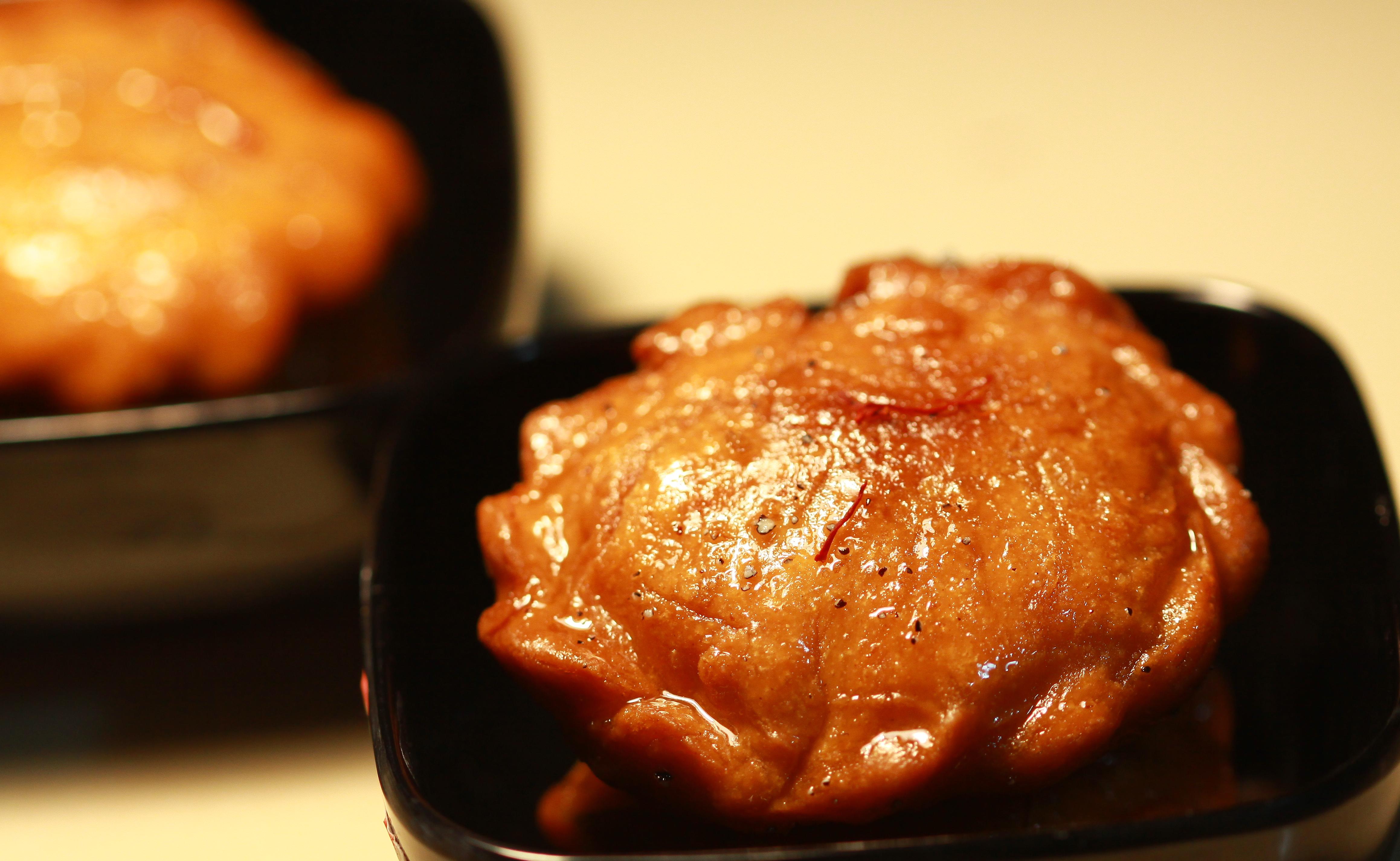
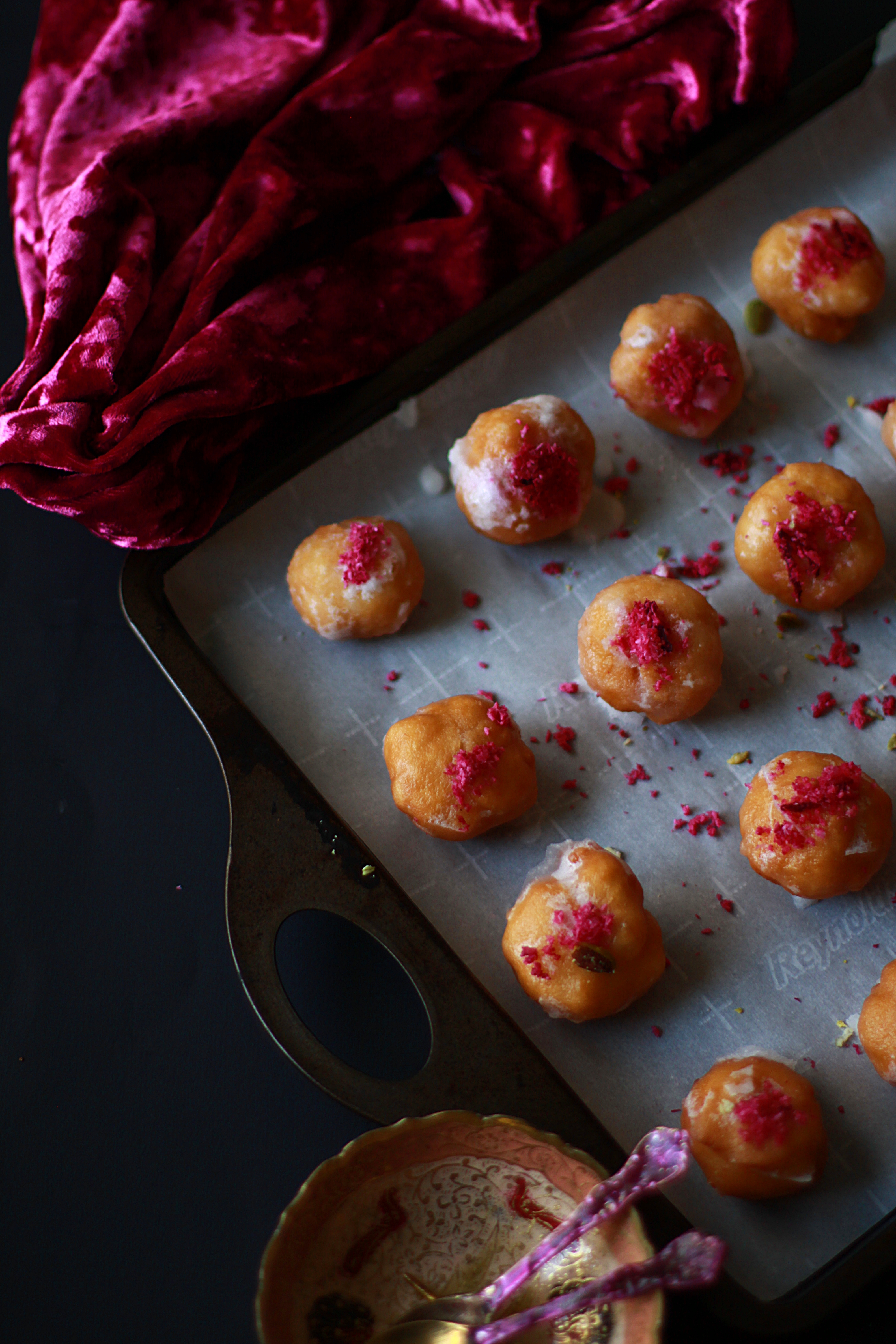
Badushah / Balushahi – Sweets for Anubhavati Second Bloggiversary!!!

IMG_5358

Two of my  favorite sweets are Badushah and Jangiri. Its a very strange pick as one of them is extremely sweet and dripping with syrup, whilst the other is very moderate in its use of sugar, flaky and dry. Yet I love these two contrasting sweets and enjoy them immensely. Badushah was a sweet I make almost very year for Deepavali and this time was no exception.  Today my little one wanted something sweet to go along with her savories and  today also  co-incides with the second bloggiversary of Anubhavati. I decided this was the occasion we were waiting for…Raks version inspired me last year and its a winning formula so Ive stuck to her proportions!

INGREDIENTS:

1 1/2 Cups Maida/All Purpose Flour.

3 Tbsp Butter.

3 Tbsp Hung Curd / Thick Curd.

1 Tsp Sugar.

1 Tsp Ghee.

1/2 Tsp Baking Powder.

1/4 Tsp Baking Soda.

1/4 Cup  Water.

FOR THE SYRUP:

1  Cup Sugar.

1/ 3  Cup water or just about to immerse the sugar completely.

Saffron.

A few drops of rose essence.

A few drops of  lemon juice.

Grated Coconut to garnish.

PREPARATION:

  • Start by making the dough – In a mixing bowl, add the butter at room temperature, and curd and whisk to incorporate.
  • Sieve the measured amount of All Purpose flour along with the baking soda and baking powder,
  • Add the flour and a Tsp of sugar to the mixing bowl and gently mix until you find its almost crumbly..
  • Now add the water slowly and keep kneading it with your hands until you get a soft dough.
  • Heat 1 Tsp of Ghee in a small kadai and pour over the dough. Keep covered for at least ten minutes.
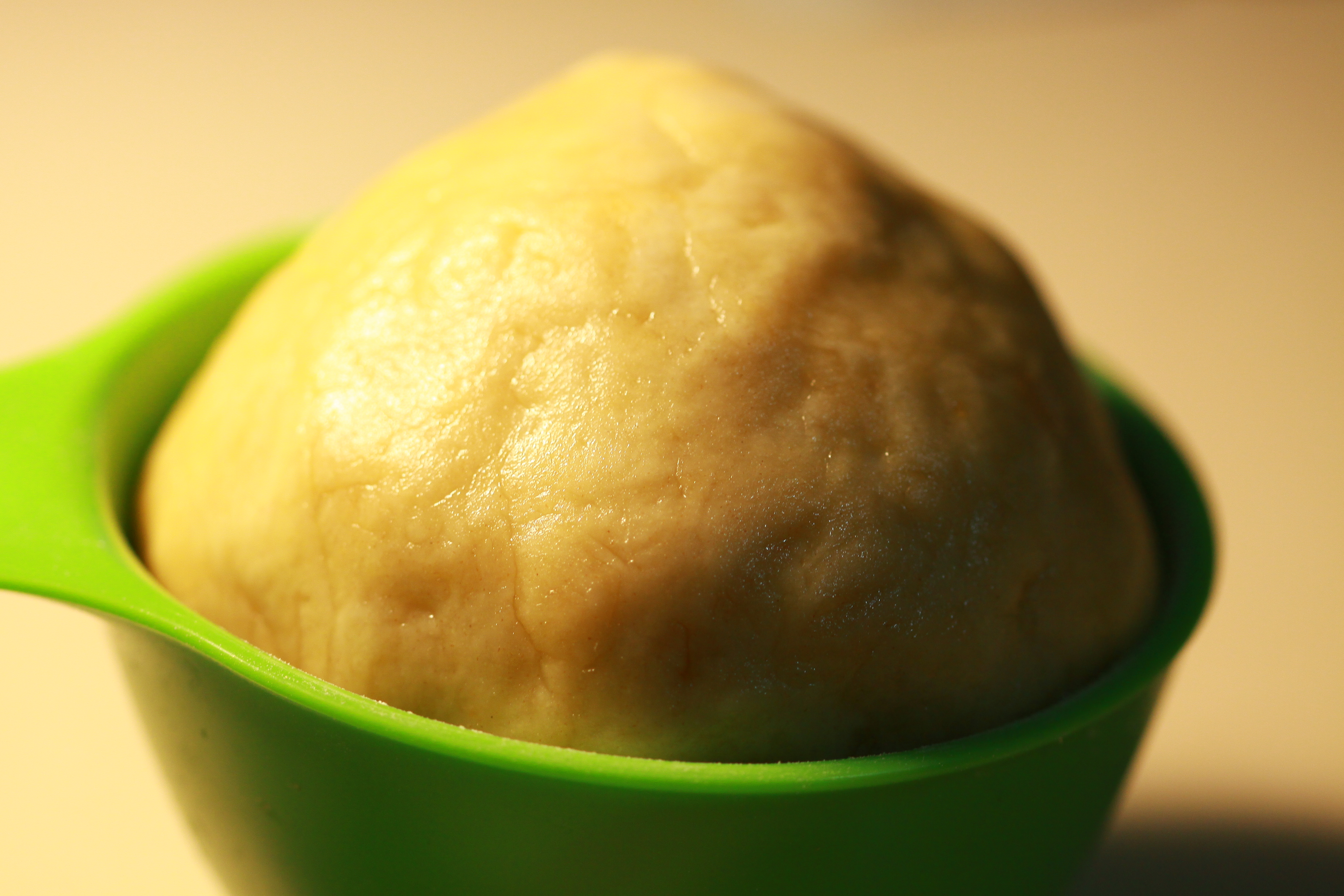
Dough – Soft and pliable.
  • Meanwhile set a kadai with enough oil to fry the badushahs. Keep the flame on medium low. Do not allow to smoke.
  • Divide the dough in to small equal sized balls and roll them out smoothly without any cracks.
  • Press them flat between your palms and pinch the edges to sort of turn them in to decorative rims. They were almost looking  like little Ravioli cuties!!!

  • Optionally you could slightly flatten them between your palms and make a very small depression in the middle. I enjoyed Raks method of decorative rims so I went ahead with that. I made another batch in the traditional way too.
  • Slowly slide in the badushahs and allow them to fry in the oil. When you pop them in , they will sizzle and slide up after a couple minutes.
  • Flip them over and allow them to fry to a golden brown color on both sides.
  • If the oil is too hot or smoky, the badushahs will not cook completely….almost the same rules as in Gulab Jamuns.
  • Keep the flame on medium low and allow them to stay in and cook completely.
  • Drain them on paper napkins and then toss them in the sugar syrup until they are completely coated in them.
  • Allow a couple minutes and then remove and let them sit for some time.
  • When warm garnish with saffron strands, coconut flakes or chopped pistachios.
  • When completely cooled, enjoy flaky, sweet and yet soft badushahs!!!

HINTS:

  1. Kneading the dough plays an important part of getting soft and flaky Badushahs. Do not scrimp on the butter as this makes the dough pliable and extremely soft.
  2. Do not keep the unfried badushahs exposed for a long time before frying as this might crack them up. Cover  them with a soft towel if needed.
  3. The temperature of the oil is the most important. The badushahs need to stay in oil and cook up slowly so do not allow the oil to smoke. If this happens, bring down the heat to low and wait until right temperature is reached.
Naivedhyams/ Festival Offerings.

Omapodi / Plain Sev.

Omapodi.

I am guessing the name itself is derived from the main ingredient that differentiates this fried snack from its other variations – Omam/ Ajwain. Omam is an excellent aid in digestion and a cure for low appetite and colic and flatulence. Omapodi is a delicious snack in itself and also aids as a main ingredient in Mixture. Omapodi is also used as a garnish in north indian chats in the form of sev.

INGREDIENTS:

1 Tsp Butter at room temperature.

2 1/2 Cups Besan.

1 Cup Rice Flour.

1 Tsp Salt.

1 Tsp Powdered  Ajwain/ Omam.

Water.

PREPARATION:

  • Keep a kadai of oil on the stove on medium heat and allow it to get hot enough to fry.
  • In a wide mouthed bowl, add butter, salt, rice flour, powdered Ajwain and besan. Use warm water and mix to a creamy moist dough. It should be in a consistency like Murukku Dough, one that allows it to get pressed using a Murukku Press. Adjust the consistency variating the water/besan.
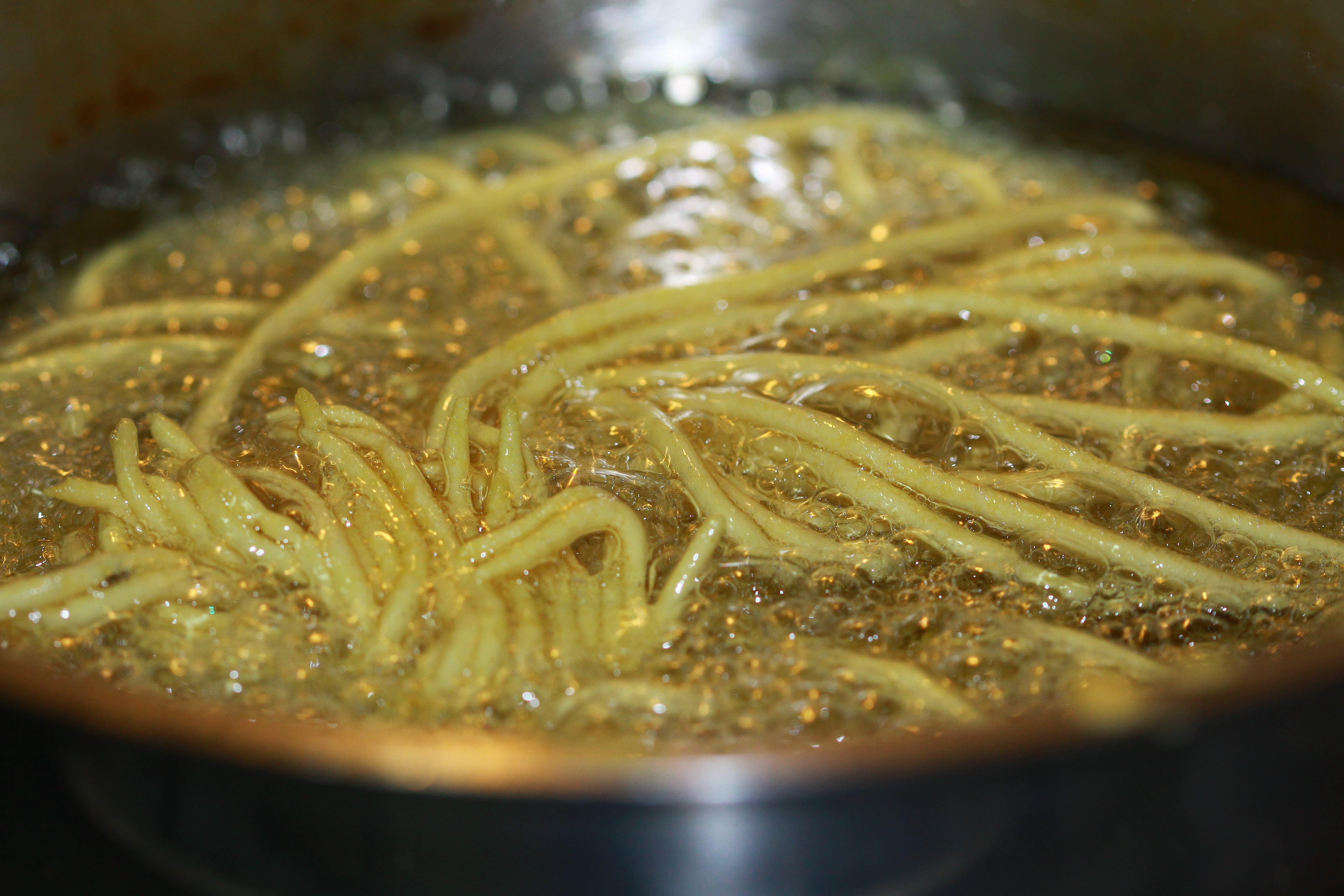
  • Use the Omapodi Press, press it on to the hot oil.
  • Allow it to cook on both sides and drain on to a tissue.
  • Crunchy Omapodi is ready to snack by itself or to use in Madras Mixture.
Naivedhyams/ Festival Offerings.

Karaboondhi – Cripsy Fried Spiced Besan Balls.

One of the most easiest snacks to make, yet requires sleight of hand and knowledge of a few tips as its tricky. The only tricky part being the consistency of the batter. Runny batter results in “boondhis” with little tails. A batter which is too thick would not even fall through the holes and not cook enough. Kara Boondhi makes an excellent snack by itslef, but I prefer making delicious Mixture for Deepavali.

INGREDIENTS:

2 1/2 Cups Besan.

1 Cup Rice Flour.

1 Tsp Salt.

1 Tsp Red Chilli Powder.

Pinch of Baking Soda.

Pinch of Hing.

1 Tsp Butter.

Pinch of Baking Soda.

1 – 1 1/2 Cups of Water. (Totally depending on the kind of Besan.)

PREPARATION:

  • Set a kadai with oil to medium heat on the stove. Meanwhile mix the batter for the Kara Boondhi.
  • In a bowl add the butter and all the dry ingredients – salt, hing, red chilli powder and  baking soda.
  • Sieve the required quantity of besan as many times the store bought besan has clots which may not yield results needed.
  • Add the rice flour and the besan.
  • Use a whisk to mix as this really helps in binding all the ingredients well.
  • Pour 1 cup of water and whisk to see the consistency. If needed add more water little by little.
  • The consistency should be slightly runny but not too much.
  • Batter for KaraBoondhi.
  • Using the Boondhi Ladle or a simple perforated ladle, take out a ladle of batter and pour over the boondhi ladle and press out the batter through the holes to fall on to the hot oil.
  • The boondhis or drops will sizzle and hiss, when cooking in the oil. Use your ladle and mix it in well to allow uniform cooking.
Boondhi Ladle.
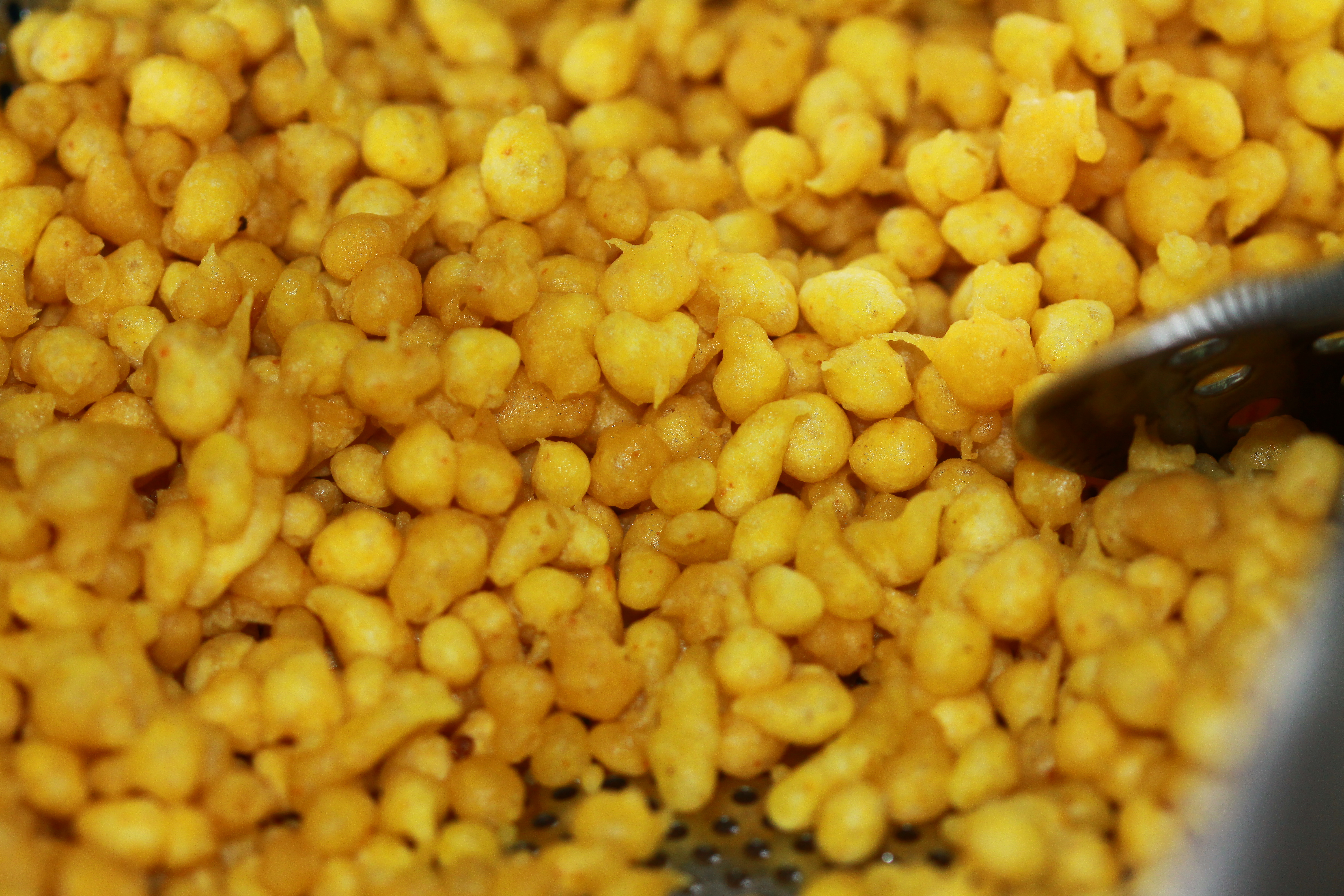
  • When starting to turn a light golden colour, remove from flame and on to a collander lined with tissue.
  • Allow the oil a couple of seconds to heat up before adding the next batch of boondhis.
  • Crisp KaraBoondhis are ready.

HINTS:

  1. Try out the boondhi ladle with the batter to see how the batter falls. You can keep the boondhi ladle on the mixed besan batter itself to see results. Then adjust the consistency of the batter by either adding more water or more besan.
  2. Use KaraBoondhis to make raitas or simply spic it up adding a little red chilli powder and hing for any anytime snack.
  3. Use with other fried snacks to make Mixture.


Naivedhyams/ Festival Offerings.

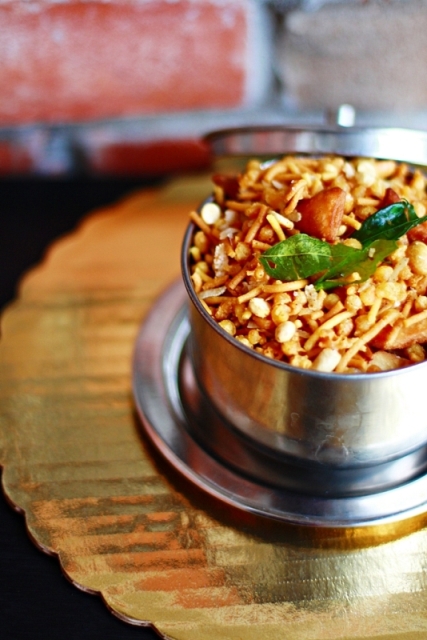
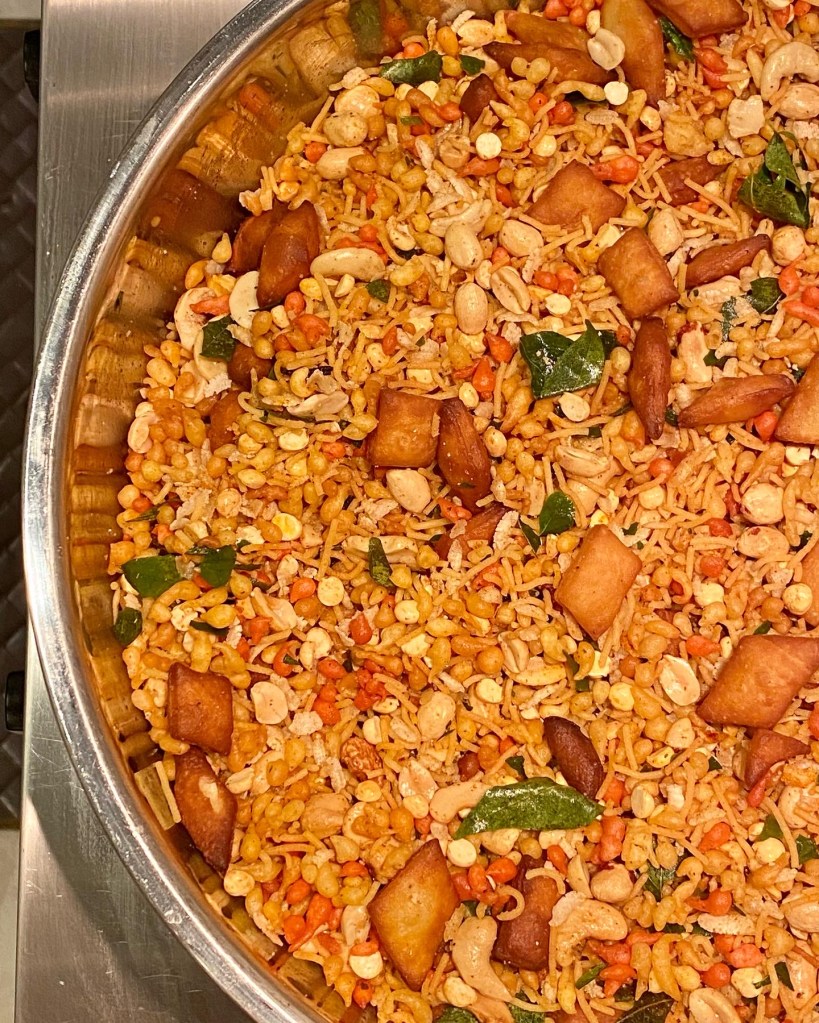
Deepavali Special – Madras Mixture.

Special Madras Mixture.

Every year Deepavali has been a special occasion for the entire family to get together and celebrate the festival of lights. These days, there is a lot of TV involved, but when we were little kids, Deepavali was getting up early in the morning and having oil bath and then wearing new clothes and prostrating before the elders of the family. We would always try to compete as to who would get up early and have a bath to get ready to go out and burst crackers with friends in the neighborhood. The earlier we get up, the more chances to enjoy more firecrackers as many of them are not as pretty when the skies light up. At around 7, breakfast would everytime be steaming hot idlis with Coconut Chutney, accompanied by the sweets and savories made for the occasion. Then more playing and more playing until we are exhausted. Lunch would be filling and satvik and with all my cousins and family.

Many of the sweets and savories prepared for Deepavali I would never eat much on that day. It would be fun to eat all of this later on, after a few days. The most special preparation for Deepavali has always been Maduraiamma`s Special Mixture. I don’t know how exactly she does it, but every time her proportions of chili powder, salt and hing have been spot on. When I open the container having the mixture, and I get the familiar aroma inside, it never fails to transport me to my childhood days.

INGREDIENTS:

1 Batch of prepared KaraBoondhis.

1 Batch of prepared Omapodi.

2 cups Maida Biscuits/ Shakkarpare

1 cup Roasted Peanuts.

1 Cup Split Chick Peas (Pottu Kadalai.)

1 cup Cashewnuts.

1 cup Aval/ Poha.

Curry Leaves.

1 Tbsp Red Chilli Powder.

1 Tsp Salt.

1/2 Tsp Hing.

PREPARATION:

  • In a large mixing bowl add the prepared KaraBoondhis.
  • Next add the prepared Omapodi and break it in to little pieces.
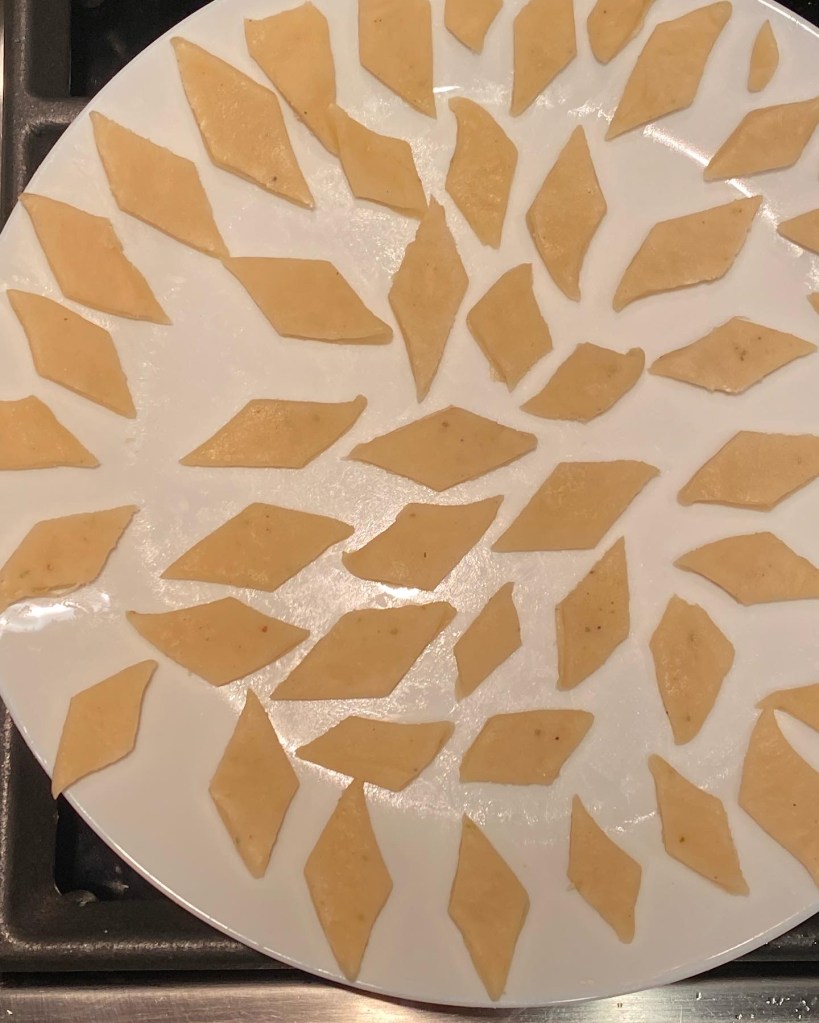
  • Prepare the Maida Biscuits/ Diamond Biscuits  in the following manner:

MAIDA BISCUITS:

Ingredients:

2 Cups All Purpose Flour.

3/4 Cup Powdered Sugar

1/3 Cup Milk + Little water to make a stiff dough.

1/3 Cup Butter/ Melted Ghee

Pinch of Baking Soda.

  1. Cream the butter, sugar, salt, baking soda until its light and fluffy and slowly add the milk a little water with the measured  2 Cups of Maida and knead in to a stiff dough. The consistency should not be sticky and soft, not too hard that its difficult to roll in to balls. Set aside for about ten mins.
  2. Divide the dough in to balls and spread out as you would do a thick chappati.
  3. Using your knife cut vertically and then diagonally to form diamonds.
  4. Fry in oil in medium low flame until well cooked and crisp and set aside.
  5. Maida Biscuits are ready.
  • Add the prepared Maida Biscuits to the mixture bowl.
  • Take some oil used for frying Omapodi  in a small kadai. Slowly add the roasted peanuts and fry them on medium low flame.
  • When done add to the mixing bowl.
  • Now add some more oil and fry the cashews until they are a light golden brown. Add to the mixture.
  • Similarly fry the Aval/poha and Split Chick Peas  and add to the mixture.
  • Finally add about 20-25 fresh curry leaves to the oil. When they are fried crisp add hing to the oil and pour over the mixture.
  • To all the hot fried items add salt and red chilli powder and using your hands/ ladle mix them all in.
  • Fresh homemade Mixture is ready !!!
  • Happy Deepavali Wishes to all my readers.
Naivedhyams/ Festival Offerings. · Snacks & Tiffin Items

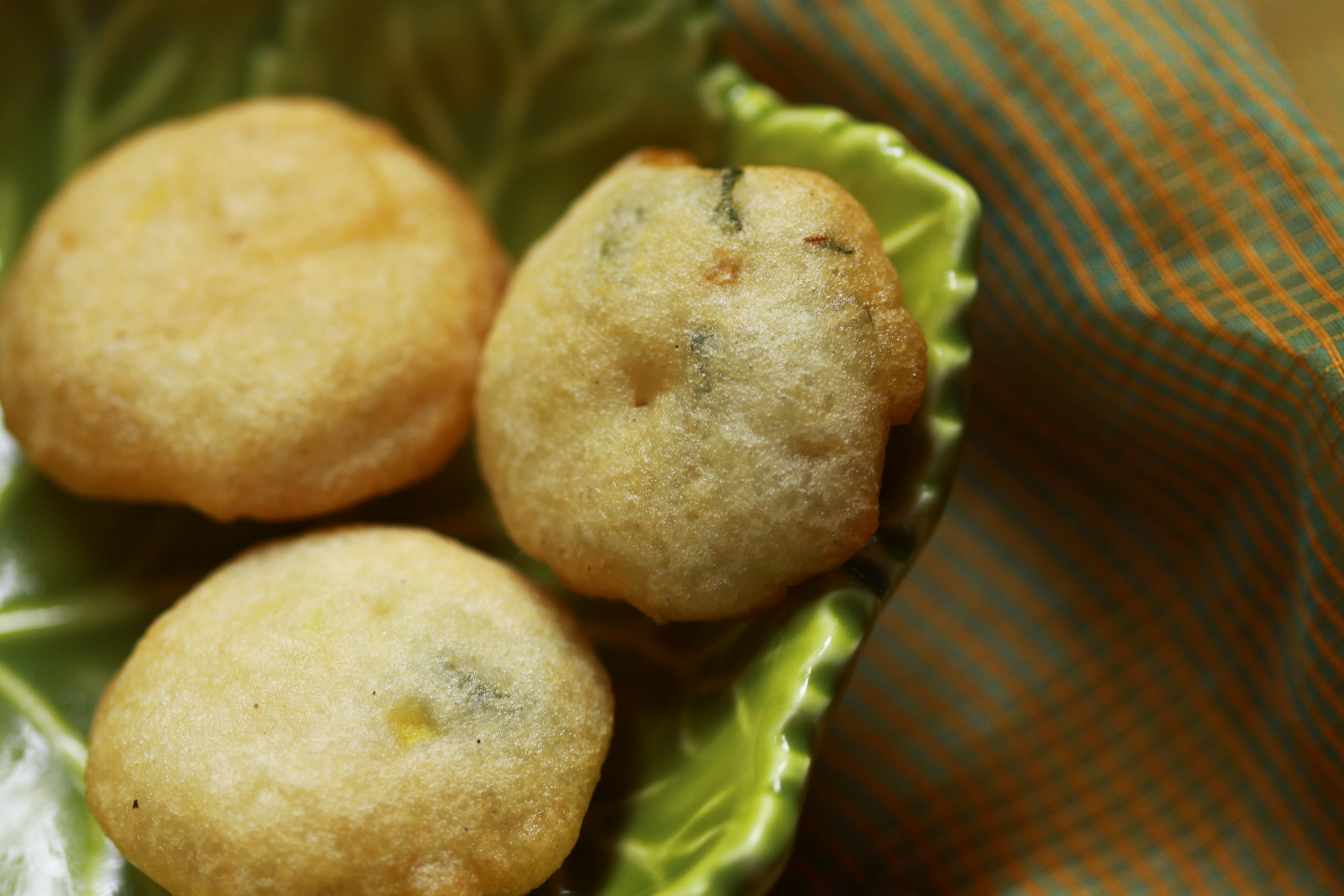
Festival Neivedhyam – Uppappam – (Spongy Balls of Rice & Urad Dhal spiced with chillies and ginger and shallow fried in oil.)

Nei Appam and Uppappam are always welcome preperations in  my mothers home. Somehow there is always an extra servings for the savouries, than the sweet version. Since I have a 6 year old, I always assumed she would like the sweet version, and so had soaked for Krishna Jayanthi, some rice for grinding and  making Nei Appams, but she  somehow was of the opinion that she preferred the salted version and the Lord would definitely like it too, as he was getting way too many sweets!!!

This used to be a favourite evening tiffin at my grandmother`s home, when she would make it, the aroma of chillies and ginger mingled with the aromas of the oil and hing etc would be simply awesome!!!

INGREDIENTS:

1 Cup Raw Rice soaked for 3 hours.

1/3 Cup Whole Urad Dhal soaked for 2-3 hours.

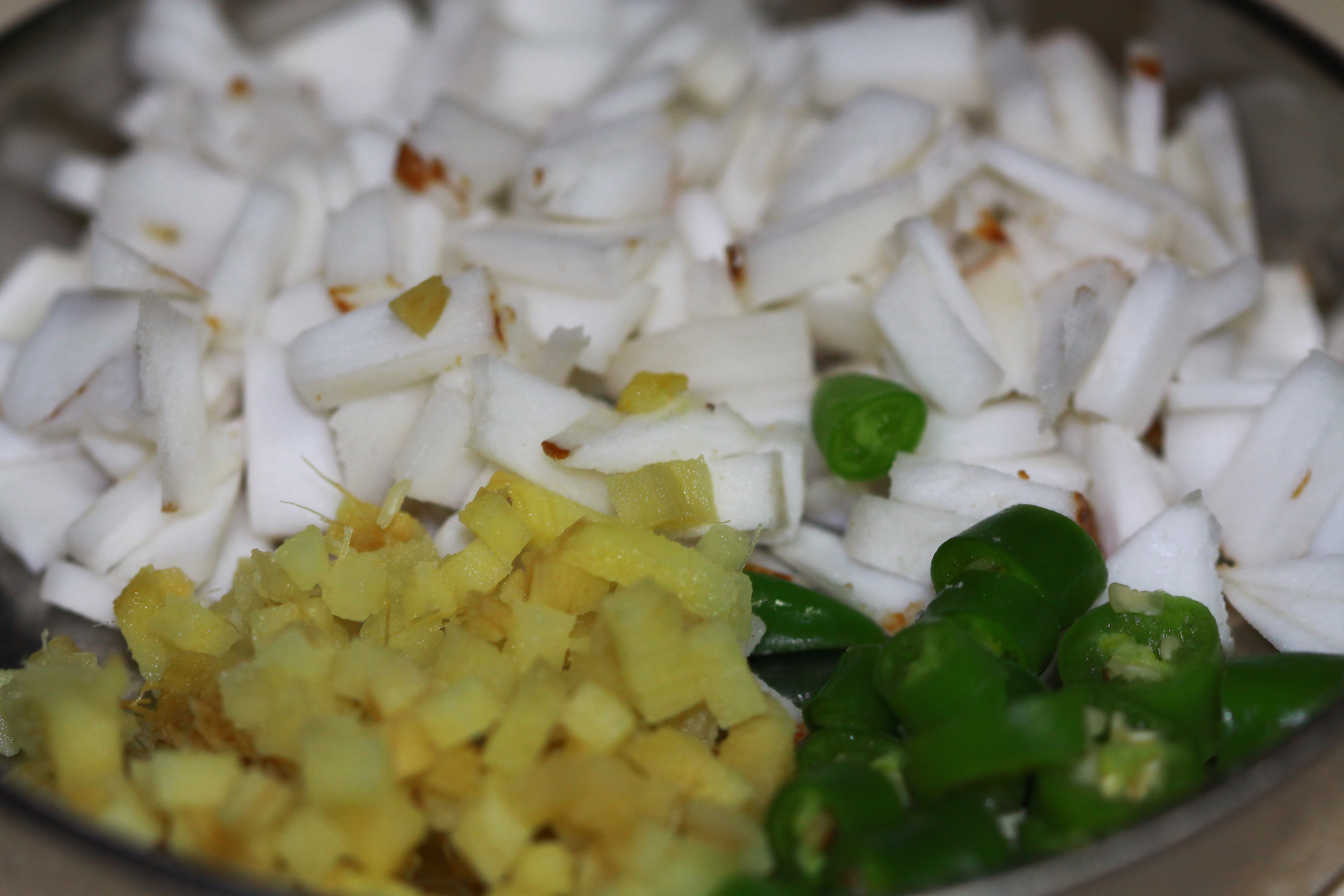
1 Inch Ginger shredded to very small pieces.

3-4 Green Chillies slit in to small pieces.

1/4 Cup of Fresh Coconut sliced in to very small pieces.

Handful of fresh curry leaves.

Hing.

Salt to taste.

PREPARATION:

  • Wash the soaked rice well and grind in the mixer until its a smooth batter. Transfer to a bowl.
  • Grind the urad dhal until its well done and you get a smooth batter. Add it to the ground rice batter. Mix well.
  • Add sufficient salt to taste.
  • Add the chopped ginger, green chillies, coconut slices, torn curry leaves and hing and whisk lightly in to the batter. The consistency should be not too runny yet not too thick.
  • Take the Appa Karal and pour out enough oil in to all the little depressions.
  • When they are hot enough ladle out enough batter which would fill 80% of the depression. If you fill it all the way, the batter would seep out when its getting cooked/fried in the oil.

  • Allow it to fry well on one side and tip it over using a knife and a spoon to pry it out.
  • When it cooks well on both sides, use a knife/skewers to remove and place on a tissue to drain out the excess oil.
  • Tastes wonderful when accompanied with Tomato Thokku or Coconut Chutney, but I like it plain with the flavours of the ginger and green chillies, combined with the crunchiness from the little coconut pieces.

    HINTS:

    Sometimes, leftover Appams can harden a little so I serve it up by dunking it in fresh TOmato Rasam almost like Rasa Vadai.

    The Urad Dhal provides the air and the sponginess in the Uppappam so its important that the urad dhal is soaked and ground well or you might not find the desired sponginess in the Appam once they are fried.

    Naivedhyams/ Festival Offerings. · Sweets

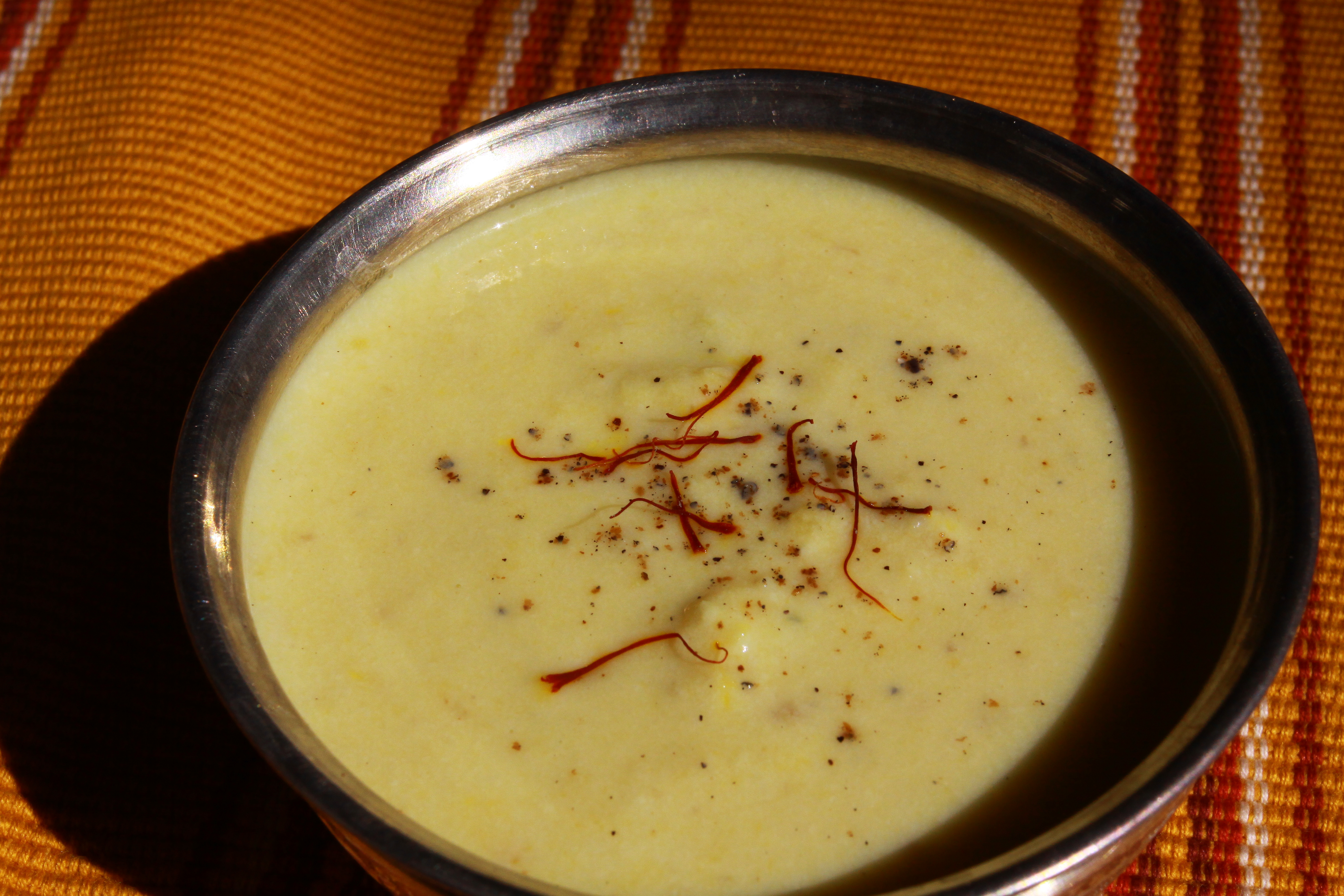
    Rich in Flavour – Quick Jackfruit Payasam – Neivedhyam for Avani Avittam.

    As always mentioned, I have an eternal love affair with the jackruit. I simply love the aroma it brings and the sweetness of the fruit revealed in its aroma. Everytime I visit Chicago, I make it a point to buy these juicy bulbs and enjoy them back home, simply eating them and getting back to heaven for a fleeting instant!  This time around, I wanted to make this payasam with this sweet fruit and offer it as Neivedhyam to the Lord. It is a very simple preparation that hardly takes more than ten minutes…

    INGREDIENTS:

    10 numbers of ripe jackfruit bulbs.

    2 Cups Milk.

    1/4 Cup Light Coconut Milk. (Optional)

    2 Tsp Fresh Coconut grated.

    1/4 Cup Sugar.

    1 Tsp Cardamom Crushed.

    Handful of broken cashews.

    Pinch of Saffron Strands.

    PREPARATION:

    • Warm 1/2 cup of milk + 1/4 Cup Coconut Milk in the microwave. Soak the cashews and saffron strands in them and let them sit.
    • Wash the jackfruit bulbs clean and cook them in a little water for a few minutes, over the stove top.
    • Grind the cooked jackfruit with a little milk. Set aside.
    • In the same mixer jar, add the fresh coconut and the soaked cashew pieces. Grind to a smooth paste using little milk. Take care to grind the cashew and coconut well before adding all the milk that you have used to soak the cashews. When you use that much milk to grind, it only causes spillage and does not ensure the smooth grinding of the coconut.
    • In a heavy kadai, add the ground cashew coconut paste, jackfruit paste, remaining milk, sugar and crushed cardamom powder and allow to boil.
    • If you feel that the payasam consistency is a little thick, add a little more whole/2% milk to temper it.
    • Switch off when it comes to a boil and serve hot or chilled.

    Kerala / Palakkad Recipes. · Naivedhyams/ Festival Offerings. · Poriyals / Kootu Varieties.

    Thiruvadharai Upperi – Vegetables steamed and spiced with coconut chilli paste.

    The complimenting Neivedhyam for Thiruvadharai Kali would be the Upperi or rather a version of select steamed vegetables, spiced generously with ground coconut and green chillies.  The Upperi as I remember is a combination of various tubers and roots that are combined and cooked to get the most delicious preparation. I remember as a child, when Thiruvadharai was around the corner, I knew a trip to the local crowded vegetable market at Ranganathan Street would happen pretty soon. Since the monsoons would have just finished, it would be a herculean task, just to walk in that crowded street. My friend would quip light heartedly that all one needs to do, was to stand at the beginning of Ranganathan street…the crowd would pull you to the very end!!! That said, one would hardly look forward to a weekend trip here, coming back with bagfulls of tubers and vegetables. Nevertheless, it had to be done…every year unfailingly, until, one day Madurai amma was convinced about buying it from  the vegetable man, pulling his own cart, quoting his own fancy price.

    INGREDIENTS:

    1/2 cup chopped Raw Banana.

    1/2 cup chopped Potatoes.

    1/2 cup chopped Kavathu Kazhangu.

    1/2 cup Flat Bean/Avaraikka slit in to 1 inch square pieces.

    1/2 cup Koorkai / Chinese Potatoes

    1/2 cup Mochai / Valor Lilva.

    1/2 cup Sweet Potatoes.

    1/2 cup fresh coconut.

    4-5 green chillies.

    2 spoons of coconut oil.

    Turmeric.

    Seasoning:

    Mustard, Curry Leaves, Hing.

    PREPARATION:

    • Remove the skins from  the potatoes, raw banana, sweet potatoe, Koorkai, Kavathu , wash and chop them in to slightly big one inch pieces.
    • Arrange them in the base of a cooker vessel.
    • Next arrange the valor lilva/mochai over the root tubers.
    • Now chop the Avaraikka / flat bean over the valor lilva and add enough water for the vegetables to cook.
    • We keep the root tubers at the base as they would need to cook more.
    • Add salt and turmeric and steam in the pressure cooker for 1 whistle.
    • Remove from cooker and allow to cool.
    • Grind the coconut and green chillies to a rough paste and set aside.
    • In a kadai, add coconut oil, mustard, curry leaves and hing and slowly add all the cooked vegetables without breaking them with the spatula.
    • Mix well for a couple of minutes and then add the ground coconut paste.
    • Allow a couple minutes for the coconut mix to spread on to the vegetables.
    • Offer Thiriuvadharai Upperi to the Lord as Neivethyam.
    Naivedhyams/ Festival Offerings. · Sweets

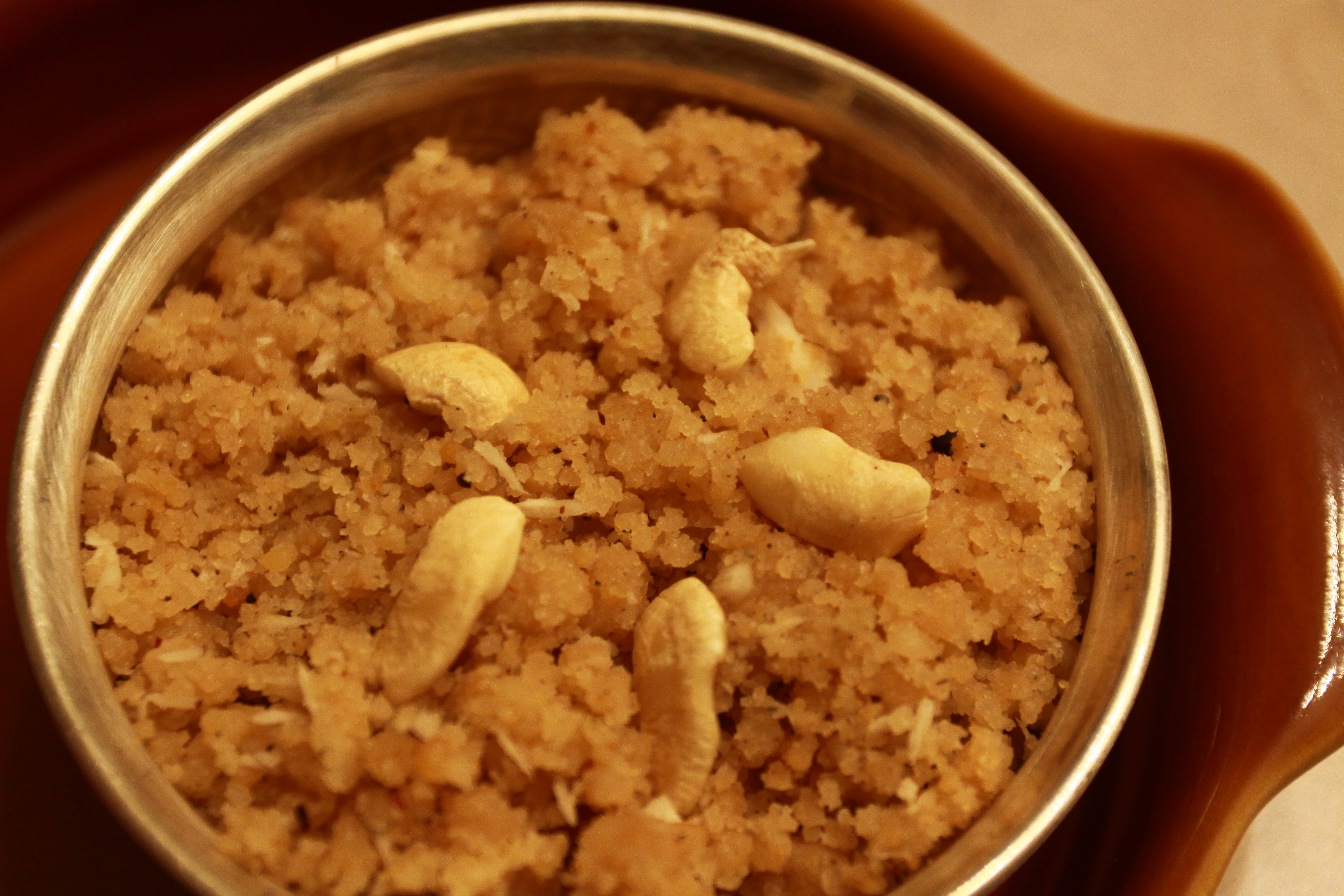
    Festival Neivethyams – Thiruvadharai Kali.

    Thiruvadharai Kali.

    Thirivadharai Kali is one of the most simple of all the neivethyams. It is made with the everyday ingredients available in the pantry. It is also a very healthy option for snack as its made out of rice thats beaten, dry roasted and then steam cooked. Jaggery which is the other ingredient is also a healthy addition to this simple and wholesome preparation.

    INGREDIENTS:

    1 cup of raw rice.

    1/4 cup of raw moong dal.

    1 cup of Jaggery grated.

    3 cups of Water.

    Ground Cardamom Powder.

    Handful of Broken cashew.

    1/4 cup of Fresh Coconut.

    PREPARATION:

    • Measure out the cupful of raw rice and put it in a dry kadai. Keep the flame on medium high and roast it until the rice turns a dull red. Another indication is the pleasant aroma of roasted rice. Set aside.
    • Now follow the same procedure with the raw moong.
    • Allow the roasted rice and moong to cool down and then transfer to a mixer.
    • Powder the rice and the moong to a coarse consistency. It should not be ground fine. Set aside in an air-tight container to keep any moisture from getting in the powder.
    • Keep fresh coconut and ground cardamom powder ready.
    • In a kadai pour the water and wait for it to come to a slow boil.
    • Now pour the jaggery, powdered rice and moong in to the water and whisk it to dissolve all the lumps.
    • In a few seconds, it will cook in the water just like rava upma.  Remove from the stove and transfer to a vessel.
    • Add enough water in the pressure cooker and steam cook with weight up to two whistles.
    • When done, remove from cooker and allow to cool. Use your hands and roughly break the clumps to form a wet sand like consistency.
    • In another kadai, add a spoon of ghee and roast cashews.
    • Add the kali in to the kadai and saute for a few minutes.
    • Add powdered cardamom and fresh coconut and mix well.
    • Offer prepared Thiruvadharai Kali to the Lord.
    Festivals & Significance · Kerala / Palakkad Recipes. · Naivedhyams/ Festival Offerings.

    Thiruvadharai – Significance & Learnings – Naivethyams.

    Every year, the month of “Marghazi” is of very special significance as it heralds new beginnings, the new year, the music season in Tamil Nadu made redolent with the myraid  performances of senior music stalwarts in the various halls, Vaikunta Ekadasi, and of course Thiruvadharai.  When I actually embarked on the significance of this day I found so many different versions, all of them confluencing on the cosmic dance of Lord Shiva.

    This festival occurs on the day of the Arudra star in the tamil month of Marghazi, and is of course of special significance to Lord Shiva. This day also marks the auspicious time for Arudra Darisanam – of Lord Nataraja in the Saivite temples all over Tamilnadu.  This celebration is marked by abhishekams to Nataraja and his consort Sivakami during the full moon night, and worship services such as the Deepa Aradhanai to Natarajar amidst the chanting of sanskrit and tamil hymns and the waving of lamps, in the pre-dawn hours, when the moon still shines bright, an enactment of the dance of Shiva, and a grand procession through the processional streets.

    Although there is a shrine to Natarajar, in virtually all of the Saivite temples in Tamilnadu, five of these are considered to be the Pancha Sabhais or the five cosmic dance halls of Shiva. The five dance halls are:

    The Hall of Gold – Kanakasabha at Chidambaram,

    The Hall of Silver Velli Sabhai at Madurai,

    The Hall of Rubies – Ratnasabha at Tiruvalankadu,

    The Hall of Copper – Tamrasabha at Tirunelveli and

    The Hall of Pictures – Chitrasabha at Kutralam.

    The usual Neivethyams that are offered to Lord Shiva are Thirivadharai Upperi & Thiruvadharai Kali. The postings will follow in the later blogs.