Naivedhyams/ Festival Offerings.

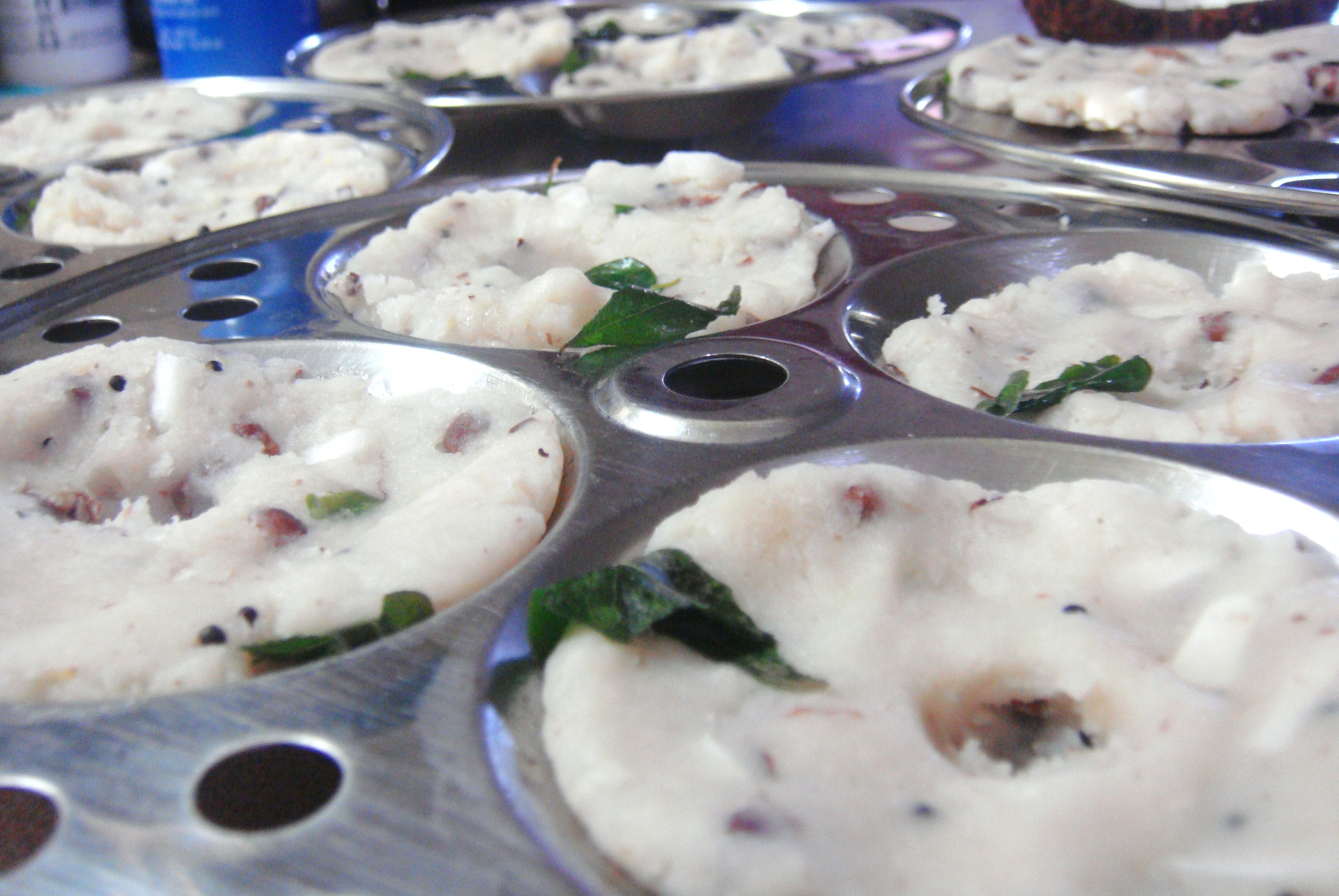
Kozhukattai Outer Dough for Preparation of Modhakas.
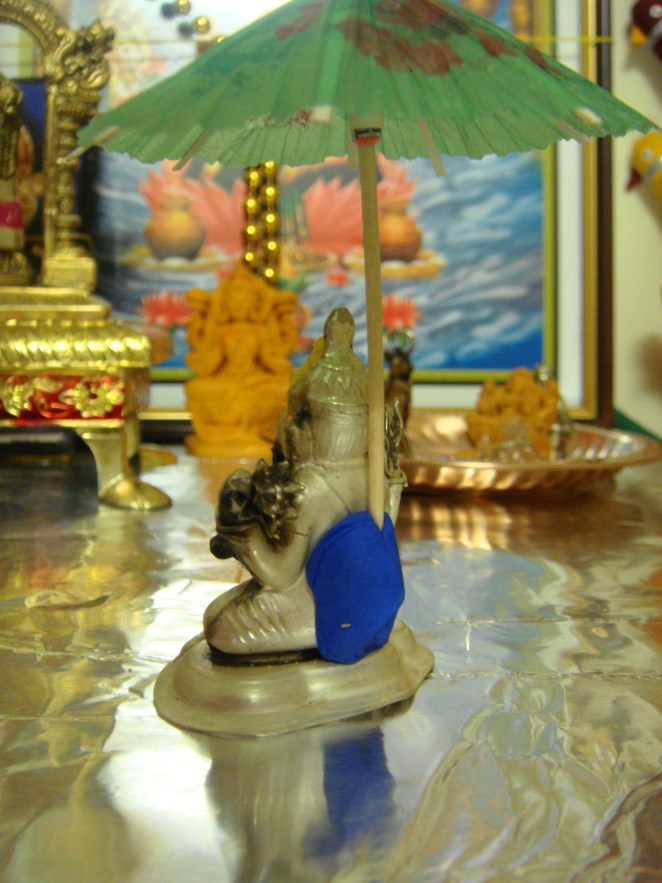
My little Silver Ganesha with a cocktail umbrella.

Every year Vinayaka Chathurthi is celebrated all over the world as the day on which Lord Ganesha, the son of Lord Shiva and Goddess Parvathi bestows his presence on this earth. Vinayaka Chathurthi in my home essentially marks the beginning of good times and of course all other festivals. In Madras, the entire shopping streets are filled with colourful umbrellas and lovely colourful statues of Ganeshas in all sizes and colours. Many people also prefer to buy the plain Ganeshas made of clay and decorate it with flower garlands. Amma and me used to go to PondyBazzar and she would let us choose the idol and the accompanying umbrella to go with it. One time I had a foldable umbrella that I had got during the chathurthi celebrations and refused to part with it for months!!! We would also get as assortment of fruits like wood apple, jamun fruit, apples etc and the signature pooja element which was a lovely green banana leaf, filled with “Arugampullu” and pink flowers. Laden with all this, we would come home excited to set up the mandal for the Lord.

Amma would have already cleaned and decorated the spot with lovely “maakolams“. Maakolam is different from the regular kolams that we use everyday outside out homes. Its simply rice soaked and ground to a fine paste and used to decorate the floors during weddings and festive seasons. The Kolam would be dry and Madurai amma would first place a wooden platform and cover it with silk. She would then gingerly place the Lord on the platform, decorate his neck with little garlands made of flowers and then place a dhoti around him. We would then finally position the colorful umbrella and the stage would be resplendent with his form. The naivedhyam would be Vella KozhakattaisUppu Kozhakattais and of course Ammini Kozhakattais. The fruits would be offered to him and Madurai amma would then start the pooja.

In the evenings, we would some times watch the procession of the Ganesha moving towards the beach. Many times, we would visit the nearby temples and get his blessings. Last year I made my own umbrella for the Lord, using sticks and colorful yarn. I also decorated my little silver Ganesha, in my pooja room with a cocktail umbrella!!!

There are essentially two ways of making the dough…One is by soaking the rice and grinding it, which is pretty elaborate but very tasty, and the other is using rice flour. I shall explain both the procedures below.

KOZHAKATTAI DOUGH BY SOAKING RICE:

1  cup  of raw rice.

A pinch of salt.

Coconut oil.

Water as required.

PREPARATION:

  • Soak the raw rice for 2-3 hours and grind in the mixer or grinder to a smooth batter. It does not matter how much water you use as it gets cooked in it finally.
  • Pour the batter in to a kadai. Make sure that there are no clots and add 1/2 -3/4 spoon of salt and a spoon of coconut oil.
  • Switch on the stove setting it on medium low  and keep stirring to avoid clots.
  • After a few minutes, you will find that the water content is rapidly used up to cook the rice batter, and it slowly thickens.
  • After a few more minutes, it will thicken and be cooked. The signs for that is you will find that when you stir, it comes together as a ball.
  • Also the whiteness of the raw rice will give way to a very slightly off white cooked rice ball.
  • Immediately transfer to a bowl and add a spoon of coconut oil.
  • With your hands, knead the ball inside the bowl by smoothing it and bring it together. This step is very integral as this is what binds the dough and takes away the stickiness.
  • This is a VERY IMPORTANT step and many people fail at this point not doing this. Please use gloves if needed and keep kneading the dough until you feel its a pliable dough that can be shaped easily with no dryness and no cracks.
  • At this point, the dough should be able to  seamlessly shape in to a ball.
  • Set aside in the bowl and cover with a lid.
Kozhakattai Outer Dough.

KOZHAKATTAI DOUGH USING RICE FLOUR:

1 cup Rice Flour.

2 cups of water.

A pinch  of salt.

2 -3 Tsp Coconut Oil.

Gloves if required to knead slightly hot/warm dough.

Bowl to knead the dough.

Ktchen Towel/ Damp Paper Towel.

PREPARATION:

  • Please measure all ingredients ahead and keep everything required close at hand.
  • In a kadai, pour the water, add coconut oil and salt and allow to boil.
  • On spotting the first boil, immediately, simmer the stove and add the measured 1 cup of rice flour in to the water.
  • Use a whisk and remove all the clots quickly. This step is very helpful to act quickly so you have no clots.
  • With a spatula, rapidly stir in the mixture as if will thicken using the water to cook the rice.
  • As before, keep stirring until you see that the water is all gone and the entire batter scoops up in your ladle as a single mass.
  • Stir for a few more minutes until you are satisfied and the batter does not stick. This would happen ONLY if the water is not used up so do not fret.
  • Transfer to a bowl, add 1-2 Tsp  of coconut oil and knead well to form a homogeneous ball.
  • This is a VERY IMPORTANT step and many people fail at this point not doing this. Please use gloves if needed and keep kneading the dough until you feel its a pliable dough that can be shaped easily with no dryness and no cracks. Add 1-2 Tsp oil if you require.
  • Keep this dough  covered  with a damp kitchen towel and cover  the bowl with a lid. This is required to keep the dough moist and not dry out.
  • Now you are ready with the outer dough to start making Sweet and Salty Kozhukattais.

Use this smooth outer dough to make delicious Vella Kozhukattai, Uppu Kozhukattai and Ammini Kozhukattais.
Naivedhyams/ Festival Offerings. · Snacks & Tiffin Items

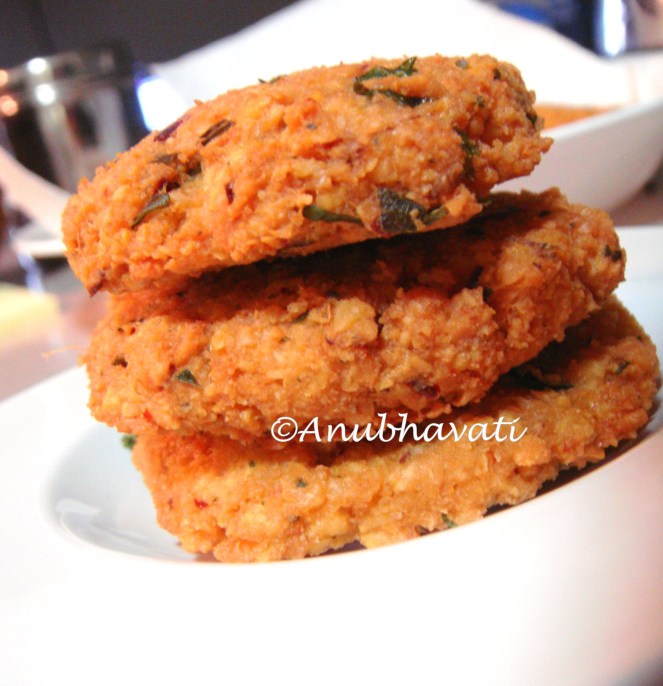
Paruppu Vadai – Dals/lentils ground with spices and deep fried in oil.

Paruppu Vadai
Paruppu Vadai

Paruppu Vadai was one of my favourite fried items growing up….I don`t remember it being an integral portion of any festival menu except probably the Vishu or Varsha Purappu or the Tamil New Year`s Day so to speak.  We would have it, as a side for sambar, rasam as well as curd. Some times, when its surprisingly left over, for the evening, I love to have it as Rasa Vadai, dipped in a bowl of steaming hot tomato rasam. I was always a rasam lover so I would find novel ways and means of having rasam more than my fair share!!!

This time, as I prepared Pruppu Vadai, as part of the new year lunch, I had to third the quantities, as we had resolved to keep a firm watch on fried items!!!

INGREDIENTS:

1 cup of  Bengal Gram.

1/3 cup of Toor Dhal.

1 spoon of raw rice.

4 red chillies

Curry Leaves

1 spoon salt

Hing

Oil to Fry.

PREPARATION:

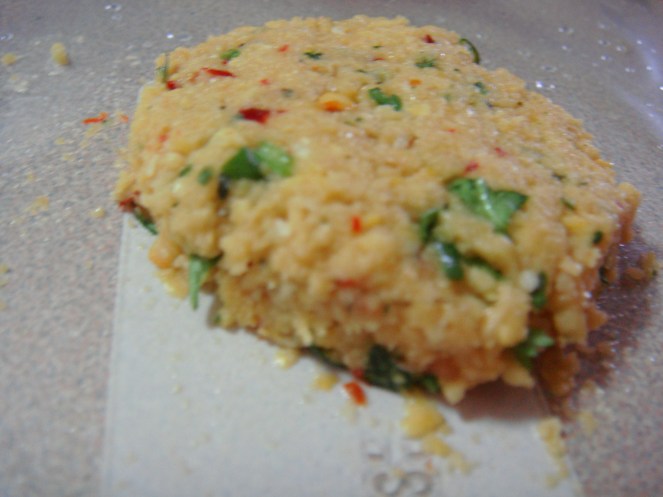
  • Clean the toor dhal and the bengal gram along with the spoon of raw rice. The raw rice helps in binding the dhals together. Soak the dhals and the rice for about 2 1/2 – 3 hours along with the red chillies.
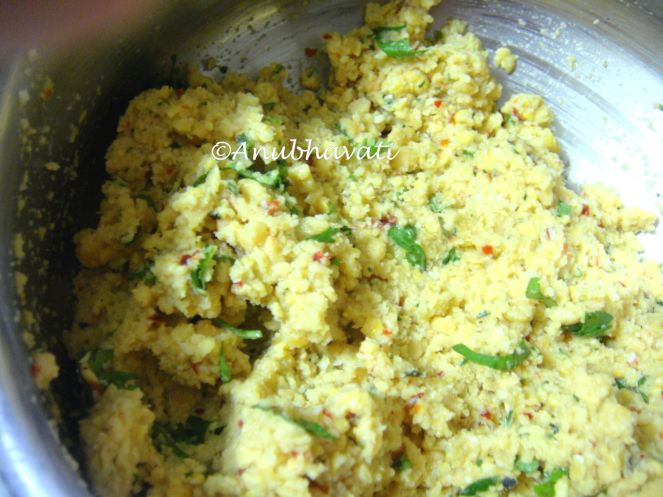
  • In a mixer, grind the dhals, rice, salt, red chillies and curry leaves to a coarse mix without adding too much water.
  • Add required hing and more chopped curry leaves and chopped cilantro. Set the oil on the kadai on medium heat.
  • On non-festival days, you could add a dash of finely chopped onions and cilantro to the base mix before making the vadais.
Paruppu Vadai Batter.
  • Use an empty ziploc cover and first dab a little oil with your fingers or simply use an oil spray on the surface.
  • Now flatten a rounded ball of the batter on the oiled surface and flatten it gently with ur fingers/palm.
Vadai on the ziploc...
  • Drop it gently in to the oil and allow to fry well on both sides. Since the main ingredient is raw lentils, its important that its fried well before serving.
  • Allow to drain on a collander lined with kitchen tissue.
  • Serve hot with Tomato Rasam or Vengaya Sambar.

Sending piping hot Vadais to WYF – Fried Snack Event at SimpleIndianFood.

logo

Festivals & Significance · Naivedhyams/ Festival Offerings.

Vishu – Significance & Preparation for the New Year.

Vishu – the dawn of the new month of Chitrai also celebrated as Tamizh Puthandu or the Tamil New Year`s Day in Tamil Nadu has been a very special occassion in our family. Many of our ancestors had roots in kerala, so many of our cultures and practises have been handed down from them over the years. Although my parents have been born and brought up in Tamil Nadu, we do follow Vishu on April 14`th ever year.
Vishu symbolises the fact that you need to start right and have the whole year right. What we see on the first day of the new year has to be pure, auspicious and signify abundance and good fortune.  Hence the custom of opening one`s eyes to Vishukkani – that which is seen first on Vishu. The preparations for Vishu starts in our home almost a month ahead. All the waste in the house is gotten rid of and cleaned and made pure. Homes are cleaned and painted in anticipation of the oncoming new year.The pooja rooms are also cleaned and the pictures of the Gods wiped clean and decorated with the Kumkum and Chandan.

When I was in school, amma and me would go to Ranganathan street the evening before Vishu, and buy guavas, jackfruit bananas and  yellow cucumber. I do not exactly know the significance of these particular fruits and vegetables, but I have heard that the “Kani” should signify auspiciousness through the yellow colour. Madurai amma would make the pooja room resplendent with her beautiful “maakolams” which are basically rangolis etched n the floor with a watery mix of ground rice paste and water. When they dry up after an hour, they look so beautiful on the marble floors. After we all go to sleep, Madurai amma would set up the Kani.

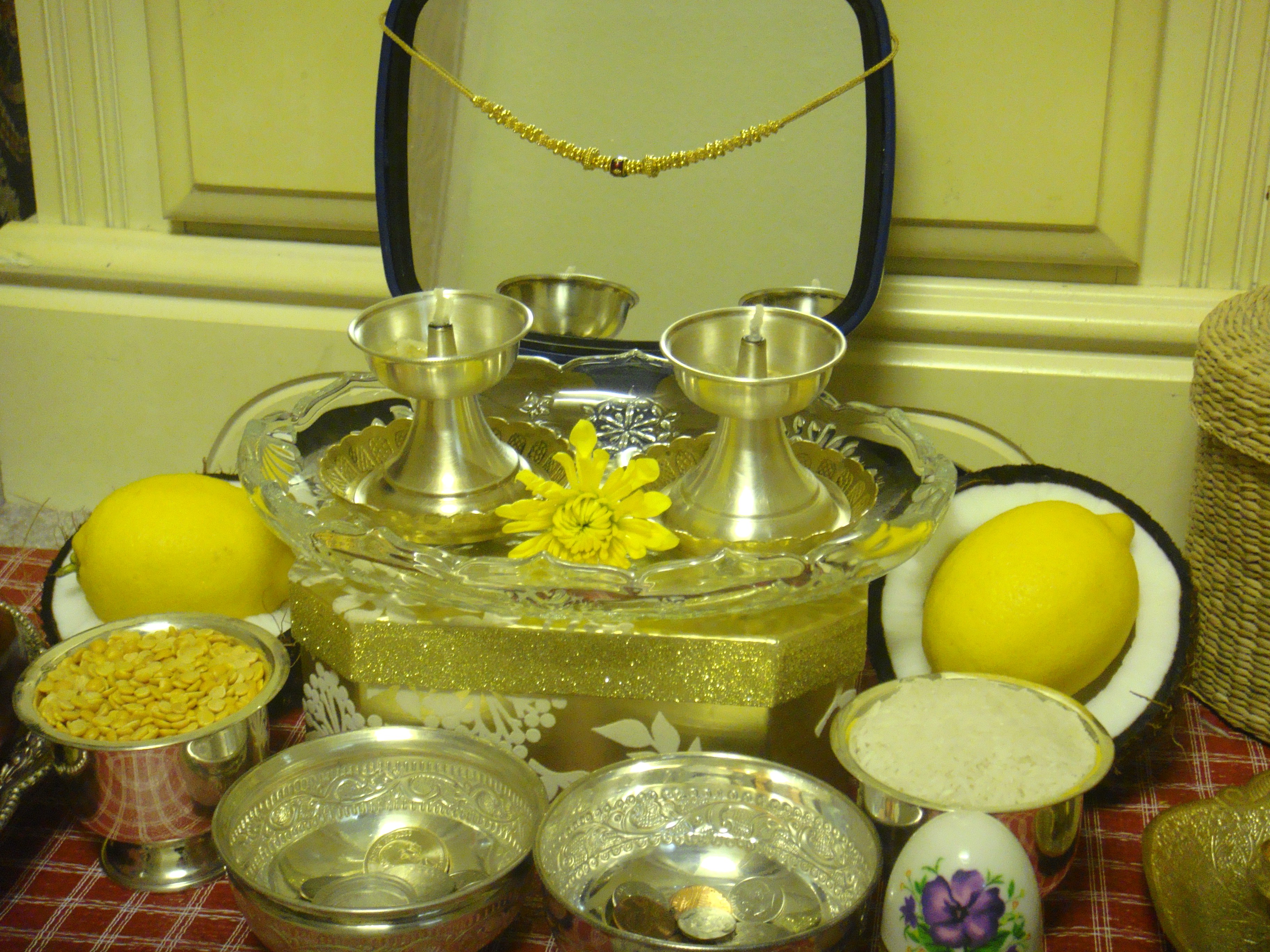
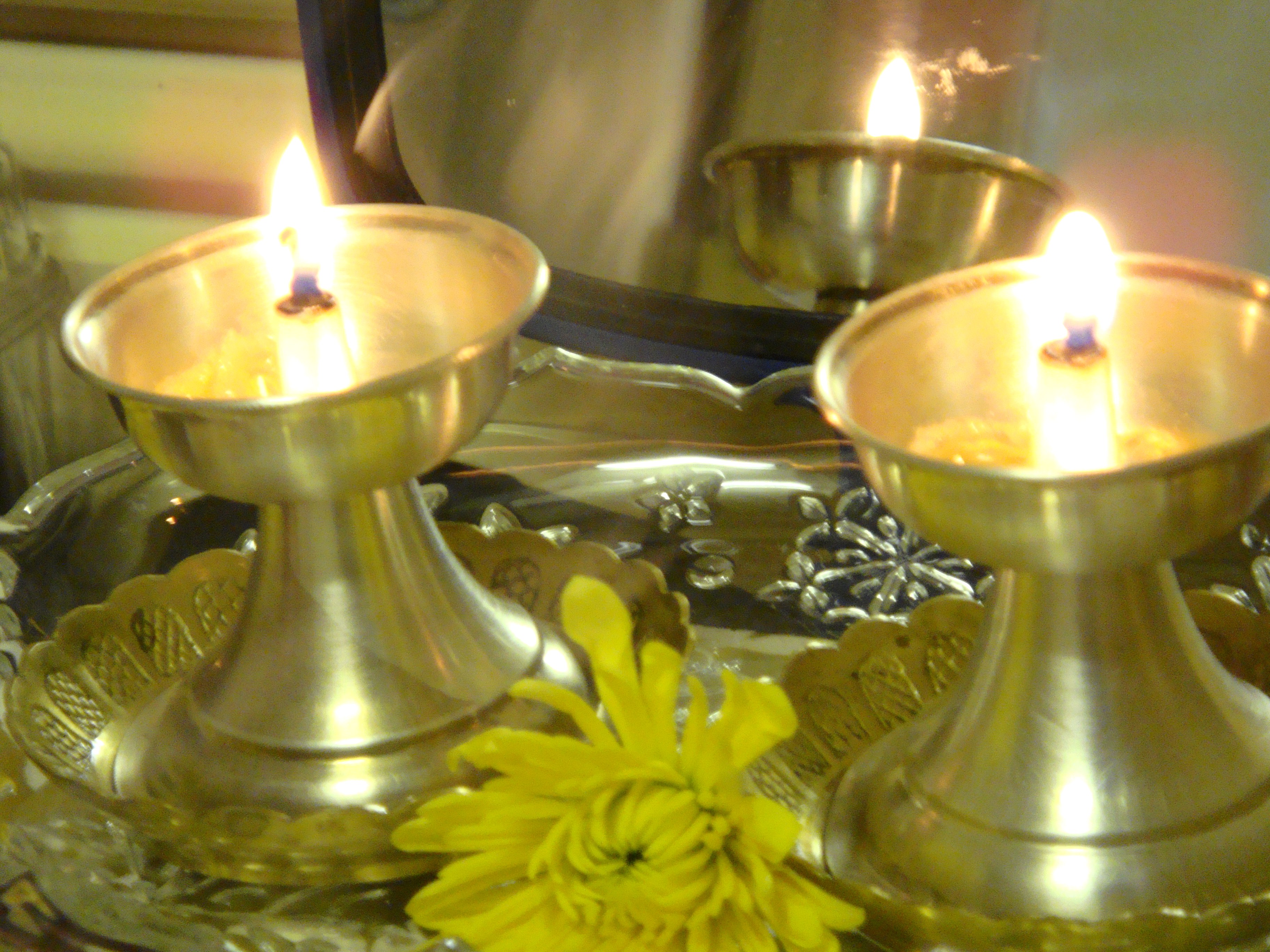
  • The centre of the Kani would be her lovely heavy mirror laden with a lovely gold necklace. Then she would keep two silver lamps ready with wicks in place and oil poured, right in front of the mirror. The mirror would also have a lovely jasmine garland adorning it, taking care that it does not disturb the sight in front. The mirror when seen on the morning of Vishu, signifies Devi and also the reflection of the things in front of the mirror, shows  that these would be multiplied by her Grace.
  • A coconut would be broken exactly in half, and set one on either side of the mirror with a whole yellow lemon in it. Care should be taken that the lemons are as fresh as possible with no flaws or eyes. I am guessing the lemons and coconut signify prosperity and good tidings.
  • Madurai amma would then set two lovely silver cups one with raw rice and one with raw toor dha, also in front of the mirror. We pray t the Goddess that we shall be in abundance of rice and lentils always.
Coconuts, Lemons, Coins, Flowers, Rice & Dhal
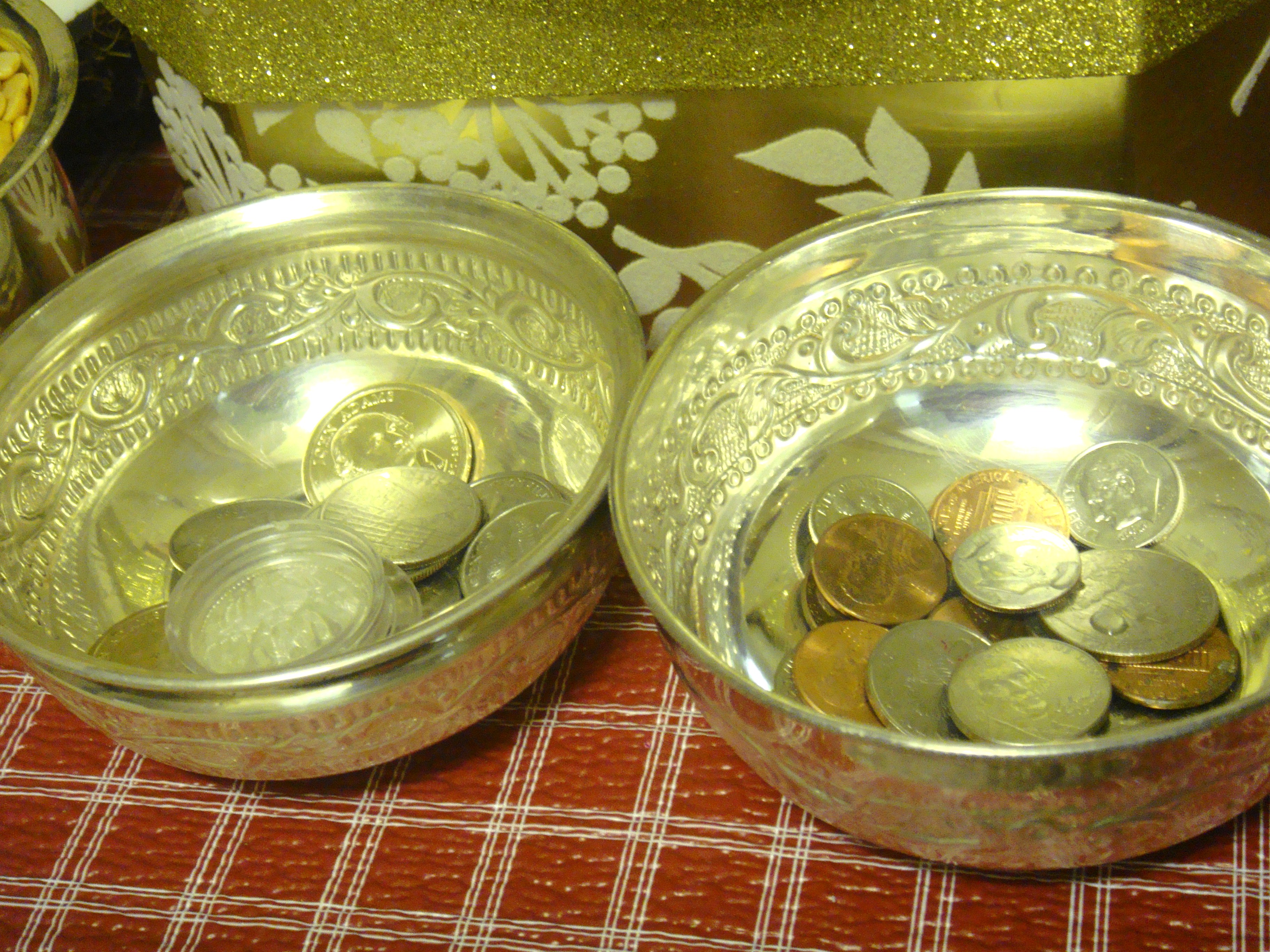
  • There would be smaller silver cups filled with silver coins, gold coins etc. Gold coins are symbols of monetary affluence, as well as cultural and spiritual wealth, which the elders of the family must share freely with the younger generation.
  • The Vishukkani is also laden with flowers, fruits as mentioned and some vegetables. We also keep chandan and kumkum in the Kani as it completes the preparation.
Coins symbolising prosperity.

Madurai amma would wake up very early, light the lamps and the incense sticks and set everything ready for the rest of us to get up and see. She would then close our eyes and bring us to the Pooja room one by one. The significance is to look at such goodness and bounty, which will in turn render our lives with such goodness and bounty. As we open our eyes to drink in the beauty of the lamps, the fragrance of the jasmine, the jackfruit and the incese all in one, the sight we behold is as beautiful every year as if we see it for the first time. The reflection in the mirror only adds to the beauty of the grandeur already resplendant in all its glory. We would see the lemons, the coconuts, the coins, the gold and then finally prostrate to the Lord. After our bath in the morning, its customary to take the blessings of all the elders in the family, for the fulfillment of the new year.

Vishukkani spells out abudance – both spiritually and materially. Food, wealth, good fortune, knnowledge and light, should accompany us at all times. The wonderful sight we behold on the first day of the new  year, must keep with us, all year and permeate our being.This year, I missed the jackfruit and jasmine, which is so charecteristic of my memories of Vishu…Nevertheless, I made my Vishu for my family, in true spirit, with the fruits and vegetables that I could get in here. My daughter was thrilled to see the Vishukkani in the morning….I saw her excitement on her face, and was instantly transported to some ten fifteen years ago….

dsc00932

Happy New Year to one and all.

Kid Friendly Recipes. · Naivedhyams/ Festival Offerings. · No Need of Onions!!! · Poriyals / Kootu Varieties. · Snacks & Tiffin Items

Yellow Peas Sundal. (Yellow vatana cooked and spiced with coconut and chillies)

Delicious Sundal.
Delicious Sundal.

The word sundal to me conjures up two things – One – Navarathri where “Sundals” are the main naivedhyams to the Goddess Devi and two – Marina Beach where hawkers sell the awesome Thenga Manga Pattani Sundal literally which translates to Coconut Mango and Green Peas. Although my mom has never ever allowed me to even look in to the hawker`s basket, all of us cousins secretly hoped to taste it some day as the aroma wafting in the air would be simply too much for us.

Navarathri again is an altogetherly  different option. Every day of Navarathri, we would be invited by the mamis next door and in the neighbouring apartments for “tamboolam“. So my sister and me would be dressed in our finest pattu pavadais, resplendant in their colours and happily go to their homes. Normally, we would be asked to sing a song on Devi, which we would and then after some time we would be given little baskets with turmeric, kumkum, and hot sundals wrapped in newspaper. As days went by, these newspaper parcels were stylishly replaces with little ziploc covers, but I missed those days of simplicity, where people had time to listen to little girls sing, enquire about each other in all sincerity, explain significances of the navarathri dolls etc.

Last night when I saw the little canister of yellow Peas in my pantry, I decided to soak it up overnight so I could make sundal the next day. Yellow Peas  is an excellent source of protein as its a healthy legume. Many days, its an easy snack for the kids when they come home in the evening from school as its both healthy as well as filling.

INGREDIENTS:

1 cup Yellow Peas.

1/4 cup of dessicated coconut.

3 green chillies.

Salt.

Hing.

Seasoning:

Mustard, Curry Leaves.

PREPARATION:

  • Soak the yellow peas the previous night for about 6-8 hours.  If you plan to make it for an evening snack, it is enough if you soak it that morning.
  • Drain all the water and pressure cook with a little salt and just enough water that they just reach the top of the vatana peas. Do not add too much that the peas drown in the water. This will render them mushy.
  • Switch off after 2 whistles and open after pressure is released.
  • Grind the coconut and green chillies without any water in to a coarse mix. Set aside.
  • In a kadai, add a spoon of coconut oil and when it is hot, add mustard, curry leaves and a dash of hing.
  • Immediately add the cooked yellow peas and a little salt and hing as required.
  • Garnish with the coconut-chilli mix and incorporate it well in to the peas.
  • Switch off the stove and serve with Sambar and Rice or as an evening snack for the kids – a healthy side/snack ready in minutes.

NOTE:

  • One variation is to season with only mustard and garnish with finely chopped coconut slivers, and finely chopped mango pieces. The crunchiness from the coconuts and the tang from the mangoes are incomparable.
Festivals & Significance · Naivedhyams/ Festival Offerings.

Significance of Ram Navami & Offerings – Sweet Panagam.

Panagam.
Panagam.

The festival of Sri Rama Navami marks the birthday celebrations of Lord Rama, an incarnate of Lord Vishnu. The main significance behind the celebration of this festival is that the character of Lord Rama signifies an ideal son, an upright husband, a righteous King, and a loving brother and even an ideal man, someone who follow the right path against all odds in life. He was also the true embodiment of humanity. So celebration of Sri Rama Navami is a special reminder of all the noble deeds or ideals for which Lord Rama symbolizes. So if we see it in true sense it is not only a festival to enjoy and have fun there are lot more things to be learnt. It is a celebration of goodness and its victory against all evils. Sacred places associated with Lord Rama, like Ayodhya, Ujjain and Rameshwaram, draw tens of thousands of devotees. In Rameshwaram, thousands take a ritual bath in the sea before worshipping at the Ramanathaswamy temple. There are also lots of Parayanams and satsangs where devotees get together to hear the story of Lord Rama and to sing bhajans in his praise.

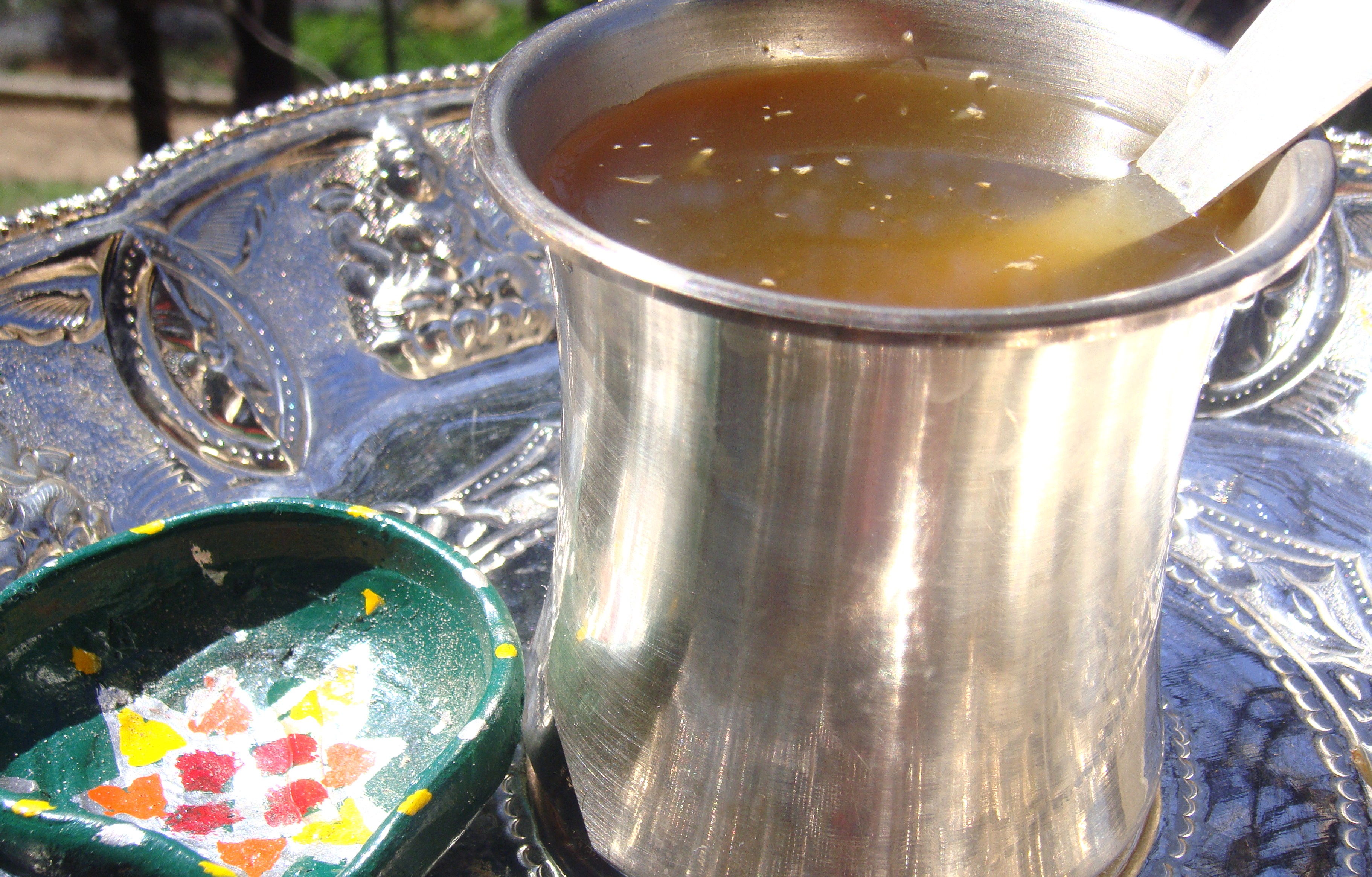
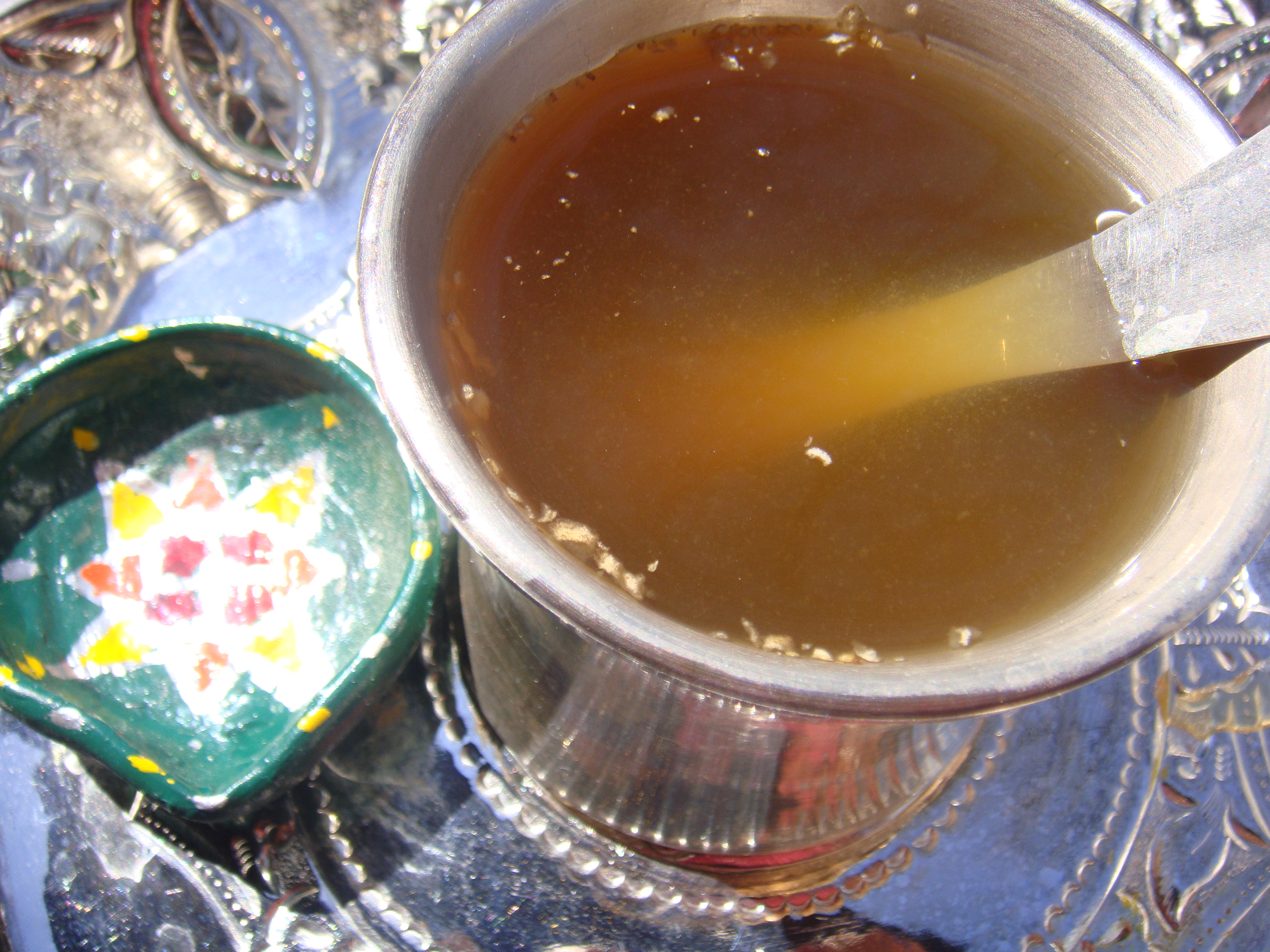
One of the most popular offering to the Lord, on this day is the “Panagam”.  I remember my amma making Panagam and offering it to the Lord and then all of us having it and enjoying the sweet from the jaggery and the spice from the ginger…

INGREDIENTS:

2 1/2 cups of water.

1/4 cups of jaggery.

1 tsp Grated Ginger.(Originally use “Chukku” or Dried Ginger)

1 tsp powdered cardamom powder.

Dash of Ground Black Pepper.

PREPARATION:

  • In a vessel, dissolve the jaggery in the measured water and set on the stove on medium low.
  • Slowly add the chukku after mashing it with a mortar and pestle or simply use fresh zested ginger.
  • Add powdered cardamom powder and a dash of ground black pepper.
  • Stir in well and switch off.
  • Offer Naivedhyam to the Lord and sip sweet Panagam.

dsc00770

Brisk Breakfast · Naivedhyams/ Festival Offerings. · No Need of Onions!!!

Venn Pongal.

Piping hot Venn Pongal.

Venn Pongal is a traditional south indian speciality that I have grown up with.  It`s the main Naivedhyam or offering for Pongal – the harvest festival celebrated in the month of January in all parts of Tamil Nadu. Pongal is basically rice and moong dal cooked to perfection and seasoned with ginger, pepper and cummin. It`s also reminscant of the fragrance of rich ghee and roasted cashew nuts.

Every hotel in Tamil Nadu, makes the most awesome Pongal  – Vada –  Chutney. Pongal is served steaming hot in a scoop, with a side of coconut chutney, a cup of Sambar  and 2 fresh crips vadas on the side. My all time favourite Pongal was  at Hotel Arya Bhavan in Madurai, very near the Meenakshi Amman temple and at Hotel Saravana Bhavan at Usman Road, T.Nagar. It`s a breakfast item that I can have for breakfast, lunch and dinner…..!!!!

INGREDIENTS:

1 cup of Raw Rice.

1/3 cup of Moong Dal

2 Tsp Ginger Grated.

A pinch of Hing.

Pinch of turmeric

Salt to taste.

4 1/2 Cups Water.

Seasoning:

2 Tsp  Jeera.

2 Tsp Whole Black Pepper.

Curry Leaves

3-4 spoons of Ghee.

5-6 pieces of Cashew.

PREPARATION:

  • Take a dry wok and add a few drops of ghee and lightly roast the moong dal. Move to a cooker vessel.
  • Wash the rice and add it to the moong dal.
  • Add a spoon of ghee  to a kadai and and when hot, add the ginger, hing and turmeric.
  • Add it to the rice and moong dal. Pour 4 1/2 cups water, add sufficient salt , cook for 1 whistle and keep on sim for 10 minutes.
  • Switch off the flame and when the pressure is released, mash the cooked rice and dal.
  • In a wide mouthed kadai, add 3 Tsbp ghee.
  • Season with cashew nuts, curry leaves, jeera and black pepper.
  • Allow it to saute for a few seconds and then add the cooked rice and moong dal.
  • At this point, If you feel that the Pongal looks dry, add 1/3 cup of milk and a spoon of ghee and stir it in.
  • This makes the Pongal rich, creamy and very moist.
  • Switch off stove and serve piping hot with Sambar/ Coconut Chutney/ Onion Tomato Chutney or Milagu Kuzhambu.


Serving steaming hot Pongal to “Think Spice – Think Pepper” event hosted by Divya Vikram of Dil Se and started by Sunita.

p1000059

Naivedhyams/ Festival Offerings. · Sweets

Succulent Gulab Jamuns.

Succulent Gulab Jamuns.

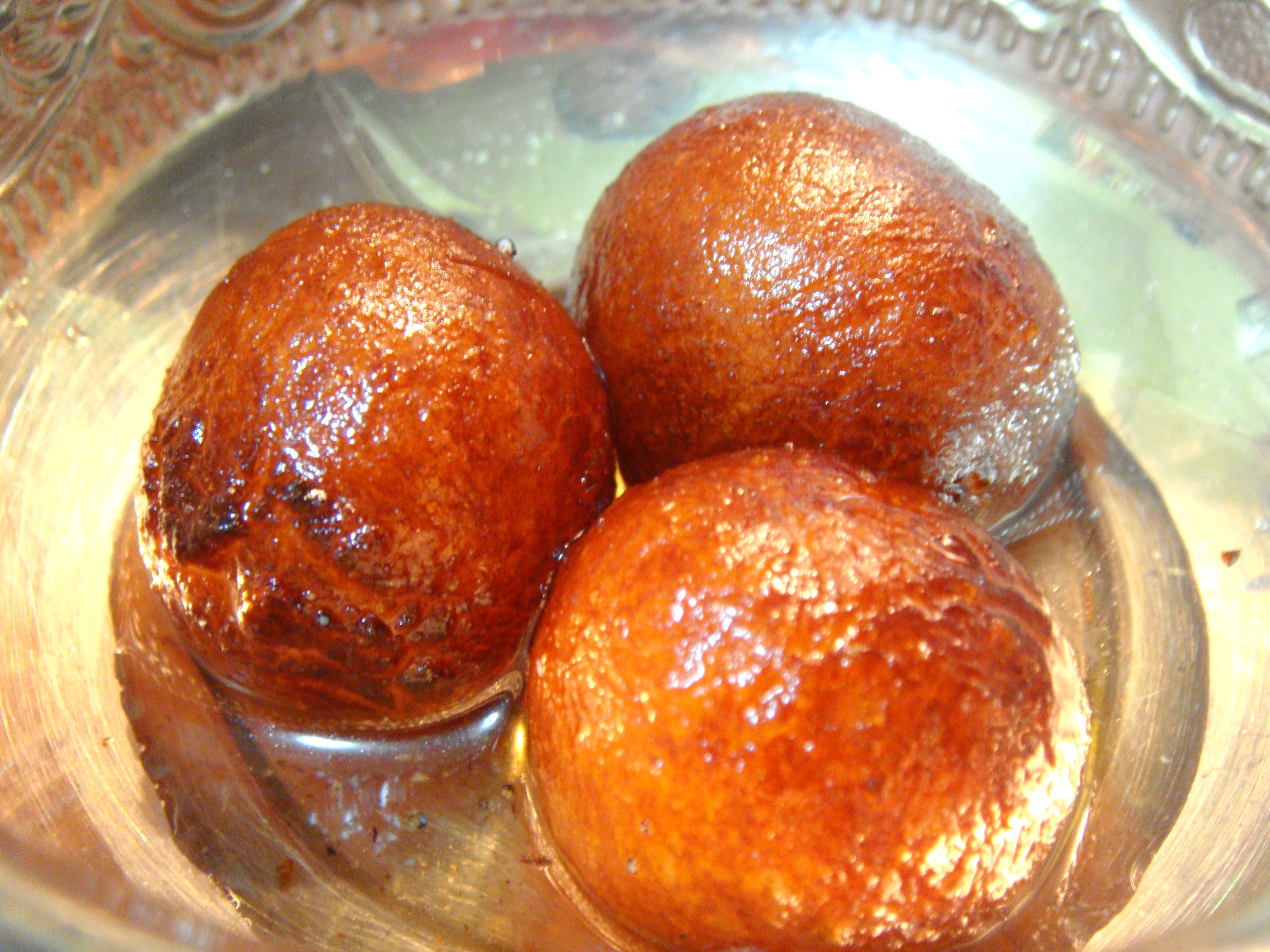
Gulab Jamuns should probably be one of the most popular and easy to make sweets with the current variety of mixes and fast fix instructions. There are a myraid of brands which offer the Gulab Jamun mixes, like Orkay, MTR, Gits, Ashirwaad etc. Some how my favourite has always been Orkay and Gits. Since Gits is more easily available in the U.S, its a sweet I make in a jiffy.

Diwali during my student days was always a flurry of activities like making Mixture, Ribbon Pakoda, Laddoo, Badam Halwa, and Gulab Jamuns amoung other things. Making the jamuns was some thing that amma would leave entirely to me….At that time Archana Sweets in T.Nagar, became very popular and introduced the Kala Jamun. I guess it was a variant of the regular jamuns, only denser in taste and not dripping in sugar syrup. Mom would buy it for us and we would enjoy it at home, nevertheless, there is a particular joy in partaking of sweets borne of out one`s one labour and preparation.

This week was my husband`s birthday and my daughter wanted me to make it for him. ….Secretly I knew, she wanted to have it so I immediately indulged her in this sweet temptation. This goes to those novices who are out there, trying this for the first time….Enjoy!!!

INGREDIENTS:

Gits Gulab Jamun Mix.

1 spoon sour cream.

3 spoons of water.

1 1/2 cup of sugar dissolved in 2 cups of water.

Pinch of Rose Essence.

Pinch of Cardamom Powder.

Saffron Strands.

PREPARATION:

  • The secret of this sweet is in the mixing of the dough. Empty contents of packet in to  a bowl. Mostly the instructions are to measure out the amount of powder and use 1/4`th of that quantity of water. In this case, all you need to use is a spoon of sour cream or thick yoghurt and then 2-3 spoons of water.
  • Make the dough in to a thick ball and keep covered for 10 minutes.
  • Now grease your palm and make little balls and set aside covered.
  • Meanwhile dissolve the sugar in the water and place it on the stove .
  • Add rose water, cardamom powder and allow to boil for about ten minutes and switch off.
  • Meanwhile add sufficient oil in a kadai and allow to the oil to heat well.

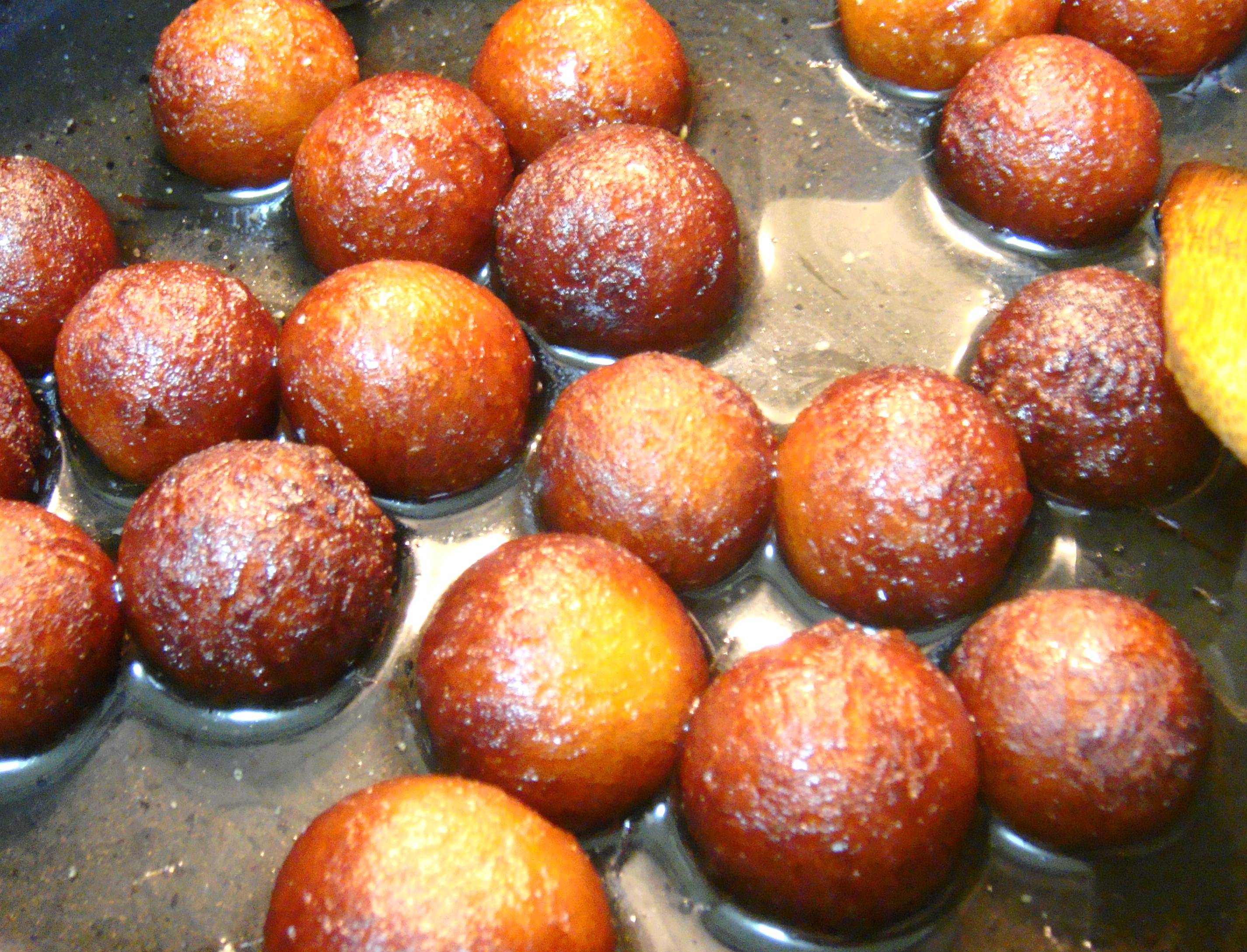
Frying in the oil.
Frying in the oil.

  • Slowly roll in the gulab jamun balls and aloow to fry the balls in oil.
  • Now set the fried jamuns in a little bowl for them to cool off for a few seconds.

Allow to cool for a couple seconds.

  • Slowly add the fried jamuns in to the rose syrup and allow it to soak before serving it to your guests.
  • Makes 20 gulab jamuns.
  • ENJOY!!!

Jamuns in Sugar Syrup.

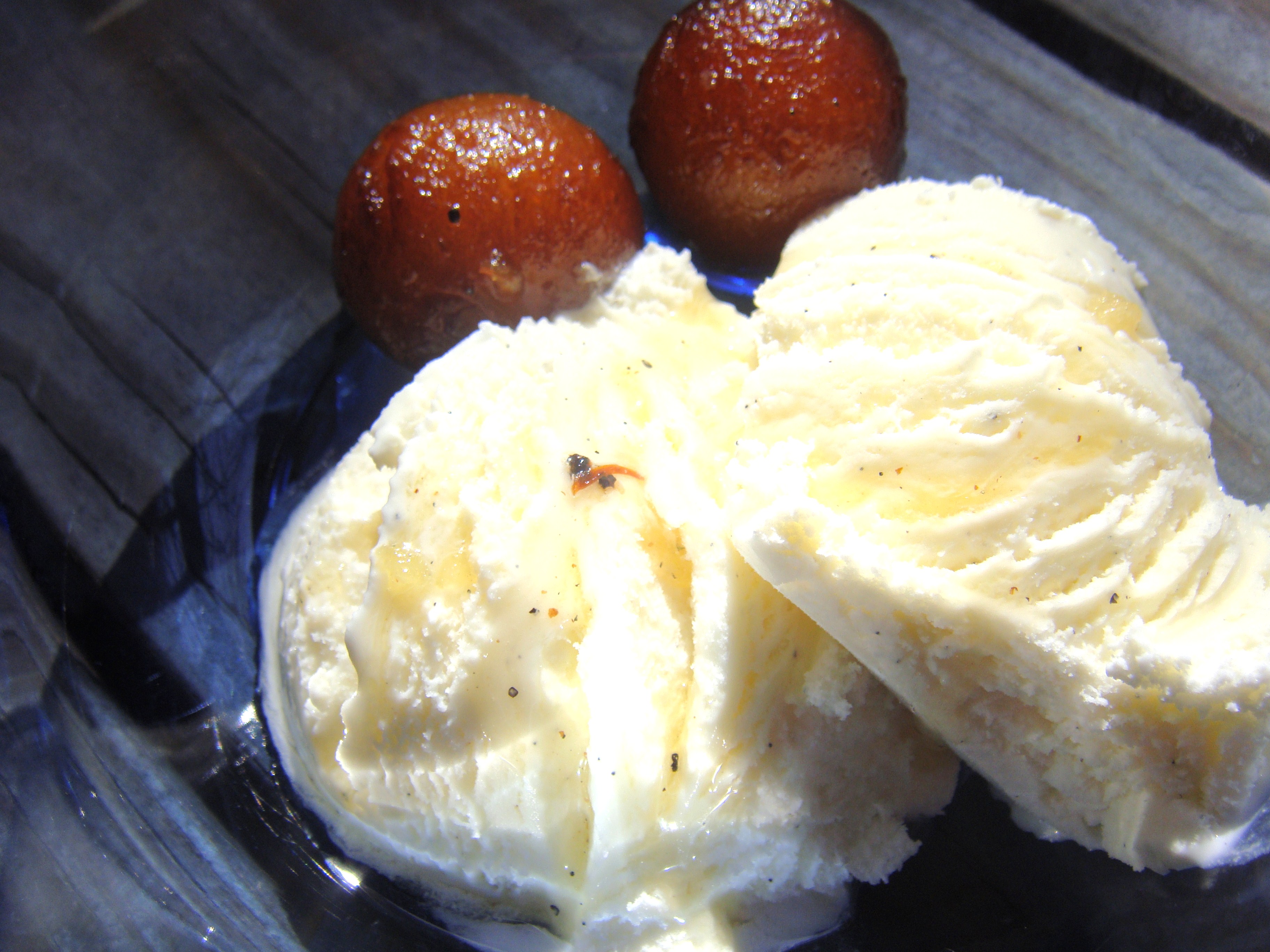
Serving Suggestion based on popular demand!!! – Hot Jamuns with Vanilla Ice Cream….Oh yes!  and let the fun times begin!!!

Jamuns with Vanilla Ice Cream.

Naivedhyams/ Festival Offerings. · Snacks & Tiffin Items

Vella Adai for Karadaiyan Nombu.

Vella Adai.

Roasting the Rice Flour is again an important and integral portion of the process of making Nombu Adai. The rice flour has to be roasted on a medium flame for about 7-8 minutes until it reaches a consistency where you can pick it up and draw a line with it . It would have changed  from a fresh white to a dull brown colour.

Roasted Rice FLour.

INGREDIENTS:

3/4 cup of rice flour.

3/4 X 2 cups of jaggery.

1 1/4 cups of water.

A handful of cooked red beans.

A pinch of elaichi powder.

1/4 cup of sliced coconut.

A drop pf ghee.

PREPARATION:

  • In a kadai, add the water and the jaggery and allow to boil.
  • Add a drop of ghee, red beans, sliced coconut, elaichi powder and stir in well.
  • Lower the flame, and slowly add the roasted rice powder little by little.
  • Use a whisk and bring the mixture together in to a smooth dough.
  • Use the same procedure as in the Kara Adai and flatten the balls of dough and place them on greased idli plates.

dsc00579

  • Steam the vella adai for 8 minutes on high and for another 7 mins on sim without weight.
  • Offer this  neivedhyam  HOT with uncooked butter.

HINTS:

  1. If you find that the jaggery has given out far more water than what you have imagined and the vella adai maavu consistency is too watery, simply pour in to the idli plates, steam and enjoy hot vella adai.,
  2. This is  a dish that get twice cooked. Once when you mix and cook it in the water over the stove and the secind time when it steams in the cooker.
  3. The MOST important step int he whole process is the roasting of the flour until its almost a dull red.
Festivals & Significance · Naivedhyams/ Festival Offerings. · Snacks & Tiffin Items

Karadaiyan Nombu Significance & Offerings – Uppu Adai (Steamed rice cakes flavoured with seasonings)

Uppu Adai for Nombu.

Karadaiyan Nombu is the tamil ritual where married women pray for the well being of their husbands and little girls pray to get good husbands in future. This ritual is observed at the time the tamil month of Masi ends and the month of Panguni begins. It`s believed that Savithri who was a very devout wife, saved Satyavan her husband,  from Lord Yama the God of Death. In order to show her gratitude to the Lord, she quickly made “naivedhyam” out of ingredients easily available then and there and offered it to God, along with uncooked butter.I am guessing “Karadai” refers to Kara – adai which means a savoury pancake. There is also the sweetened preparation called Vella Adai. Another ritual , is to offer the adais, a fruit, butter etc to Lord, pray for one`s husband`s well being and tie the Nombu Charadu which is a yellow thread, around the neck. Following the tradition of Karadaiyan Nombu is believed to attain Dheerga Sowmangalyam ( Long Married Life).

Every year when we were small, I remember madurai amma would dutifully tie her madisar so beautifully and get ready for the vratam. Mami and me and D would help in the kitchen in rolling out the dough, flattening them on little square cut banana leaves and placing them in the idli plates. Mami would then steam them out in the cooker and place them in little casseroles. There would be no need to grease the plates as they adais would be directly placed on the idli plates flattened on to the leaves. All one has to do is pull out the leaf and place the piping hot adais on the casseroles. I would love to see the little adais with the banana leaf pattern on one side. I am guessing there is also a flavour angle here, but I can never be too sure. After making the adais, Madurai amma would have laid out little square kolams for us to place the small banana leaf in front of the altar. We would all sit on follow her cue from there. She would place, a banana, the nombu charadu, the kara adai and the vella adai on the leaf and serve a blob of butter and offer it to God. She would also place a similar leaf for the Goddess herself. After tying the charadu to the picture of the Goddess, she would tie it on her neck and then tie each of our charadu on our necks too. Then we would salute the Goddess and then partake our prasadam.

Today, as I was following Madurai amma`s traditions, teaching them to my little daughter, I am reminded of how much devotion she would put in to every festival, every ritual. Her every proportions for dishes that she had taught me over the years, still hold good. I am very lucky to be her grand daughter and to have lived with her and learnt so many things from her. The preparation for kaara adai is also her proportions which are perfect if followed correctly.

INGREDIENTS:

1 cup rice flour.

Red beans - Karamani
Red beans – Karamani

2  cups of water.

A handful of cooked red beans (Karamani)

1/3 cup of thinly sliced coconut pieces.

1 Tsp Finely chopped Ginger.

1 spoon of salt.

2 Green  chillies chopped in to fine pieces.

Curry Leaves.

Mustard to season.

PREPARATION:

  • Dry roast the rice flour for about 7-8 minutes till it becomes a very light shade of yellow, and keep aside.
  • In a kadai, add 2-3 spoons of coconut oil and when hot, add mustard. When the mustard splutters, add chopped coconut, chopped green chillies, curry leaves, cooked red beans and a pinch of hing.
  • Allow to saute for a few minutes and then immediately add 2 cups of water and the salt.
  • Allow for this to boil, like you would do for upma.
  • Now slowly bring the stove to SIM and add the roasted rice flour little by little.
  • Use a whisk to bring it all together. You will see that it becomes a nice cooked ball of rice upma.
  • Grease your hands and also a small ziploc cover on one side. Make a ball from the rice upma and flatten it n the ziploc cover till it becomes the size of a cookie. Make a little hole in the centre and place it on a greased idli plate.

Adai flattened on a greased ziploc cover.

  • Comtinue and finish the dough , place the idli plates in the cooker and steam on high for 8 mins and then simmer and cook without weight for another 7 minutes or so.

Adais ready to get steamed in the idli plates.

  • Remove from idli plates, and serve HOT with uncooked butter.
  • Makes approximately 16-18 adais.
  • Also look at Karadaiyan Nombu Vella Adai.

HINTS:

  1. The most important part of the Nombu Adai is roasting the rice flour until it turns to a consistency where you can almost etch a”kolam” line  with it. Not roasting it properly alters the water absorbed by the Nombu Adai. PLease take care with this.
Naivedhyams/ Festival Offerings.

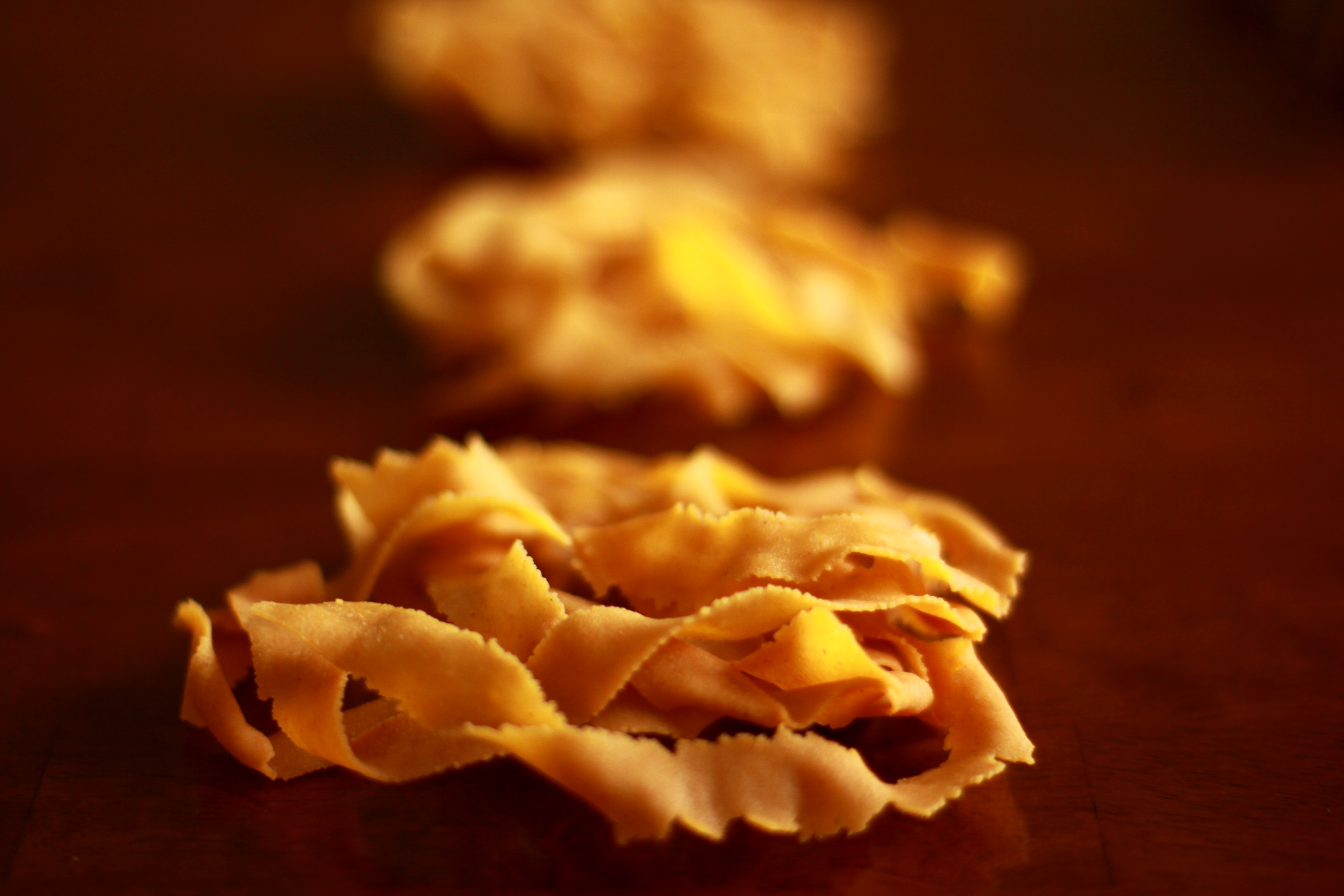
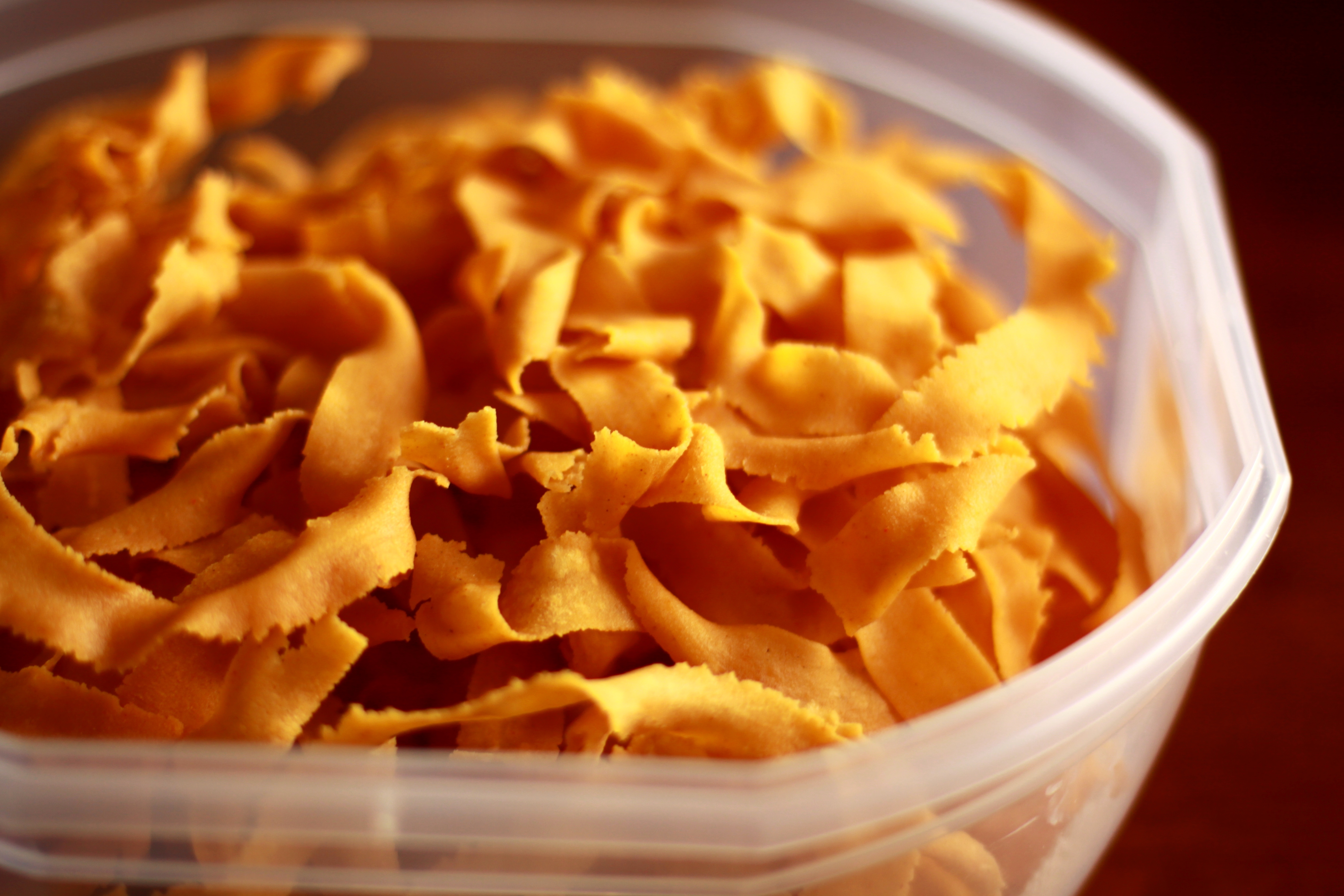
Ribbon Pakoda – Any time snack.

IMG_5598

Ahhh…the most loved anytime snack  – the ribbon pakoda is a family favourite. Ribbon Pakodas are an inclusion to all festivals and occasions  Those days Madurai amma would make a whole large aluminum tin, full of this delicious crunchy snack. Somehow, all of us cousins would invent reasons to visit the kitchen frequently and be extremely accommodating to the elders if they wanted us to get pickle or salt from the kitchen as it pronounced a chance to snack on the pakodas with a rock solid alibi!!!

These days, as is the family tradition, I also include it as a part of the “Bakshanam” for any festival, specially Deepavali. It`s a great snack to have on long drives or simply when the family gets together for a movie or a chat…My daughter loves it a lot, and I am sure you would too…

INGREDIENTS:

2 Cups Store Bought Rice Flour, sieved

1 Cup Besan, sieved.

2 Tsp  Urad Flour.

1 and 3/4 Cups (approx) Water.

1 Heaped Tsp Chilli Powder.

2 Tsp Salt.

1/4 Tsp Hing .

1.5  Tbsp Butter.

PREPARATION:

  • Take a heavy flat bottomed vessel and pour in canola or refined oil and switch on the stove on medium low.
  • In a mixing bowl, add the butter, hing, red chilli powder and  salt and cream/mix  it together with your hands. This is the base of this snack so make sure that its creamed and mixed well.
  • If you overdo the butter, it gets too greasy that it does not get pressed out as ribbons. They would all fall out in little pieces…So more is not always good!
  • Measure out the flours and add them to the bowl of creamed spices. Mix it in dry for a couple seconds.
  • Add the water little by little and knead the dough in to a soft homogenous ball.
  • The ball should slightly soft and  moist.
  • Dole out a big piece on to the hand press and when the oil is hot enough, slowly press out the dough on to the oil in to a circle.
  • Try to press them in to a flattened circle taking care not to clump them up at any time.
  • When one side is a done to a golden yellowish brown,  turn over to fry the other side and place on a soft tissue to allow the excess oil to drain.
  • Store in an air tight container and enjoy lazy afternoons with hot coffee or chai!!!

HINTS:

  • The main hint for this snack is that it should be crisp but melt in the mouth.
  • One the oil needs to be hot when you put in the item to be fried. Keep your flame on medium high and put in the Ribbon Pakoda. When one side is well done, turn it over and fry on the other side too. Between putting the next bunch of ribbon pakoda to be fried, allow the oil to get heated again.
  • When you finish one bunch, drain it on a collander, allow it to come to room temperature, taste it, adjust salt, spice levels  etc and then proceed to store it in an air tight container.
  • In case the  “Acchu” has a thicker hole,  allow it to cook well. but not brown. It is preferable to have thin crisp Ribbon Pakodas.

IMG_5595