Poriyals / Kootu Varieties. · Side Dishes for Rotis/Dosas/ Naan.

Quick Cauliflower subzi.

Cauliflowers are always a welcome addition to any dish I make as cauliflowers are an excellent source of Vitamin C and dietary fiber. I am a fiber freak and try to sneak in this element of our daily requirement in any dish I create. I also have this habit of immediately cleaning with salt water, drying and storing the florets in an air tight container, so I can scoop them and add them in to any dish I am making for the day. Cauliflowers are an excellent addition to any dry subzi preparation, mixed rices, bajjis, fillings and gravies. This is one of my entry for JFI Cauliflower hosted by Paajaka Recipes.

Cauliflower Subzi.
Cauliflower Subzi.

logo_jfi1

This is a quick and simple everyday recipe, known for its simplistic presentation and flavourful taste. A handful of peas could also be thrown in for added nutrition. It`s all about innovation in everyday cooking right???

INGREDIENTS:

Cauliflower:                 2 cups. (cleaned and chopped in to florets)

Salt

Besan                              1 spoon

Seasoning:

Mustard, Broken Urad Dhal, Curry Leaves, Hing.

Roast in Oil and Powder:

Toor Dhal           – 2 spoons

Bengal Gram     – 2 spoons

Dhania                 –  2 spoons

Pottu Kadalai   –  1 spoon

Red Chillis         – 5

Hing

Curry Leaves

PREPARATION:

  • Before you start, pop the cauliflower in to the microwave for 3 minutes so its almost halfway cooked. There is no need to add water, as the inherent water content in the cauliflower helps it to cook.
  • Place the tava in the stove, pour a spoon of oil,season with mustard, urad dhal, curry leaves and hing and immediately add the cauliflower.
  • Add turneric and salt according to taste and allow to cook for 5 mins or so until the raw smell is gone.
  • Add the ground powder, sprinkle besan  and serve garnished with cilantro.
  • This subzi is quick and can be coupled with roti or rice. For added nutrition and colour, pop in peas or lilva beans.
Poriyals / Kootu Varieties.

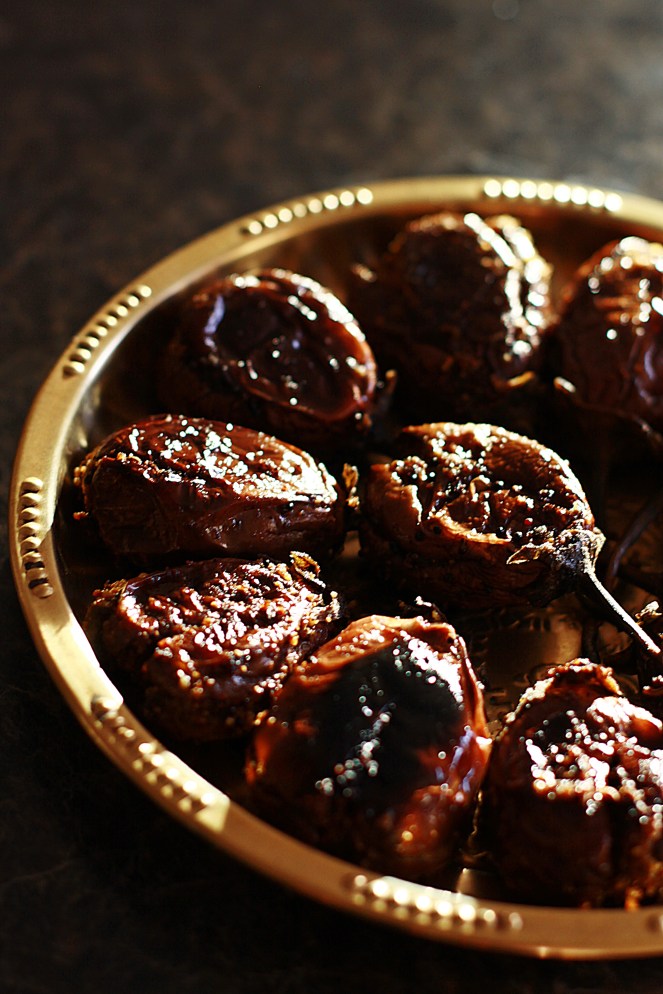
Stuffed Yennai Kathirikkai – (Eggplant stuffed with ground masala and slow roasted in oil)


img_5133Stuffed Brinjal is a delicacy that has a hundred different methods of preparation – influenced by the culture and changes over the times. My mother in law is an expert in this delicacy and she would make it often when we visited home in Srirangam. My husband loves eggplants and specially this particular dish and relishes it ,when its lovingly made by his  mother.At his request, I learnt to make this dish from my mother in law. Over times, on account of lavish use of oil, I have concocted my own way of simplifying this dish to accommodate both counts of flavor and health. There are a number of little tips that are important for this delicacy to turn out the way its supposed to be presented. Care should be taken to buy fresh, tender, small  brinjals, and prepare it in its freshest form, to minimize the effort involved as well as the oil used in its preparation.Most of the cooking is finished in the microwave oven, so that saves a lot of time, makes it a lot more simpler, and reduces the oil used. My recent addition of the Calphalon Sear Pan with its super wide base and sear bottom halves the cooking time and makes it fuss free.

INGREDIENTS: 15 – 18 tender and fresh Brinjals.

Salt

Curry Leaves

Hing

Roast in oil:

4 Tsp Dhania

2 Tsp  Bengal Gram.

1 Tsp Toor Dhal

1 Tsp Pottu Kadalai  .

1 Tsp Peanuts.

6 – 7  Red Chillis

1/2 Tsp Salt

1 Tbsp Coconut

5- 7 Curry Leaves

Hing

PREPARATION:

  • Clean the brinjals, dry them and slit them in horizontally and vertically until you just reach the stalk.
  • Roast the captioned ingredients in oil and powder them finely in a mixer. The ground powder already has salt which will help to flavor the brinjals.
  • Spray the eggplants with oil spray/ (spread gingely oil ) and sprinkle salt over them.
  • When the  brinjals are cooled, stuff the powder inside the brinjals, and keep them closed again as if they were whole. Since they are sprayed with oil, the stuffing will stick to the sides of the brinjals.
  • Place inside a greased cooker and cook on HIGH for one whistle.

img_5125

  • Take a wide mouthed pan, add oil, and season with mustard and curry leaves and slowly place the stuffed brinjals one by one,  in to the pan.img_5127
  • Cover and cook on low flame for about twenty minutes. Keep adding a spoon or two of oil, if you think its getting dry.
  • If needed sprinkle a few drops of water and cook until the brinjals are soft and cooked to perfection.
  • When one side of the brinjal gets seared, tip them over with a spoon so they cook uniformly.
  • When done switch off stove and serve HOT with Mango Kuzhambu or Chinna Vengaya Vathal Kuzhambu. 
  • IMG_1373
Kerala / Palakkad Recipes. · No Need of Onions!!! · Poriyals / Kootu Varieties.

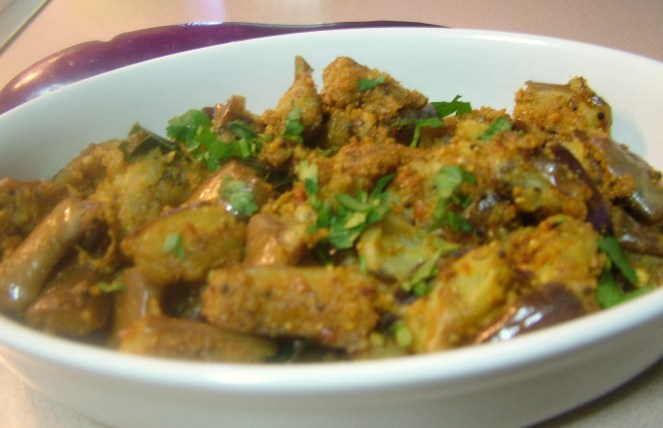
Kathirikkai Podimas – Eggplant/Brinjals sauted in oil and coated in curry powder.

Brinjals are an all time favorite and render themselves to be cooked in a hundred different ways. It`s always been a pleasure for me to cook with good tender brinjals as they get done in minutes. I always pick up tender tiny brinjals from the Indian store or better still, use the Japanese Eggplant.  You can make Yennai Kathirikkai, Kathirkkai Podimas, Brinjal Pepper Kuzhambu , Kathirikkai Curry with  minimalistic masalas, vangibath, baingan bartha, baghara baingan, and Kathirikkai Poricha Kuzhambu. Each of them take a different taste because of the way they are concocted. My husband  loves the way, brinjals are cooked slowly over a medium flame and slathered with the mix of roasted spices. It`s also a favorite among my friends and a regular addition to all potlucks and get-togethers.

Brinjal Podimas.
Brinjal Podimas.

INGREDIENTS:

Brinjals/Eggplant            – Medium (10-12) or 1 Big Japanese Eggplant.

Salt

Hing

Seasoning:

Mustard, Oil, Urad Dhal, Curry Leaves.

ROAST IN OIL:

Boiled Rice          – 3 spoons

Bengal Gram      – 2 spoons

Dhania                  – 1 spooon

Red Chillis          – 4

Curry Leaves    – 3-4

Hing                      – A pinch.

PREPARATION:

  • Chop the brinjals in to slightly longer pieces as they cook very fast and you dont want them to get mushy.
  • Slow roast the mentioned ingredients in a spoon of oil, allow to cool and grind them to coarse powder and set aside. You can proportionately increase the measurements two fold depending on the number of eggplants. Extra powder can always get stored in an air tight container doubly sealed with cling film to contain the freshness and aroma of the ground powder.
  • Pour 2 spoons of oil in a kadai, season with mustard , urad dhal and curry leaves and throw in the chopped brinjal pieces.
  • Add salt, turmeric and hing and cook on medium flame for about ten minutes till the brinjals are cooked well.
  • Switch off stove and add ground powder for flavouring.
  • Garnish with chopped cliantro and serve HOT with Lemon rasam or Spinach Morkuzhambu.
Poriyals / Kootu Varieties.

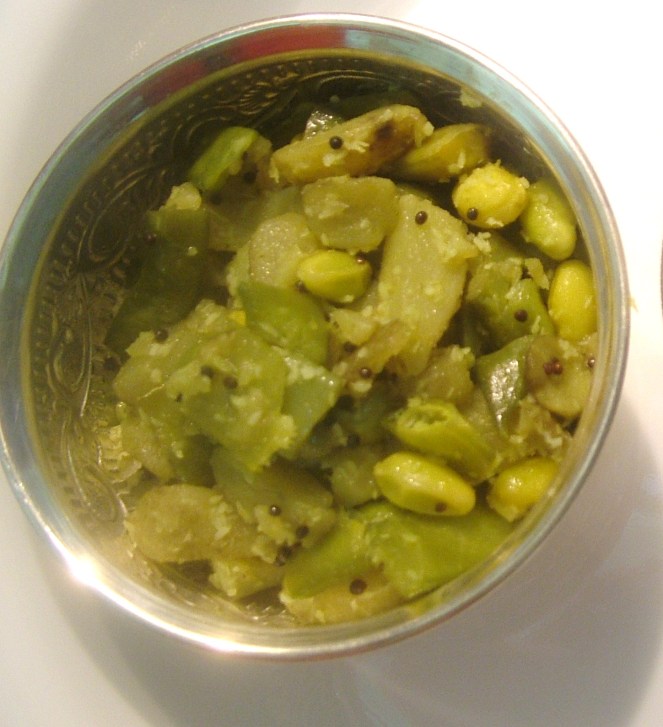
Avaraikkai, Mochai and Koorkai Poriyal.(Broad Beans,Lilva and Chinese Potatoes Poriyal)

Avaraikkai, Mochai & koorkai Poriyal.

Koorkai is a favourite for me even when I was in Madras, as this was a pretty seasonal root, that you would get only during december/january. It is an important addition to the vegetables that we use in “Thiruvadharai Upperi”. My mum would soak it for some time and rub is against a rough surface so it would get clean. Cleaning the Koorkai is the most difficult portion of  labour before relishing its taste. Then you would have to painstakingly remove the skin and chop it before you cook it in steam, AND THEN it becomes ready to be used in Mozhukkuperati, or upperi or molagootal….So much for this rare tuber!!!

I was really missing it when I moved to the U.S, but when I visited my aunt in PLano, in December `08, I found cleaned, cut and frozen koorkai in in indian store near her place. I was delirious with joy and I guess I bought 4-5 packets, as my husband was darting looks that very clearly spelt “baffled”. Not that I minded. I knew this was a seasonal vegetable and I had to stock  up for the year! Today was an exceptionally cold day and I really felt like having this fragrant vegetable, so I combined to make a  Poriyal with Avaraikkai and Mochai. In my mind, I guess I was trying to make up for the root, by adding a pulse and a high fibre vegetable.

It`s a pretty simply recipe, so here you go…

INGREDIENTS:

Avaraikkai             – 1 cup (Valor/Broad Bean) chopped in to 1 inch pieces.

Koorkai                   – 1 cup. (cleaned and chopped in to small pieces)

Mochai                   – 1 cup ( Valor Lilva)

Coconut                 – 3 tsp.

Salt.

Hing.

Seasoning:

Mustard seeds, Broken Urad dhal, Curry Leaves, Red Chillis (2-3)

PREPARATION:

  • Take a kadai and pour in two spoons of oil and allow to get hot. Slip in the urad dhal and the red chillies and allow it to get a little brown and now drop in the mustard seeds and the curry leaves and a dash of hing.
  • Add the chopped vegetables and add sufficient salt and sprinkle water and allow to cook on a medium low flame.
  • Allow to cook for a good fifteen minutes and sprinkle dessicated coconut.
  • Serve HOT with Vengaya Sambar.
Kerala / Palakkad Recipes. · No Need of Onions!!! · Poriyals / Kootu Varieties.

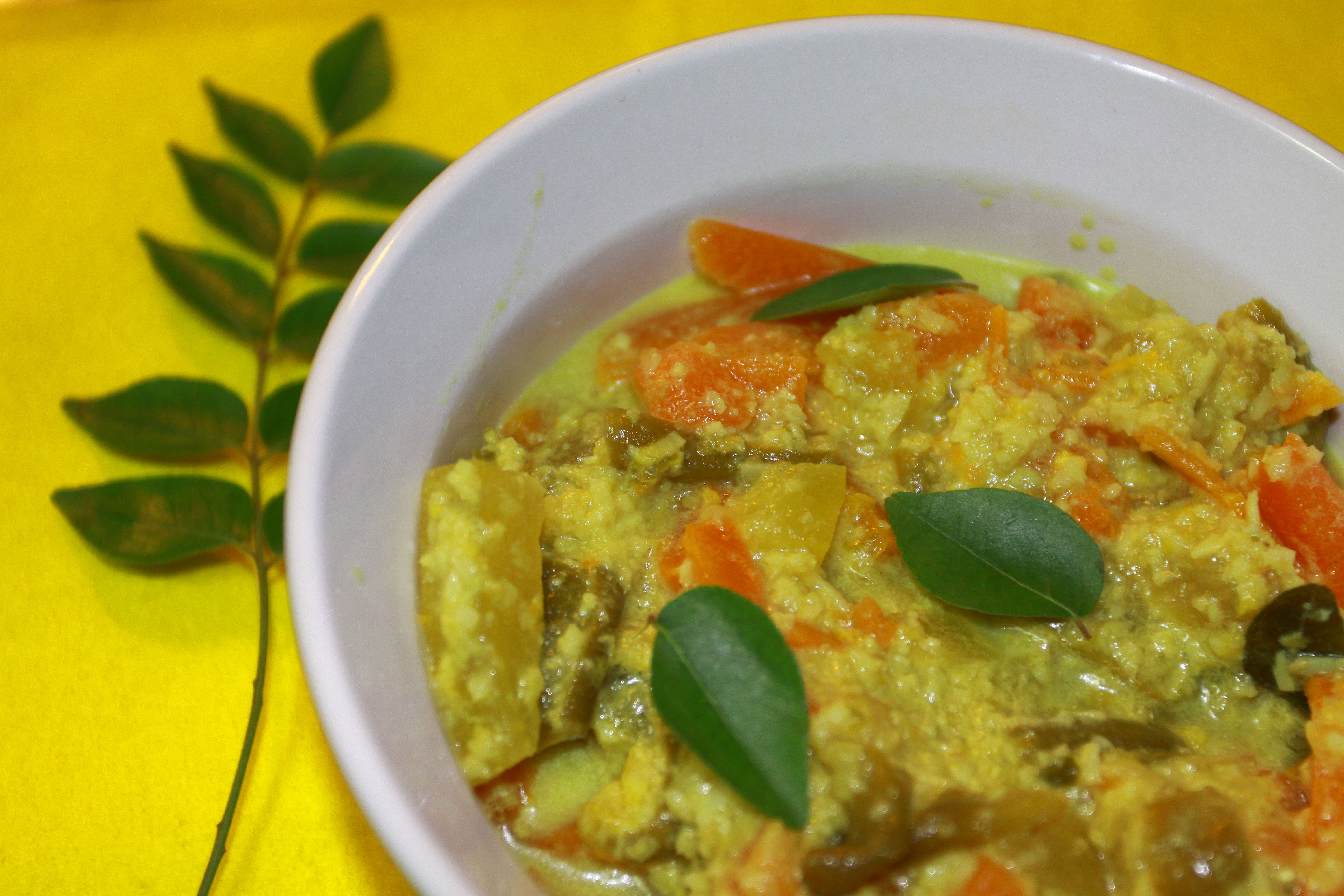
Avial – (Vegetables simmered in Coconut Yoghurt Gravy.)

Avial, a kerala dish, was always a favorite of mine.  There are many different ways of making this simple dish, but I love the way my grandmother used to make it. She had no methods and proportions, but all her dishes would be extremely tasty and very well done. I dont ever remember even a single incident where she felt that her salt was more or less or the dish was not well done. Her cooking was perfected over years and years of practice. As I lived with her during my student  years, I had learnt this dish from her first hand!!  Traditionally, Avial is made either as a side in a slightly thick form, or as a “kuzhambu”  form where its slightly more thinner.

Normally, Avial, is a choice when I see I  have a lot of leftover vegetables at the end of the week. It could be made with a variety of gourds and roots so its pretty versatile. Typically, its made with ash gourd, yam, potatoes, drumstick, carrots and raw plantains and some times even mango! . I am posting this simple recipe for the benefit of all my friends who have been wanting to try this for a long long time. In Tamil Nadu, people pair “Avial”  with “Adai” for a filling evening tiffin or dinner.

INGREDIENTS:

(ALL THE VEGETABLES HAVE TO BE CUT IN TO 1 INCH LONG PIECES)

Ash Gourd          – 1/2 pound.

Yam                       – 1/4 pound

Raw Plantain      –  1 Medium sized

Potatoes               –  1 Big sized or 2 Medium Sized

Carrots                  – 1 Long

Long Eggplant    – 1

Tamarind Water- 1/4 cup

Thick Yoghurt    – 1/2 cup.

Salt

Coconut                 – 1/3 cup

Green Chillis        – 6-7

Turmeric               – A pinch.

PREPARATION:

  • Arrange the heavier root vegetables like the carrots, potatoes, yam and plantains at the bottom of the vessel, and the more  lighter ones like the gourds and eggplant on the top.
  • Sprinkle salt and turmeric powder and pour the tamarind water over the veggies and allow to cook in the cooker for JUST ONE WHISTLE.
  • Do not overcook the vegetables as this would make them mushy.
  • Pulse the chillies and the coconut to a smooth paste.
  • Take a heavy bottomed vessel and move the cooked veggies to it.
  • Swich on the stove and  add the ground coconut paste.
  • Stir in the paste carefully to avoid breaking the cooked vegetables.
  • After simmering for 5-6 mins, add the thick curds and salt.
  • Stir again to mix in the yoghurt, add curry leaves, 3-4 drops of coconut oil and switch off the stove.
  • Serve HOT!! with Vethal Kuzhambu.
Poriyals / Kootu Varieties.

Cabbage & Peas Poriyal.

Cabbage & Peas Poriyal

Cabbage,as a vegetable  is an excellent source of Vitamin C. It also contains significant amounts of glutamine, an amino acid, which has anti-inflammatory properties, and an excellent source of dietary fibre. Cabbage as a vegetable was very common in my household. Probably thats why I was not a great fan of it. To make it a little more interesting my mami would add peas to the cabbage liberally. I am posting this as part of “Everyday Samayal”.

INGREDIENTS:

Cabbage          –  1/2 sliced and chopped in to small pieces.

Peas                   –  1/4 cup.

Coconut           – 2 spoons

Green Chilli    – 1 or 2

Salt, Hing.

Seasoning:

Urad Dhal, Mustard, Curry Leaves.

PREPARATION:

  • Place a kadai on the stove. Add 2 spoons of oil and when warm, slowly add urad dhal.  When it starts to brown, add the mustard and curry leaves.
  • Slowly add the cabbage and the peas and stir in well. Add salt, hing.
  • Cover and cook for ten mins or as long as the cabbage is well cooked.
  • Quickly pulse in the mixer 2 green chillis and coconut.
  • Add to the cabbage and mix in well.
  • Serve HOT with Drumstick sambar or Pavakkai Pitlae.