Sambar / Rasam / Kuzhambu Varieties.

Delicious Onion VethalKuzhambu.( Onions sauteed with spices and powders and simmered in tamarind gravy).
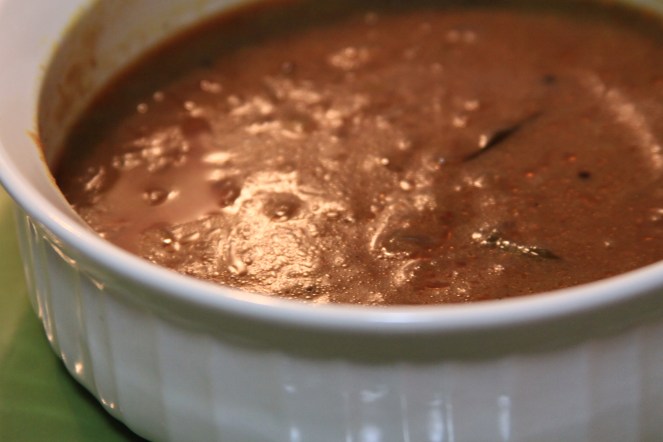
Onion Vethakuzhambu.

I had been wondering why on earth I had not posted this everyday recipe that my mom used to make. It has been an eternal favourite of mine since the day I have had it with Alu Fry. I remember when we were little, my sister D would want this everyday. Mom would keep it special over the weekend and she would have it with a side, with curd rice and every other dish possible. In my opinion, this gravy gets redolent with flavour and aroma at least a day after it has been prepared. There is no great secret recipe or ingredient….only small little things that have to be kept in mind, added a little ahead or later. Here is my recipe for the same.

INGREDIENTS:

1/2 of  a Big Onion or 1 Medium sized red onion.

1 1/2 cups of Tamarind Water extract.

1 1/2 spoons of Sambar Powder.

Salt

Curry Leaves.

Turmeric

1 Spoon of Ghee.

1 Spoon of Rice Flour diluted in 1/3 cup of water.

PREPARATION:

  • Keep all the ingredients ready before preparation. Chop the onions in to fine pieces.
  • Toss a kadai on the stove, and add a spoon of ghee/oil. When hot, add mustard, curry leaves, 2-3 somph, and immediately the chopped onions.
  • Allow to saute well and when beginning to turn light brown, add the sambar powder.
  • Roughly saute for a few minutes and then add  the prepared tamarind water extract.
  • Add salt, turmeric, a little more curry leaves and allow to boil and reduce. Keep it on medium flame.
  • When the water content is reduced to at least half, add the rice flour dissolved in water and mix well.
  • Keep for a couple more minutes and switch off. Garnish with chopped cilantro and serve.

HINT:

Serving Suggestion: Onion Vethakuzhambu & Alu Fry.

Naivedhyams/ Festival Offerings.

Navarathri Pooja Tamboolam Offerings:

Navarathri Tamboolam.


In the hindu ritualistic vedic poojas, every diety is worshipped by offering 16 services called the “Shodasa Upacharas”. Poojas have basically a two fold purpose. The first is the Baahya Pooja or the rituals we perform outwardly for the Deity, like offering flowers and fruits, incense, neivedhyam etc. It is an expression of our faith and reverence.Perfoming it in a systematic, time tested ritualistic manner is better as it gives better results. It also gives you discipline and better satisfaction & peace of mind.

But apart from that there is a deeper and greater spiritual significance behind the rituals and that is why they were prescribed and practiced by millions of our ancient seers. Understanding this,is known as Antah-Pooja. A vedic ritual is never a meaningless act. They all have deep rooted spiritual, philosophic significance.

Baahya Pooja is the formula. Antah Pooja is understanding and applying the formula  to get better results and achieve greater heights. These are the  steps involved in the Baahya Pooja:

  • Avahana – Welcoming the deity.
  • Asanam – Offering seat
  • Padyam – Washing the feet
  • Aarghyam – Washing the hands
  • Achamanam – Offering water to drink (to wash mouth).
  • Snanam – Bathing
  • Vastram – Offering clothes.
  • Yagnopaveetam – Offering sacred thread.
  • Aabharanam – Offering ornaments
  • Gandham – Offering Sandalwood paste
  • Pushpam – Offering flowers and doing pooja.
  • Dhoopam – Offering perfumed Incense
  • Deepam – Offering a lighted lamp.
  • Naivedyam – Offering food.
  • Taamboolam – Offering beetle leaves with caustic and beetle nut
  • Pradakshina Namaskaram – Circumambulation and salutation of the deity.

Tamboolam consits of beetle leaves, beetle nut and caustic represent the three avasthas or states of the human being – jagrad, swapna and shushupti or waking, dreaming and sleeping states. Offering Tamboolam is the effort to go beyond these states – i.e. to the nirvikalpa state. When we offer Tamboolam to a woman or a kanya girl, we see them as a form of Goddess Durga and thus salute them as such.

The Tamboolam plate typically consists of the following:

Betel Leaves.

Betel Nuts.

Areca Nuts.

Kumkum.

Turmeric.

Small Mirror.

Comb.

Bangles.

Fruits – Bananas, Apples, Oranges etc.

Neivedhyam like Sundal, Chakkara Pongal etc.

Small gifts for kanya girls like Chains, Bracelets, Earrings etc.

Blouse Bits for Married Women.

Many times, we also offer little silver kumkum containers, sarees etc to important women in the family and our elders. It is customary to salute their feet and humbly  offer the Tamboolam, seeking their blessings.

Naivedhyams/ Festival Offerings. · No Need of Onions!!! · Snacks & Tiffin Items

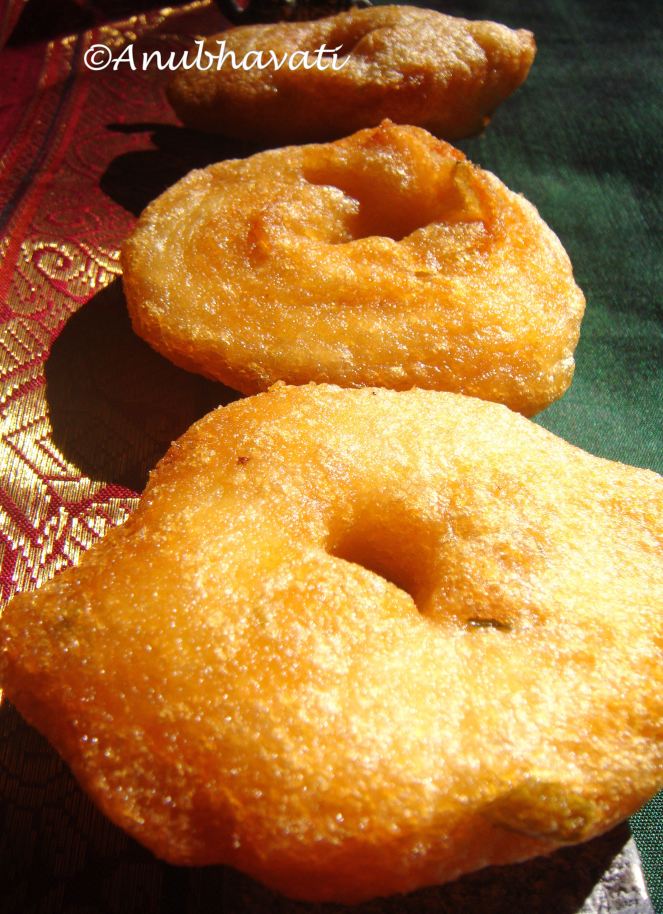
Navarathri Neivedhyam – Saraswathy Pooja – Ulundhu Vadai.(Crispy Savoury Snack made from Black Gram Dhal)

Crisp Fried Vadas.
Crisp Fried Vadas.

Crispy Black Gram Dhal Vadas were always my favourite from when I was a little girl. Madurai amma used to make them at home for all important festivals and I used to love to bite in to their crispy exterior and spongy insides!!!   I have two maternal uncles living in the north and whenever they would visit us in Chennai, they would go to Balajee Bhavan or Geetha Cafe in Pondy Bazzar in T.Nagar and order for Pongal and Vada for breakfast!!! Steaming hot Venn Pongal, shaped in to a ball, coupled with two crispy vadas on the sides, loftily served with piping hot sambar and thick coconut chutney on the side….YUM….I would give anything to be there right now!!!

When I wanted to make it, at home for Avani Avittam one year, I used my Premier Mixer and tried my hand at the batter. I had to say, I did soak the urad dhal for just 3 hours, and it did come out fried, but it was never crispy and in the shape I wanted it to be. I wanted golden vadas, which were crisp and yet spongy, and not dripping with oil in which it was fried. I tried various methods, adding rice flour, adding rava, fermenting the batter for a bit, adding very less water, using ziploc bags to get the desired shape….and then I hit upon the home truth – GRINDING THE BATTER IN A WET GRINDER!!!  Yes, thats really it. And the last few times, I have been enjoying wonderful, crisp, terrific, delicious vadas, way better than the ones in the hotels, as we make at home with the freshest of oils and the best of efforts and devotion. This does not in any way mean that people with mixers cant try this out. The secret is to increase the fluffiness of the urad dhal without adding much water. This end result is best achieved with stone grinder, rather than with a electric mixer, loaded with urad dhal, and little water.

INGREDIENTS:

1 cup whole Urad Dhal soaked for 3-4 hours.

8-9 Green Chillies.

Less than 1/4 cup of Water.

1 spoon Salt.

Hing.

Torn Curry Leaves.

Oil to fry.

Wet Grinder.(Optional)

Ice Cream Scoop (Optional)

PREPARATION:

  • Take  the wet grinder/mixer, wash it and keep it ready for use. Clean the soaked Urad Dhal and remove all the water it was soaked in.
  • Switch on the grinder, add the green chillies and 1/8 cp of water and then slowly add the soaked and cleaned urad dhal.
  • Add all the urad and let the grinder run for at least 40 minutes.
  • In the middle, if you feel that it requires some water, go ahead and sprinkle a few drops. Add salt.
  • The secret is to allow it to run for the 40 minutes with as much less as water as needed.
  • By now the urad is very softly ground. Remove and store in a container. Add hing, freshly torn curry leaves and mix well. The consistency should look like this.
Vadai Batter - Thick and fluffy.
  • Keep sufficient oil in a kadai and allow it to heat. Do not overheat lest the oil should smoke. Keep the flame on medium to medium high.
  • If you have an  ice cream scoop, put that in a small cup filled with water.
  • Wet your left hand, scoop out some batter in the ice cream scoop with your right and pop it in your left hand.
  • Wet your right hand and slightly flatten the batter, make a hole in the middle, and drop it slowly in to the oil.
  • This is easily achieved ONLY if  your batter has minimal water AND your hands are sufficiently wet. The scoop is also made wet, as this aids in easily slipping out the batter on to your hands.
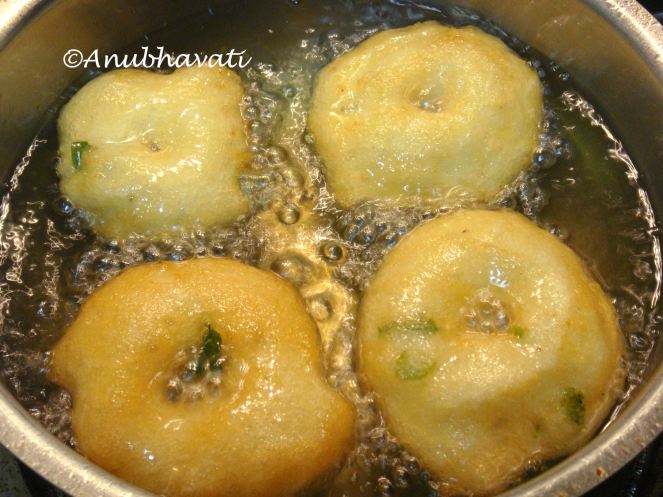
Vadais frying in Oil.
  • The scoop is only used to get uniformly shaped vadas. Feel free to scoop with your  bare right hand and drop it on your left, if you are comfortable with this.
  • The vadas, when they hit the oil, will hiss and start cooking on one side. When its done, turn over to the other.
  • When fried to a golden colour, remove from oil and allow to drain on kitchen tissue lining a colander/bowl.
  • Repeat and continue until the batter is completed.
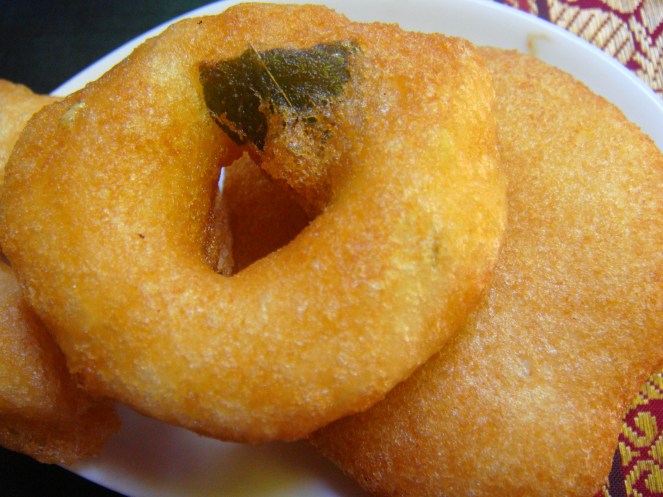
  • Crispy fried Ulundhu /Urad Dhal Vadas are ready to taste!!!
Ulundhu Vadai
Ulundhu Vadai

HINTS:

  • The only difference with using the mixer, is that the batter never comes out as fluffy and thick as the ones that go through the grinder. Here you would need to use a spoon of rice flour to thicken it out.
  • Ulundhu Vadais/Urad Dhal Vadas  can be soaked in Rasam and served as Rasa Vadas.
  • Served with hot sambar and garnished with cilantro, it becomes Sambar Vadas.
  • Soaked in thick curd/dahi, garnished with a little bit of sweet tamarind chutney, chat masala and boondhi, it becomes yummy Dahi Vadas.

This is my entry for EC’s WYF – Festive Treats event going on at her blogsite.

Sept logo


Naivedhyams/ Festival Offerings. · No Need of Onions!!! · Snacks & Tiffin Items

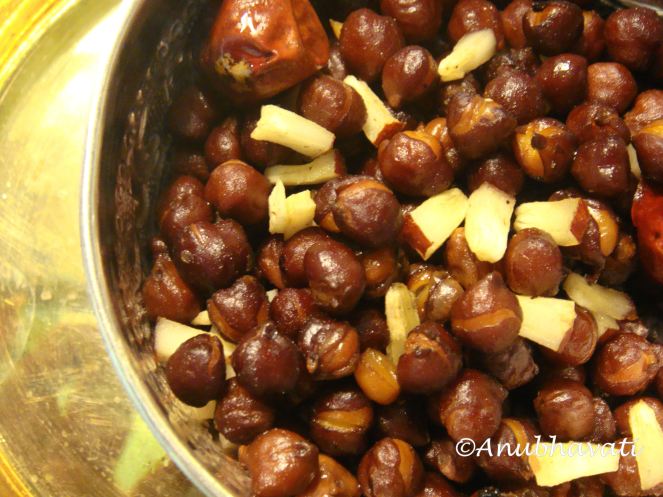
Navarathri Neivedhyam Day 8 – Black Channa Sundal garnished with sliced coconut pieces.

Black Channa Sundal
Black Channa Sundal

On this Ashtami of Navarathri I wanted to make an all time favourite – Black Channa Sundal garnished with sliced coconut pieces. Black Channa is very common among our homes as a classic Neivedhyam for Navarathri. It is in fact made on Saraswathy Pooja day as the “traditional” offering to Sarswathy, in my home. Just like any other legume, the black channa variety is high in cholestrol lowering fibre and has a lot of protien content which is very useful for people on diets and for a healthy snack.

INGREDIENTS:

1 cup Black Channa.

Water to cook

Salt

Oil

Mustard

Curry Leaves

4 Red Chillies Dry.

1/4 cup of finely slit coconut pieces.

PREPARATION:

  • Soak the black channa for at least 6 hours prior to cooking.
  • Put in a wide mouthed container, add salt, turmeric and add just enough water to cover the channa.
  • Put in the pressure cooker and when the steam comes, put on the whistle.
  • Wait for one whistle and then reduce the flame to “SIM” and keep for ten minutes and then switch off.
  • Drain in a collander, but save the water to mix chappathi, make rasam, sambar etc.
  • Take a kadai, add 2 spoons of coconut oil. When the oil is hot add mustard, curry leaves, hing, dry red chillies and then the cooked channa.
  • Mix well and wait until the seasoning ingredients are mixed well in to the legumes.
  • Garnish with finely sliced coconuts and serve HOT after offering as Neivedhyam.
Naivedhyams/ Festival Offerings. · Snacks & Tiffin Items · Sweets

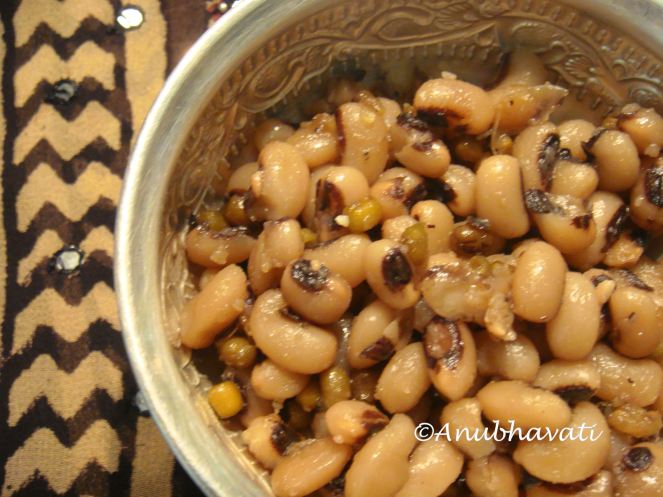
Navarathri Neivedhyam Day 7 – Sweet Black Eyed Beans Sundal. (Vellai Karamani Vella Sundal)

Sweet Black Eye Beans Sundal.

Today being friday, my daughter wanted a repetition of the Sweet Sundal so we made the Black Eyed Beans cooked in jaggery. This is made very similar to the Sweet Green Gram Dal Sundal that I had previously posted.

HINTS:

Soak the Black Eyed Beans in water for at least 4-5 hours prior to preparation of Sundal.

Cook in the pressure cooker until you get one whistle and then reduce the heat and cook in LOW for ten minutes and then switch off.

Drain in the colander to remove any excess water and keep ready.

Follow the same procedure as in the Green Gram Dal Sundal.

Naivedhyams/ Festival Offerings. · Snacks & Tiffin Items

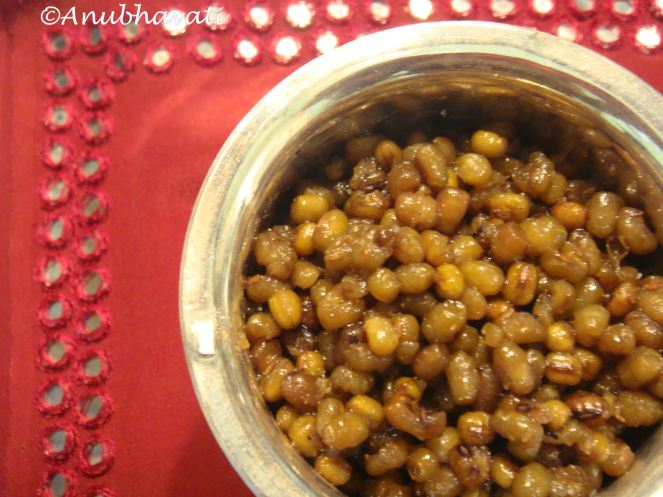
Navarathri Neivedhyam Day 6 – Sweet Green Gram Sundal & Pidi Kozhakattai.

Sweet Sundal.
Sweet Sundal.

I remember when we were little kids, amma always used to make at least two days of Sweet Sundal during the Navarathri festival for all our sweet cravings!!! What a great idea, to incorporate the best of two worlds – legumes and jaggery!!! My sister D loves this version and in fact would pester her to make it as an evening snack or whenever she feels like eating anything sweet!!! Since we use brown sugar/jaggery, which is  a rich source of iron , it is definitely more wholesome sugar and, unlike refined sugar, it retains more mineral salts.

Green Gram Dal on the other hand is one of the most wholesome among all the pulses and it forms very nutritious diet.Try this version  and you`ll find that the kids instantly love them. It`s actually a great evening snack full of protien and nutrients, made with jaggery, so the benefits are multiplied.

Today`s Neivedhaym for Navarathri was

Navarathri Neivedhyam

INGREDIENTS:

1 cup Green Gram Dal.

3/4 cup grated Jaggery or soft brown sugar.

Water to cook.

1 tsp of Cardamom Powder.

1 spoon of ghee.

PREPARATION:

  • Take the cup of  green gram dal and roast it dry in the kadai for a few minutes. You will slowly get the aroma of the roasted green gram dal. This should suffice. Its not required to soak the green gram dhal. We do this so the green gram dhal cooks easily.
  • Always roast on a medium flame. Set aside.
  • When the dhal cools considerably, put in a vessel and pour water to cover the beans. Do not add salt.
  • Allow the steam to come on full throttle and put whistle. When the first whistle comes, reduce the flame to LOW and keep for ten minutes.
  • Switch off after ten minutes, and set aside.
  • In a kadai, add  spoon of ghee, and the cooked green gram dhal.
  • Now add the 3/4 cup of jaggery and mix well. The jaggery will melt and coat the cooked green gram dhal.
  • Immediately switch off the stove and add the crushed cardamom.
  • Stir in immediately and mix well.
  • Offer Neivedhyam to Devi and enjoy sweet sundal.

HINT:

IT IS NOT REQUIRED TO SOAK THE GREEN GRAM DHAL. THIS CAN BE WHIPPED UP IN A JIFFY. THIS IS WHY WE LIGHTLY ROAST IT SO IT COOKS WELL WITHOUT GETTING TOO MUSHY.

This variation can also be tried with Black Kidney Beans, white beans etc.

Kids also love this as an evening snack.

Packing off this delicious Sundal to My Legume Love Affair – Serving 15 hosted by Sia of Monsoon Spice, brainchild of Susan of The Well Seasoned Cook.

3877642517_283368e75d_o


Naivedhyams/ Festival Offerings. · Sweets

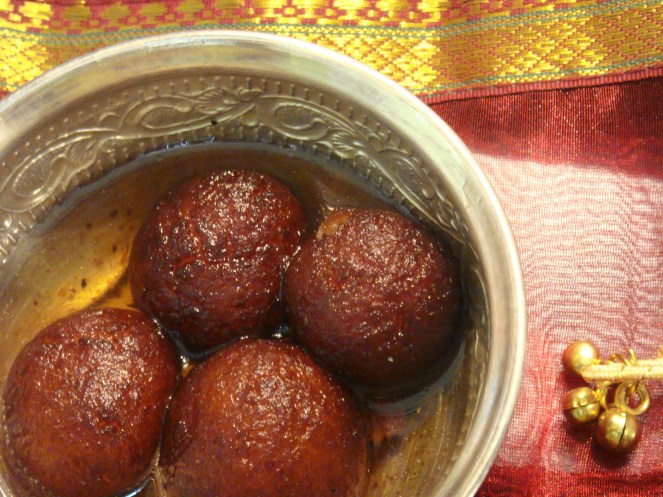
Navarathri Neivedhyam Day 5 – Sweet & Succulent Gulab Jamuns.

Today was Sri Chakra Pooja at the local temple and I had been wanting to witness one for some time now. Today also happens to be my mother`s birthday. So I wanted to make some thing sweet for her, as well as offer some thing to Devi. I am not sure if this is very apt as a Neivedhyam for Goddess Parvathy, but this is what I made nevertheless.

The posting for Gulab Jamuns can be found here in my earlier posting.

Navarathri Neivedhyam Day 5 - Sweet Gulab Jamuns.
Naivedhyams/ Festival Offerings. · Snacks & Tiffin Items

Navarathri Neivedhyam Day 4 – Yellow Peas Sundal.

Today being the fourth day of the nine day celebration of Navarathri, the offering to the Devi was Yellow Vatana Peas Sundal. This has already been posted here previously and its also one of my favorite of the sundal preparations. Here is the pic…

Yellow Peas Sundal.
Yellow Peas Sundal.
Naivedhyams/ Festival Offerings. · Snacks & Tiffin Items

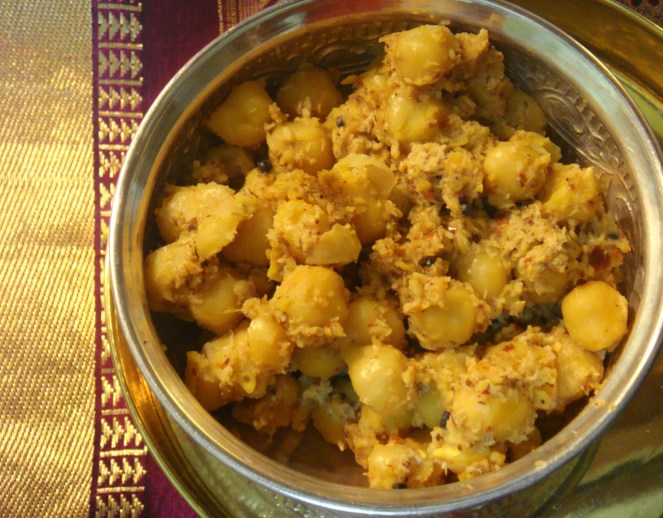
Navarathri Neivedhyam Day 3 – Arachu Vitta Sundal. ( Garbanzo Beans cooked with ground spices)

Arachu Vitta Sundal.

Today is the third day of Navarathri and we thought we should make a neivedhyam with the white channa or the garbanzo beans. This is probably the most used and most under-valued in the legumes family.Garbanzos (also called chickpeas) are a good source of cholesterol-lowering fiber, as are most other beans. In addition to lowering cholesterol, garbanzos’ high fiber content prevents blood sugar levels from rising too rapidly after a meal, making these beans an especially good choice for individuals with diabetes, insulin resistance or hypoglycemia. When combined with whole grains such as rice, garbanzos provide virtually fat-free high quality protein. It is also a very rich source of dietary fibre, iron and magnesium.

This variation of Arachu Vitta Sundal is also made by Amma with Mochai ( Field Beans) and its a favourite at home.

INGREDIENTS:

White Channa – 2 cups.

Water just enough to cover and cook.

Salt

Hing

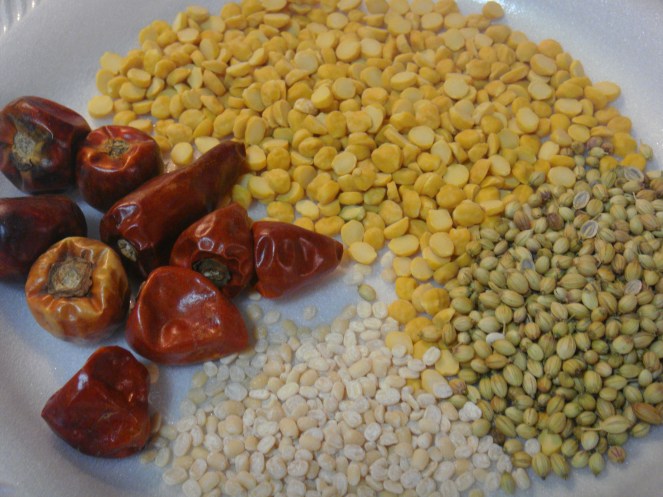
Roast:

4 spoons Channa Dal.

2 spoons Dhania.

8 red chillies

1 spoon of urad dhal.

1/3 cup of coconut.

Mustard, Curry Leaves, Oil & Hing for seasoning.

PREPARATION:

  • Soak the white channa for at least 6-8 hours prior to preparation of neivedhyam. Cook in the pressure cooking adding water,  salt and turmeric for 3 whistles.
  • Drain all the cooked channa in a collander and allow to stay.
  • Use the water for cooking rasam, sambar etc and also for grinding the “masala” for the sundal.
Roast in oil and grind with coconut...
  • In a kadai, add a spoon of oil and when it is hot, add all the ingredients specified for roasting. Roast on a medium flame until the dals get brown and you get a gentle aroma.
  • Pop in the mini mixer jar, add fresh grated coconut and using a alittle of the cooked channa water, grind to a very smooth paste.
  • Take your kadai/wok and add 2 spoons of oil. Season with mustard, curry leaves and hing and add the cooked white channa beans.
  • Stir them gently and now add the ground masala from the mixer jar.
  • Mix well and allow to cook for a couple of minutes until all the water is absorbed.
  • Delicious Arachu Vitta Sundal is ready for Neivedhyam.

HINTS:

  • Moderate the number of red chillies as these were a tad spicy for people like me. People who want the heat from the red chillies are most welcome!
  • Follow the same method for sundal made out of Mochai or Field Beans. Very YUM !!!

Naivedhyams/ Festival Offerings. · Snacks & Tiffin Items

Navarathri Neivedhyam Day 2 – Moong Dal Sundal.

Tamboolam Plate.
Tamboolam Plate.

Today being the second day of Navarathri and a weekend, I thought Moong Dal Sundal would be a good choice. Moong Dal is a good source of high levels of protien and contributes only a very low percent of fat calories to the diet. Moong Dal Sundal would be an excellent choice as an evening snack for kids as well as a mid day snack for pregnant women and people on diets. It cooks very easily unlike the other varieties of protien/lentils.

INGREDIENTS:

2 cups of Moong Dal.

Water to cook the dal.

Salt

Hing.

Pinch of red chilli powder.

1/3 cup of fresh grated coconut.

5-6 green chillies or according to taste.

Seasoning: Mustard, Curry Leaves.

Oil.

PREPARATION:

  • Moong Dal cooks very easily so there is no need to soak ahead.
  • Take a vessel and put in the moong dal. Then add water to just cover the moong, salt and a pinch of red chilli powder.
  • Allow it to cook on medium flame for about 6-7 minutes. You will see that the moong with absorb the water and slightly grow in size.
  • It is important that you do not overcook the moong as it tends to get mushy.
  • Drain out the water with the help of a collander and set aside to cool down for 10 minutes or so. If needed, spread it out on a plate so it dries out the water a little.
  • Meanwhile pulse the coconut and green chillies in a mixer to a rough mix.
  • Take a kadai, add 2 spoons of gingely/coconut oil and allow to heat.
  • Season with mustard, hing, curry leaves and then add the cooked moong dal.
  • Immediately add the pulsed coconut-chilli mix and give it a slow mix.
  • Use your ladle to carefully mix in the ingredients and flavouring. Too much handling could again break the moong and make it mushy.
  • Garnish with chopped cilantro.
  • Offer Neivedhyam to Goddess Devi and partake of the prasadam.