Kerala / Palakkad Recipes. · No Need of Onions!!! · Sambar / Rasam / Kuzhambu Varieties.

Pumpkin & Cucumber Molagootal. (Ash Gourd & Cucumber cooked with coconut and spices)

Pumpkin Molagootal

Many days the staple diet at home, when I was growing up, used to be Pumpkin Molagootal. I guess it was cooked so often as it was pretty easy to make, uses less ingredients, and since the main vegetble is Pumpkin, its a very healthy preparation. On a day when you would want to eat healthy and finish cooking without a fuss, Molagootal would be an easy option. Goes very well with some thing tangy like Inji Pulikachal, Brinjal Puli Pachadi, Vendekkai Thayir Pachadi, Maavadu, Maanga Curry or any kind of pickles too specially lemon. Since it can be had with so many sides, every side dish, almost makes you feel like you have made a completly different menu combination.

INGREDIENTS:

2 cups of cubed pieces of pumpkin and cucumbers.

A pinch of Turmeric.

1/2 spoon of Red Chilli Powder.

Salt.

1/2 spoon of Fresh/Dessicated Coconut.

1 spoon of Jeera.

1/2 cup of cooked toor dhal.

Seasoning:

Coconut Oil, Mustard Seeds and Curry Leaves.

PREPARATION:

  • Place the chopped vegetables in a wide vessel. Add 1/2 cup of water, turmeric powder, chilli powder and salt and cook it in the pressure cooker for just one whistle.
  • Drain out the water and save in a container. Put the cooked veggies on to a kadai and place on the stove.
  • Grind fresh coconut with jeera using  this water saved from cooking the vegetables , and make a smooth paste. Set aside.
  • Add ground paste, cooked and mashed toor dhal, a little more salt, hing, curry leaves and allow to boil. Adjust the water a little bit if you feel that the consistency is way too thick.
  • In a seasoning ladle, add 2 spoons of coconut oil, mustard, curry leaves, broken urad dhal and pour over the Molagootal.
  • Mix with rice and use any of the following sides: Inji Pulikachal, Brinjal Puli Pachadi, Vendekkai Thayir Pachadi, Maavadu, Maanga Curry, Lemon Pickle, Nelikkai Oorgai etc.
  • Each combination would be different and delicious!!!!

HINT:

Various other vegetable combinations could be used to make:

Cabbage and Peas Molagootal.

Pumpkin & Chayote Molagootal etc.
Easy LunchBox Series. · Kerala / Palakkad Recipes. · No Need of Onions!!! · Snacks & Tiffin Items

Tamarind Sevai (Real Rice Sevai flavoured with tamarind and spices)

Tamarind Sevai.
Tamarind Sevai.

I had already posted Tamarind Sevai or Puli Sevai in my previous post using rice sticks. But having actually made the fresh Sevai, I decided to go all the way and flavour it with tamarind just like I normally do. There are days, when you really go through the pantry, wondering what to cook, and to get it done with. On those days I simply flavour rice sticks with some home made “pulikachal” or even the store bought 777 variety. It does taste great with the baked vegetable chips from Trader Joes my favourite store!!! Today was one of those days when I really enjoyed my cooking and dedicated myself to it. I do really love to cook and put my heart in to making it for my loved ones…Those days there are no shortcuts and mishaps – It`s traditional cooking and the taste is pretty delectable.

INGREDIENTS:

Prepared Sevai.

A small gooseberry shaped tamarind ball soaked in 3 spoons of water and warmed.

3-4 red chillies.

Curry Leaves.

A pinch of salt.

Hing.

Oil & Mustard for seasoning.

PREPARATION:

  • In the mixer, grind soaked tamarind, red chillies, salt and hing to a fine paste.
  • In a kadai, add a spoon of oil and when hot, add mustard, curry leaves and this ground paste.
  • Saute the paste in the oil until its well cooked. As the tamarind is used raw this helps in cooking the ground paste.
  • When well done, switch off the stove and add the sevai.
  • Moderation on the salt is required as the Sevai already has the salt in it.
  • Alternatively, if you have store bought pulikachal mix simply mix it in to the cooked sevai and add some seasoning with mustard and curry leaves for added flavour and moisture.
  • Enjoy hot Puli Sevai with Appalam or Chips or just like that!!!

DSC01087

Kerala / Palakkad Recipes. · No Need of Onions!!! · Snacks & Tiffin Items

Sevai – (Steamed Rice Noodles made from scratch)

Delicious Home Made Sevai.

Just the name conjures up so many memories of my childhood and of my grandmother and mother toiling in the kitchen, on saturday afternoons to make delicous sevai for all of us for the evening as well as for the night.  Sevai was always thought as “labourious” as we were in a lovely joint family of 8 and cooking anything for all of us would mean laborious. But on the other side, it would be a joyous moment for me to sit and help my grandmother in the preparation and more particularly, in the partaking, which we would do all together.

My daughter had never seen me making fresh sevai as I would never attempt it when she was smaller. On  one such vacation in Madras, amma had asked me what I wanted for dinner and I promptly told her “Sevai” and we thought , “well why not? ” As we were extruding the steamed balls in the “Sevai Nazhi” or “Sevai Press”, my daughter S, who was sitting near me, doodling on a piece of paper stopped short in complete awe. She couldnt believe that some thing so beautiful could come out of the Sevai Press. She immediatly wanted to taste the freshly pressed Sevai. My mom gave her a bit, and from then on she was hooked!!!

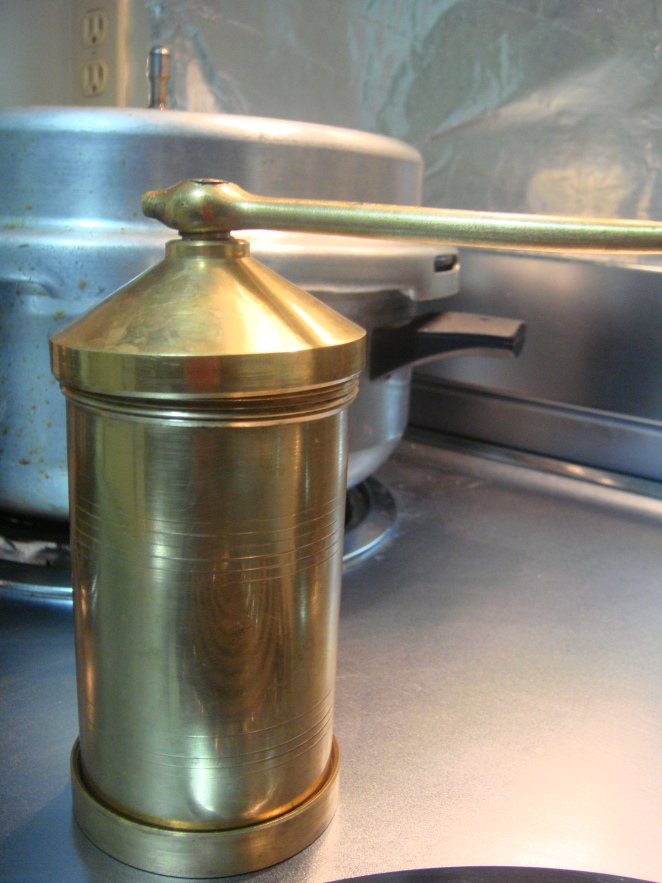
I had tried making Sevai at home last week, sans the Sevai Press. I used the traditional ones that we normally use for making Ribbon Pakoda etc and it looks like this:

Regular Press for making Ribbon Pakoda, Mixture etc.

INGREDIENTS:

2 cups of Boiled Rice.

Salt

Pinch of Hing

A spoon of Coconut Oil.

Sevai Press or Regular Nazhi or Press.

PREPARATION:

  • Soak the boiled rice for 3 hours ahead. You could soak it even at 8 Am in the morning if you plan to make it for lunch. With the help of a grinder, grind it to a smooth paste adding enough salt . Use only as much water as is necessary.
  • Since this involves extrusion etc, it is important that the rice is ground to a smooth paste.
  • From here there are actually two methods – one which my mom in law uses and one that we have been traditionally using in my grandmother`s home. One option is to simply transfer this ground batter in to greased idli plates and steam then for 15 mins just as you would do for idlis.

(OR)

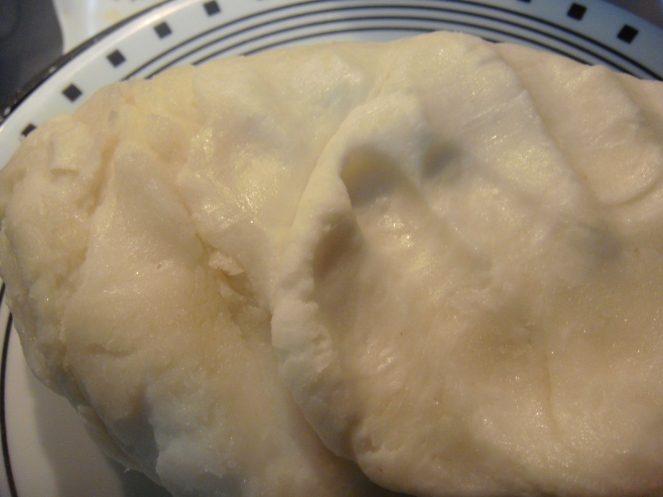
  • Transfer the contents of the grinder in to a kadai, add a pinch of hing and a spoon of coconut oil and switch on the stove on medium low flame. Keep stirring it until the water is used to cook the batter and it comes together as one. It should look like this:
Batter cooked to make soft dough.
  • Immediately shape this dough in to rough balls and place them on  greased idli plates. Steam these balls for about ten minutes just like you would steam the idlis. This double cooking where we cook it once over the stove and once in the cooker,makes it much more easily digestible for old people and for kids alike. If you are out of time simply follow the earlier method of directly steaming the raw batter in the idli plates.
  • Once you have steamed the batter/prepared dough balls you have to start the process of sevai extrusion.
  • Briskly add the balls in to the sevai maker and press to get steaming hot noodles of rice sevai. Keep the unused balls tightly closed inside the pressure cooker as the heat is what helps in the easy pressing. Once they get cold, it would become very difficult to press.
  • As the prepared sevai is pressed on to a plate, allow to cool before adding it to a wide mouthed bowl.
  • Delicious home made Sevai is ready to be eaten plain or after seasoning as  Pulikachal Sevai. Lemon Sevai or Coconut Sevai.
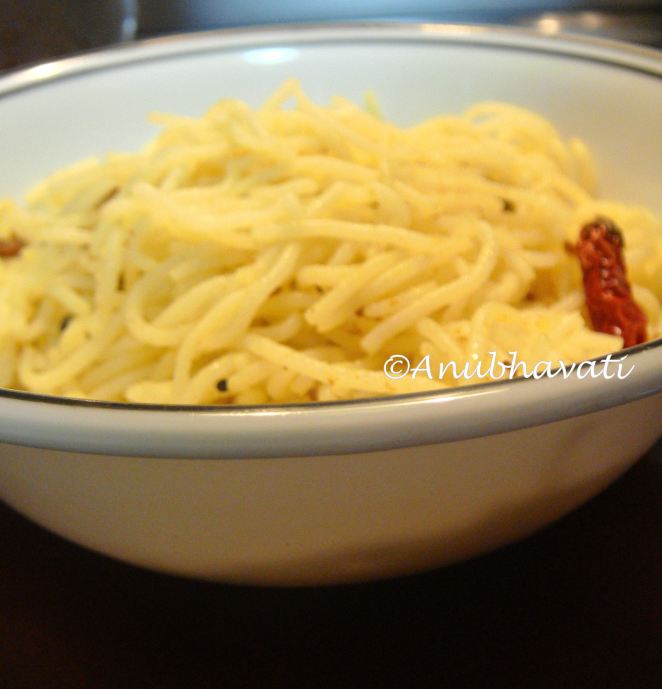
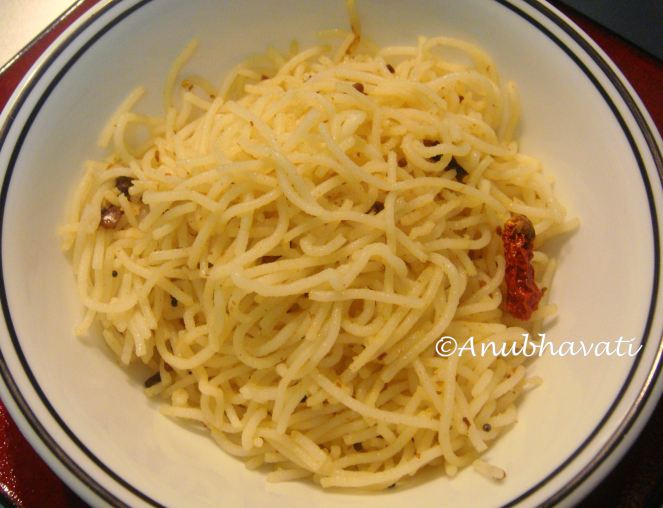
Sevai.
Sevai.

TIP:

When using the regular press, to extrude the sevai, the body of the press would be very hot and so I use a kitchen mitt to hold it with my left hand and then rotate the lever with my right.

Steaming hot oodles of noodles being sent to Monthly Mingle Ravishing Rice started by Meetha.

Poriyals / Kootu Varieties.

Easy & Healthy Vazhakkai Fry.

Vazhakkai Fry
Vazhakkai Fry

The lowly vazhakkai was always a favourite vegetable for me although my mom was never such a great fan of it. I always saw how versatile this vegetable was….One could make it in to a fry, at home we always make simple “mozhukkuperatti” where its simply cooked, seasoned with mustard and curry leaves and smothered with coconut oil, use vazhakkai to make yummy “Thiruvadharai Upperi”, Vazhakkai Podimas and of course the easy Vazhakkai Chips on the slicer. I love all the forms of making this green plantain. I particularly prefer the malabar variety I guess for reason that I am used to it. I usually do not pick up the elongated variety thats available in the Indian stores.

This Vazhakkai fry is both easy and healthy as I precook it in a little water for a few minutes before actually sauteing it in the kadai to make a fry.This way, I lessen the total cooking time and also save on using a lof of oil, without compromising on taste…which I am sure you will agree once you try it too.

INGREDIENTS:

2 Green Raw Bananas or Vazhakkai.

1/2 spoon of tamarind paste (OR) i cup of diluted tamarind water.

Turmeric

Hing

1 spoon of Red Chilli Powder.

Salt as required

Oil.

PREPARATION:

  • Peel the raw bananas  and slice them vertically so they split in to two long halves. Now slice each half in to thin slices. Thin slices means easy cooking and less oil.
  • Put the chopped slices of raw bananans  in a bowl containing a cup of tamarind water. Sprinkle a little salt and place on the stove for about ten minutes till they are half cooked. The time is only an indication, and might vary according to the vessel, gas/electric stove etc. The sliced pieces need to be a little cooked yet firm.
  • Drain the water and set aside. Now take the kadai and add 2-3 spoons of oil.
  • Add mustard, urad dhal and curry leaves and when mustard splutters, add the semi cooked vazhakkai slices.
  • Add hing, salt, turmeric, red chilli powder and stir well.
  • Keep the flame on medium and constantly stir so it does not stick to the bottom and blacken.
  • When well roasted switch off and serve hot.
Uncategorized

Weekend Menu #4.

This weekend was a little crazy with spring cleaning and ice skating classes for S and this and that. I wanted to whip up something that my husband likes a lot and my choice this saturday was

Milagu Kuzhambu with little whole baby brinjals floating in it, 

Vazhakkai Fry, Nelikkai Oorga

curd rice.

This time I purposely did  not make any rasam as I was sure with Pepper Kuzhambu around,  S would hardly even look at rasam, let alone try it.